




403
Sorry!!
Error! We're sorry, but the page you were looking for doesn't exist.
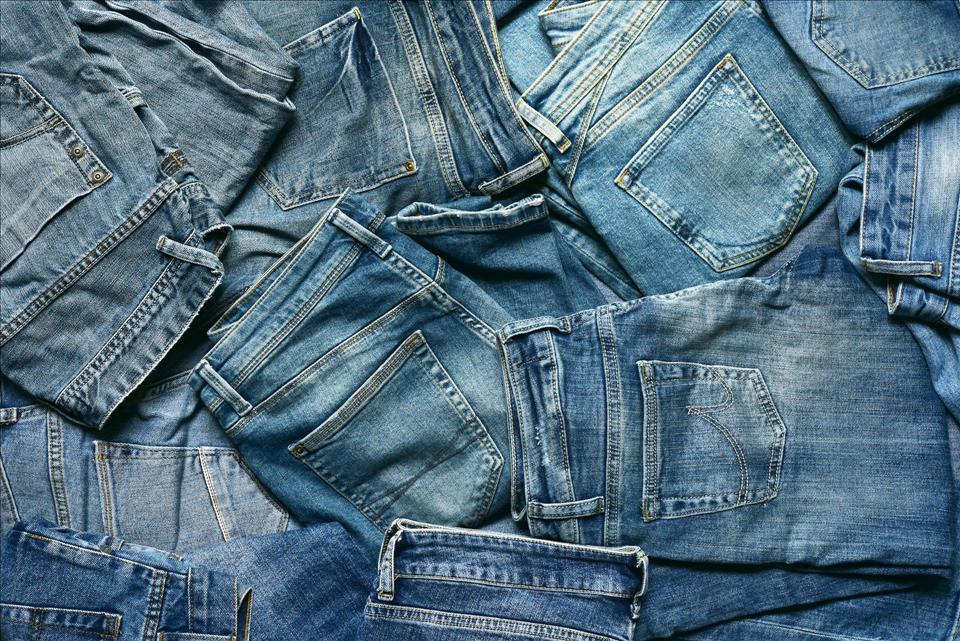
A Brief History Of Denim And Why The 'Perfect Pair' Of Jeans Remains Elusive
Author: Rose Marroncelli
(MENAFN- The Conversation) Denim is present in practically every country in the world and is widely adopted as one of the most common forms of everyday attire. Its appeal spans generations and social groups: jeans are worn worldwide by those who follow fashion and those who do not, by people seeking to stand out and by those who prefer to blend in. However, many of us have never found the perfect pair.

Although denim has been produced since the 16th century, its association with American culture and durable workwear emerged during the Californian gold rush of the 1850s. It was during this time that Levi's – now arguably the most recognisable denim brand – was established.
Levi Strauss, an immigrant entrepreneur who arrived in California from Bavaria in the 1850s, opened a dry goods business catering to miners. One of his customers, the tailor Jacob Davis, developed the innovative use of metal rivets to reinforce stress points in work trousers, making them more durable. Strauss and Davis jointly patented this technique, and the Levi's brand was born.
Blue jeans were originally a seen as symbol of labourers (like the miners) and they also gained a strong association with cowboys. In the decades that followed, denim jeans evolved from practical workwear into one of the most iconic and enduring symbols of global fashion and culture. Film stars such as Marlon Brando and James Dean popularised the jeans and t-shirt look to a young generation in the 1950s. These films personified motorcycle-loving nonconformists, and 1950s Hollywood embraced denim as the garment of rebellion.
Today, the cultural significance of denim jeans has moved beyond early associations with workwear, the cowboy and the teenage rebel, to become a staple worn by people of all ages and backgrounds.
Finding the perfect pairDenim jeans are often seen as a problematic fashion product in terms of sustainability, because their production leaves a considerable environmental footprint.
Cheap prices on the high street can encourage consumers to treat denim products as short-term items, reducing their lifespan. Cotton, which is commonly the main fabric for denim, is incredibly water intensive; the production of one pair of jeans uses approximately 7,500 litres of water.
Different components involved in the making of a single pair of jeans, such as denim, thread, cotton and buttons, can originate from different countries all over the world. This raises questions regarding the environmental costs involved in the production process. Further issues include that jeans are often not made from single fibre materials and therefore cannot be recycled.
Adding to sustainability concerns, at the consumer level, the perfect pair of jeans remains an elusive concept. But in a recently published book chapter, I explain that the perfect pair of jeans is elusive for a reason. Jeans have to be correct for the individual wearer in terms of comfort, social and personal identity, and also the complexity of fit.
Previous reports have focused on women's struggle to find jeans that fit and are flattering. The inability to find the perfect pair of jeans may encourage overconsumption, due to repeated purchasing based on poor fit.
My research shows that this is an issue which applies to all genders. The men I spoke to noted how they resented paying a higher price for brands like Levi's, so spent less by purchasing cheap, high street alternatives. This attitude can lead to overconsumption, as low price points achieved through low-quality production often compromise product longevity.
This demonstrates the perpetuating cycle of fast fashion, driven by cheap, low-quality production, and contradicts the original purpose of jeans of being highly durable and having longevity. The combination of highly environmentally damaging production processes with overconsumption results in even greater environmental harm.
Retailers can make efforts to reduce the trend of overconsumption with better fitting garments. However, fit is a complex issue for retailers as well as consumers. For the retailer, producing jeans in a wide range of sizes and styles is often not cost effective, and complex sizing systems can also confuse the consumer.
Technology could provide future solutions to improving the accuracy of fit. Personalised virtual fitting, made possible through improvements in 3D human shape recognition, could ensure improved fit for the consumer. This would benefit online shoppers, although the technology does remain in its infancy, and is yet to be adopted by major online fashion retailers. Virtual fitting rooms also cannot replicate the feeling of denim next to the skin, so although the fit may be perfect, comfort could be compromised.
Ultimately, the enduring challenge of finding the“perfect pair” of jeans highlights not only the garment's cultural significance but also the opportunity for the fashion industry – and consumers – to move toward more sustainable, better-fitting and more thoughtfully designed denim for the future.
Institution:Nottingham Trent University

Legal Disclaimer:
MENAFN provides the
information “as is” without warranty of any kind. We do not accept
any responsibility or liability for the accuracy, content, images,
videos, licenses, completeness, legality, or reliability of the information
contained in this article. If you have any complaints or copyright
issues related to this article, kindly contact the provider above.
Most popular stories
Market Research

More Story








Comments
No comment