



403
Sorry!!
Error! We're sorry, but the page you were looking for doesn't exist.
Markets On Edge As Middle East Conflict Reaches Critical Juncture
(MENAFN- Mid-East Info) By Daniela Hathorn, senior market analyst at Capital
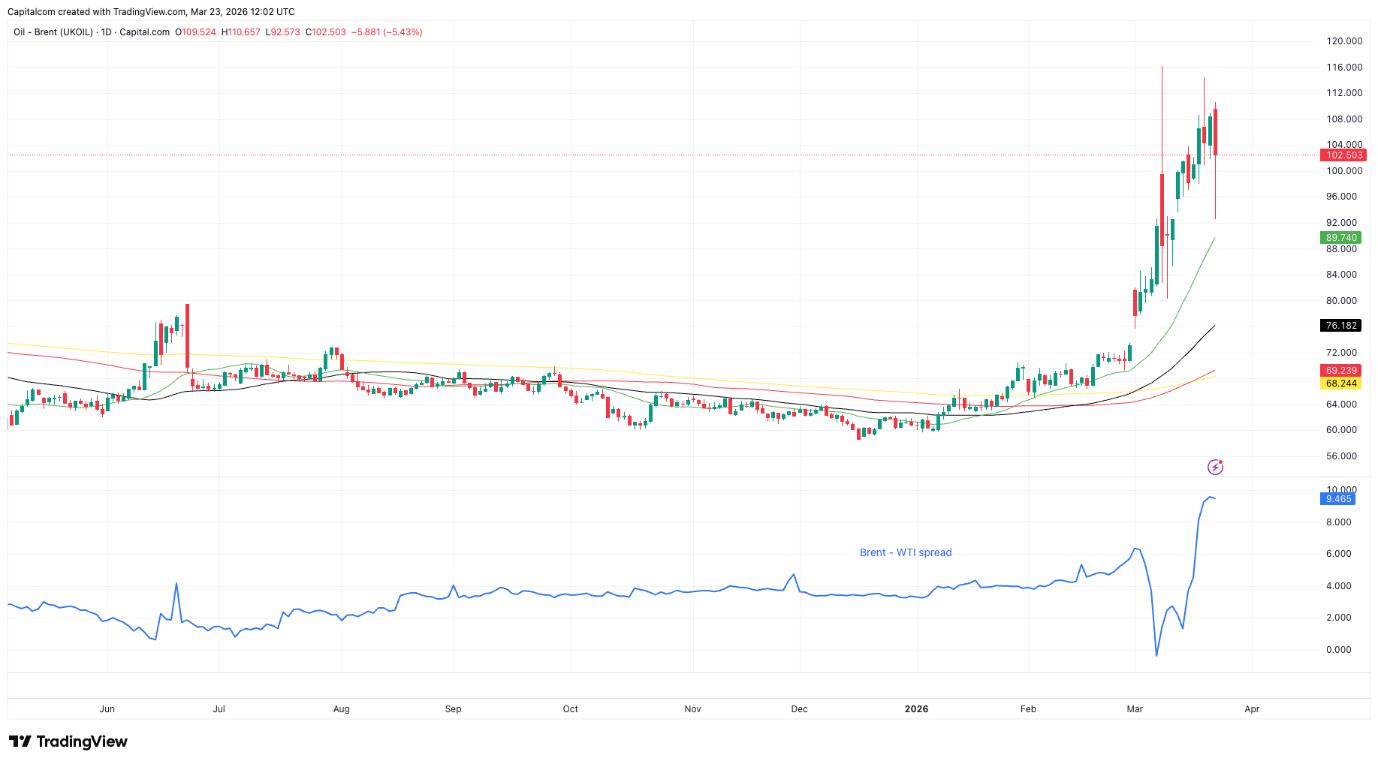
Markets are heading into what could be a defining moment, with the next 12 to 24 hours potentially shaping the near-term direction across asset classes. After a volatile end to last week, investors are now grappling with an increasingly binary outlook as tensions among key regional and international stakeholders heighten around the Strait of Hormuz. The past 48 hours have been marked by sharp shifts in sentiment. Late last week, there were tentative signs of de-escalation, with reports suggesting that negotiations could begin to take shape and that some officials were considering steps to de-escalate. However, those hopes were quickly overturned over the weekend. A period of heightened rhetoric - including statements about potential actions affecting energy infrastructure if restrictions at the Strait of Hormuz persist - has brought markets back to a state of heightened uncertainty. Subsequent statements has only added to the tension. Statements regarding energy and water infrastructure in the Gulf signal a willingness to amplify disruptions, increasing risk levels. The situation has now evolved into a strategic impasse centred on security around the Strait of Hormuz, a critical chokepoint for global energy flows. For markets, this is the key variable: as long as energy flows remain constrained, the risk of a sustained global energy shock remains elevated. A binary risk for markets The current environment presents a clear, binary risk scenario. On one side, a further escalation - particularly any direct action against energy infrastructure - could trigger a sharp market reaction. Oil prices could surge well beyond $120, global yields would likely spike on inflation fears, the US dollar could rally sharply, and equities could see a sharp sell-off. On the other side, if tensions ease or the anticipated escalation fails to materialise, markets could see a strong relief rally. With positioning already skewed toward risk aversion, any sign of de-escalation could lead to sharp moves in the opposite direction: equities rebounding, yields falling, the dollar weakening and gold recovering. For now, however, markets appear to be in a holding pattern. Equity indices across Europe, Asia and the US are struggling to find direction, reflecting a wait-and-see approach. Investors are reluctant to commit to either outcome ahead of what could be a pivotal moment. Energy Shock Driving the Narrative At the centre of it all is the energy market. Oil prices remain elevated, but the headline moves only tell part of the story. Beneath the surface, there are significant dislocations across global energy markets. The spread between Brent and WTI has widened to multi-year highs, reflecting the uneven impact of heightened supply risks. While US crude prices have risen, international benchmarks - particularly those tied to seaborne supply - have surged more aggressively as the risk to global shipping routes increases. Brent Crude Chart & Brent – WTI spread Past performance is not a reliable indicator of future results. In some regions, particularly parts of Asia, physical oil prices are reportedly trading at far higher levels than benchmark futures suggest. This highlights a growing divergence between paper markets and physical supply conditions - a sign that the full impact of the disruptions may not yet be fully reflected in market pricing. Gold, the dollar and financial conditions: Another notable feature of recent price action has been the behaviour of traditional safe-haven assets. Gold, which would typically benefit from geopolitical uncertainty, has come under pressure. This reflects a combination of factors, including rising yields, a stronger US dollar and positioning dynamics following a prolonged rally. The dollar, meanwhile, has strengthened as investors seek liquidity and safety, while also benefiting from higher yields and increased demand linked to rising oil prices. This tightening in financial conditions is already beginning to ripple through markets, contributing to the broader risk-off tone. Central banks behind the curve? Despite the scale of the developments, central banks have so far been cautious in incorporating the energy shock into their policy frameworks. Recent communications from policymakers suggest a wait-and-see approach, with limited explicit acknowledgement of the potential long-term impact of recent developments. This raises the possibility that markets - and policymakers - may still be underestimating the broader consequences. Even if the immediate disruptions is contained, the knock-on effects on inflation, growth and financial conditions are likely to persist. Energy shocks of this magnitude tend to have long tails, affecting everything from industrial production to consumer spending. A story far from over: Even in the best-case scenario, where immediate escalation is avoided, the underlying tensions remain unresolved. The strategic importance of the Strait of Hormuz and the incentives across stakeholders suggest that volatility is likely to remain elevated. For investors, this is not just a short-term event risk, but the beginning of a more prolonged period of uncertainty. The next few hours may determine the immediate direction of markets, but the broader story - one of energy disruption, elevated global risk and tightening financial conditions - is likely to continue unfolding in the weeks ahead.
Markets are heading into what could be a defining moment, with the next 12 to 24 hours potentially shaping the near-term direction across asset classes. After a volatile end to last week, investors are now grappling with an increasingly binary outlook as tensions among key regional and international stakeholders heighten around the Strait of Hormuz. The past 48 hours have been marked by sharp shifts in sentiment. Late last week, there were tentative signs of de-escalation, with reports suggesting that negotiations could begin to take shape and that some officials were considering steps to de-escalate. However, those hopes were quickly overturned over the weekend. A period of heightened rhetoric - including statements about potential actions affecting energy infrastructure if restrictions at the Strait of Hormuz persist - has brought markets back to a state of heightened uncertainty. Subsequent statements has only added to the tension. Statements regarding energy and water infrastructure in the Gulf signal a willingness to amplify disruptions, increasing risk levels. The situation has now evolved into a strategic impasse centred on security around the Strait of Hormuz, a critical chokepoint for global energy flows. For markets, this is the key variable: as long as energy flows remain constrained, the risk of a sustained global energy shock remains elevated. A binary risk for markets The current environment presents a clear, binary risk scenario. On one side, a further escalation - particularly any direct action against energy infrastructure - could trigger a sharp market reaction. Oil prices could surge well beyond $120, global yields would likely spike on inflation fears, the US dollar could rally sharply, and equities could see a sharp sell-off. On the other side, if tensions ease or the anticipated escalation fails to materialise, markets could see a strong relief rally. With positioning already skewed toward risk aversion, any sign of de-escalation could lead to sharp moves in the opposite direction: equities rebounding, yields falling, the dollar weakening and gold recovering. For now, however, markets appear to be in a holding pattern. Equity indices across Europe, Asia and the US are struggling to find direction, reflecting a wait-and-see approach. Investors are reluctant to commit to either outcome ahead of what could be a pivotal moment. Energy Shock Driving the Narrative At the centre of it all is the energy market. Oil prices remain elevated, but the headline moves only tell part of the story. Beneath the surface, there are significant dislocations across global energy markets. The spread between Brent and WTI has widened to multi-year highs, reflecting the uneven impact of heightened supply risks. While US crude prices have risen, international benchmarks - particularly those tied to seaborne supply - have surged more aggressively as the risk to global shipping routes increases. Brent Crude Chart & Brent – WTI spread Past performance is not a reliable indicator of future results. In some regions, particularly parts of Asia, physical oil prices are reportedly trading at far higher levels than benchmark futures suggest. This highlights a growing divergence between paper markets and physical supply conditions - a sign that the full impact of the disruptions may not yet be fully reflected in market pricing. Gold, the dollar and financial conditions: Another notable feature of recent price action has been the behaviour of traditional safe-haven assets. Gold, which would typically benefit from geopolitical uncertainty, has come under pressure. This reflects a combination of factors, including rising yields, a stronger US dollar and positioning dynamics following a prolonged rally. The dollar, meanwhile, has strengthened as investors seek liquidity and safety, while also benefiting from higher yields and increased demand linked to rising oil prices. This tightening in financial conditions is already beginning to ripple through markets, contributing to the broader risk-off tone. Central banks behind the curve? Despite the scale of the developments, central banks have so far been cautious in incorporating the energy shock into their policy frameworks. Recent communications from policymakers suggest a wait-and-see approach, with limited explicit acknowledgement of the potential long-term impact of recent developments. This raises the possibility that markets - and policymakers - may still be underestimating the broader consequences. Even if the immediate disruptions is contained, the knock-on effects on inflation, growth and financial conditions are likely to persist. Energy shocks of this magnitude tend to have long tails, affecting everything from industrial production to consumer spending. A story far from over: Even in the best-case scenario, where immediate escalation is avoided, the underlying tensions remain unresolved. The strategic importance of the Strait of Hormuz and the incentives across stakeholders suggest that volatility is likely to remain elevated. For investors, this is not just a short-term event risk, but the beginning of a more prolonged period of uncertainty. The next few hours may determine the immediate direction of markets, but the broader story - one of energy disruption, elevated global risk and tightening financial conditions - is likely to continue unfolding in the weeks ahead.

Legal Disclaimer:
MENAFN provides the
information “as is” without warranty of any kind. We do not accept
any responsibility or liability for the accuracy, content, images,
videos, licenses, completeness, legality, or reliability of the information
contained in this article. If you have any complaints or copyright
issues related to this article, kindly contact the provider above.
Most popular stories
Market Research

More Story








Comments
No comment