




403
Sorry!!
Error! We're sorry, but the page you were looking for doesn't exist.
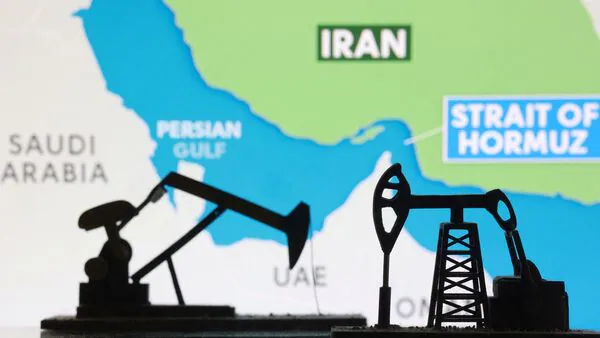
Middle East War: Is Iran Charging $2 Million To Let Vessels Pass Through Strait Of Hormuz? Here's What The Embassy Said
(MENAFN- Live Mint) The Iranian Embassy in India on Monday (local time) dismissed claims circulating online that Tehran is now demanding a $2 million payment in exchange for allowing vessels to pass through the Strait of Hormuz, a narrow waterway that was shut by the Islamic Revolutionary Guard Corps (IRGC).
Addressing the claim in a post on X, the embassy clarified that reports about Iran collecting $2 million from ships transiting the Strait of Hormuz are baseless. It stressed that such remarks reflect individual opinions and do not represent the official stance of the Islamic Republic.
The clarification came after Alaeddin Boroujerdi, an Iranian lawmaker and a member of the parliament's national security committee, claimed in an interview with Iran International that Tehran has begun charging as much as $2 million from certain vessels to allow passage through the Strait of Hormuz.
Also Read | India's LPG conversion story: At the end of its pipeline? Iranian lawmaker on charging vessels on Hormuz StraitDescribing the move as part of a broader shift in strategy to assert control over the key maritime corridor, Boroujerdi said the policy had already been implemented. He characterised it as the beginning of what he called a new sovereign framework governing the Strait of Hormuz after decades.
Justifying the idea, the lawmaker said that war comes with costs, and it is therefore reasonable for Iran to impose transit charges on vessels using the route. He added that such a step underlines Tehran's authority over the waterway.
Strait of Hormuz blockadeThese developments come amid heightened tensions in the region, with the Strait of Hormuz effectively closed following US and Israeli strikes in late February targeting Iran's military and naval infrastructure. The attacks resulted in the death of Supreme Leader Ayatollah Ali Khamenei, along with several senior officials.
The shutdown of the critical passage, through which nearly one-fifth of global oil supply is transported, has sent shockwaves through energy markets and unsettled traders worldwide. In an attempt to calm concerns over supply disruptions, the International Energy Agency (IEA) stepped in. On 11 March, the agency announced it would release 400 million barrels of oil from its emergency reserves.
Also Read | US-Israel, Iran conflict: IEA says 400 mn barrels of oil to start flowing soon Donald Trump's warning to IranAmid the escalating situation, US President Donald Trump issued a strong warning to Tehran last week, threatening to destroy its power infrastructure if the Strait was not reopened by March 23. Writing on Truth Social, Trump said that if Iran failed to fully reopen the waterway without threats within 48 hours, the United States would begin targeting and eliminating its major power plants, starting with the largest.
Also Read | Trump vows to 'obliterate' Iran's energy infra if Hormuz not opened in 48 hours Iran hits backTehran responded sharply to Trump's warning, stating that any attack on its power infrastructure would be met with a proportional response. Iranian officials warned that they would target energy facilities, IT networks, and desalination plants linked to the US and Israel across the region.
Following the US warning, Iranian President Masoud Pezeshkian also issued a direct message, saying that threats and intimidation only strengthen national unity within the Islamic Republic. In a post on X, he said that attempts to erase Iran reflect desperation in the face of a resilient and historically rooted nation.
He further stated that the Strait of Hormuz remains open to all countries, except those that violate Iranian territory. According to a Hindustan Times report, while some vessels, including ships heading toward India, have managed to pass through the narrow channel, many others remain stranded as tensions continue and Iran presses its response to the US-Israel strikes.

Legal Disclaimer:
MENAFN provides the
information “as is” without warranty of any kind. We do not accept
any responsibility or liability for the accuracy, content, images,
videos, licenses, completeness, legality, or reliability of the information
contained in this article. If you have any complaints or copyright
issues related to this article, kindly contact the provider above.
Most popular stories
Market Research

More Story






Comments
No comment