



403
Sorry!!
Error! We're sorry, but the page you were looking for doesn't exist.
View From The Hill: Albanese Could Learn From Malinauskas' Masterclass In Messaging
Author: Michelle Grattan
(MENAFN- The Conversation) With social cohesion badly fraying and One Nation's surge reinforcing the threat it is under, politicians desperately need to find the rhetoric to help glue our multiculturalism back together.

Obviously it will take much more than words but, as is often said, words matter.
So does linking change with continuity, relating today's Australia to the country of yesterday.
Also important is making the national symbols and values the instruments of unity, claiming them back from the culture warriors.
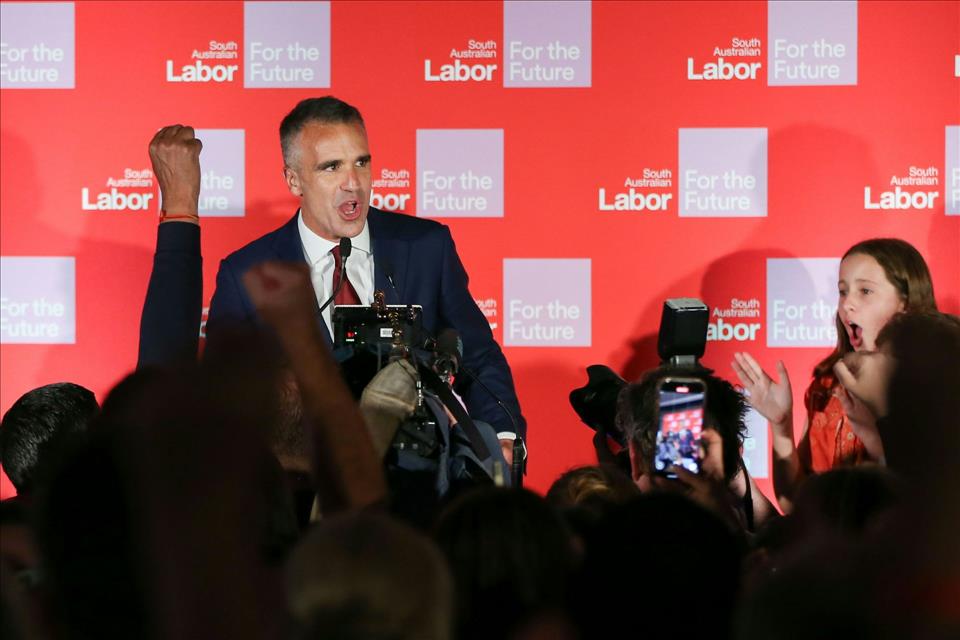
In his Saturday night victory speech, South Australian Premier Peter Malinauskas gave a masterclass in how to tackle the task. On Sunday, Prime Minister Anthony Albanese's comments on the subject were direct and blunt.
In a targeted response to One Nation, Malinauskas personalised diversity with a contemporary anecdote. He rooted the imperative for tolerance in the distant past by invoking an Australian literary icon. He brought a degree of subtlety that spoke to his ability as a communicator.
“I lined up today as I've done at each election, at the Woodville Gardens polling booth in my electorate. It's home to one of the more diverse communities in our state,” the premier told the excited crowd at the Labor function.
“And I got chatting to the gentleman in front of me, who I had met before, and he was Vietnamese, a man small in stature, but tough as nails. He was a boat person.
"He came out here from Vietnam, fleeing communism, looking for the same thing that my grandparents did, an opportunity. An opportunity to live in a peaceful country where he knew he could work hard, provide for his family, put a roof over his head, and then in turn, give back.
"And as he was queuing up to vote today, he said to me, rather quietly, 'I like elections'.
"It sort of struck me as being a clear signal of what patriotism can look like.
"I couldn't help but go back to a poem that was written by one of Australia's greatest authors, if not greatest writer, in Henry Lawson.”
Malinauskas then read at length from Lawson's The Duty of Australians.
"Lawson was onto something,” Malinauskas said.
“That has remained true to this day in our island continent that we call home. And it's why Australians should be patriotic and can be proud of what our nation stands for.
"Because it is distinct. Australians' version of patriotism is a little different to our northern hemisphere friends. We are famous for being just a little bit more laid back.
"That is to say, less brash and boastful, and more dogged and determined. We can and we should wave our flag with pride, knowing that Aussie patriotism sometimes means sitting with a stranger and having a cuppa or a frothy and arguing about the footy. Not our faith,” he said.
“It's been a hot summer in Australia. So maybe we should all look forward to the temperature coming down just a little bit.
"So that when we sing the national anthem with pride, we don't forget there is a second verse which reminds us. It reminds us that when we all combine, we can achieve anything.
"When we work together, diversity has always been our greatest strength.”
Malinauskas's homily was a targeted response to the divisiveness and prejudice that One Nation – which had polled strongly in that day's election – has fed on and fanned.
Using the touchstones of the past, poetry and patriotism, Malinauskas linked modernity and nostalgia. Of course critics might point to the romanticisation and blanking out of the negatives – Australia in Lawson's time had racial exclusion as its official policy.
Contrast Albanese's more confrontational messaging at the weekend when he highlighted the difference between the old and new Australia.
Speaking at a Vietnamese function he also drew on history, referring to the ending of the White Australia policy by the Whitlam Government just before the arrival of Vietnamese refugees.
“We need to be vigilant,” he said, in lines directed as much to the Labor base and progressives as to the people in the room.
“There are some, including some in political life, who want to turn back the clock to an Australia that is no longer who we are.
"And we need to call out those people.
"And we need to continue to cherish our diversity as a strength for our nation, which it is.”
Albanese is often inclined to berate people critical of modern Australia, by saying, in effect, get used to the new reality. Malinauskas sought to find common threads between the old and new orders.
Albanese risks alienating voters who hanker after former times. The words of Malinauskas are aimed at giving them food for thought.
Institution:University of Canberra

Legal Disclaimer:
MENAFN provides the
information “as is” without warranty of any kind. We do not accept
any responsibility or liability for the accuracy, content, images,
videos, licenses, completeness, legality, or reliability of the information
contained in this article. If you have any complaints or copyright
issues related to this article, kindly contact the provider above.
Most popular stories
Market Research

More Story


Comments
No comment