




403
Sorry!!
Error! We're sorry, but the page you were looking for doesn't exist.
Is Cuba Next After Maduro's Capture?
(MENAFN- Asia Times)
Nicolás Maduro was the head of the Venezuelan dictatorship, but his removal not only signals the coming liquidation of the Venezuelan cartels and thugs; it also has a dramatic immediate impact on Cuba. Is Cuba next?
Cuba has an extensive presence in Venezuela and Cuban intelligence and military personnel not only trained the Venezuelan military but also led the effort to crack down on opposition to the Chavez-Maduro dictatorship. Experts and former Venezuelan officials estimate there are between 5,000 and 15,000 Cuban personnel dedicated specifically to intelligence, counter-intelligence, and security tasks.
According to news reports, Venezuelans are identifying the homes of the Cuban mercenaries.
Maduro was hiding at a secret residence inside the Fuerte Tiuna military installation. This fort houses the Ministry of Defense, the headquarters of the army and highly secure residential areas for top government officials. Inside the residence was a strong room that Maduro tried to access when he was captured.
The facility was heavily guarded and the force guarding it included Cubans. There were a number of firefights as US military helicopters operated around the fort, where one helicopter was hit but continued operating. It isn't known how many of the guarding force were killed or wounded, but possibly that will be learned in due time.
Cubans in Venezuela also provide medical care. Both the security presence supporting the Maduro dictatorship and the medical personnel are said to be a reimbursement for the delivery of Venezuelan oil for Cuba.
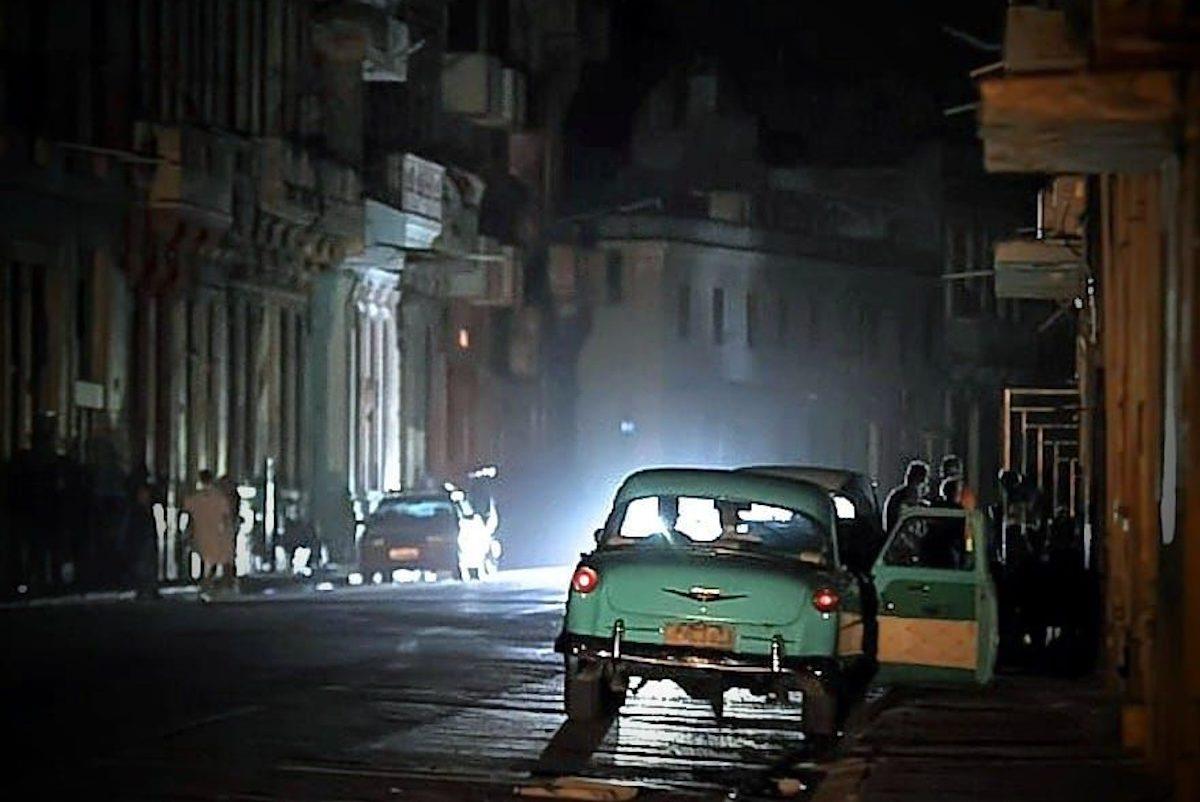
Cuba, which mainly depends on oil from Venezuela, is now experiencing severe power outages and rising protests against the 67 year-old dictatorship.
Latest stories America's chip export controls are working Anatomy of an economic suicide: Venezuela under Maduro Global outrage over 'state terrorism' as Trump attacks VenezuelaCuba requires approximately 110,000 to 120,000 barrels per day (bpd) to meet its basic needs, but it currently falls far short of this target. Oil supplies to Cuba have fluctuated wildly but trended downward, averaging 27,400 bpd through the first ten months of the year. Now they are approaching zero from Venezuela, which was Cuba's main supplier.
Mexico emerged as a critical secondary source in 2023 and 2024, though its support has been inconsistent due to its own domestic oil production struggles. In 2024 Mexico provided approximately 20,000 bpd. In a massive“solidarity” effort, Mexico sent over $3 billion in subsidized fuel between May and August 2025 (briefly reaching peaks of over 300,000 bpd in a single month).
However, by late 2025, these regular shipments fell by 73% as Mexico focused on its own fuel shortages. In December 2025, Mexico sent emergency shipments totaling 80,000 barrels to help Cuba manage a total grid collapse during the holiday season.
It is unclear if Mexico will step in again since the US could expand its embargo to cover Mexican oil to Cuba.
Mexican crude on the average is currently priced at $54.90 per barrel, which means Mexico was underwriting the Cuban economy and losing other export sales at the same time. In any case, Mexico does not have any capacity or budget to underwrite oil deliveries to Cuba.
Because Cuba has little cash, it cannot buy oil on the spot market from other sources. Russia delivers very little oil to Cuba and is unlikely to step in, given the current challenges Russia faces because of Western embargos.
Cuba has some domestically produced oil, but it is very heavy oil that isn't suitable for Cuban processing facilities.
The US destroyed Venezuelan air defenses on the night of January 2nd to 3rd. This included a Buk-M2E system at La Carlotta airfield, and possibly other air defenses and radars. Russian mil-blogger reporting also suggests that an S-300VM air defense system was also destroyed.
Russian sources also say the Venezuelan air defenses were not used correctly (kept in a stationary or fixed position despite being mobile like the BUK) and were wanting spare parts and maintenance. If this was true of Venezuela, possibly the same applies to Cuba.
According to statements from Colombian President Gustavo Petro, the United States struck a facility in or near the Venezuelan port city of Maracaibo. The target was a“factory” associated with the National Liberation Army (ELN), a Colombian guerrilla group. The facility was part of the military-industrial infrastructure in the region that has been linked to the assembly and storage of various munitions and technical equipment, including Iranian drones.
Hezbollah was responsible for setting up domestic assembly for Iranian-designed drones, such as the ANSU-100 (a derivative of the Mohajer-series) at Maracaibo. Hezbollah operatives provided the“asymmetric warfare” expertise needed to weaponize these drones for maritime and border surveillance.
Hezbollah also ran a Margarita Island facility that served as Hezbollah's most critical operational base in the Western Hemisphere. The facility was a hub for document forgery, allowing operatives to obtain Venezuelan identification and travel throughout Latin America undetected. There was a paramilitary training center on the island, managed by the Nassereddine clan (a family with deep ties to Hezbollah and senior Venezuelan officials). In addition, the facility was also a consequential money laundering operation.
The US also was able to blank out parts of the power grid in Venezuela during the Maduro capture operation, called Operation Absolute Resolve.
Cuba's leadership is trying to rally the Cuban people at the start of the new year. Miguel Díaz-Canel, Cuba's president, demanded that the Cuban people be“united more than ever” behind the communists. But Breitbart News reports that there are
Sign up for one of our free newsletters-
The Daily Report
Start your day right with Asia Times' top stories
AT Weekly Report
A weekly roundup of Asia Times' most-read stories
The collapse of the Venezuelan regime and the growing chances that Cubans will kick out the communists create an unprecedented shift in hemispheric politics, already mostly trending to conservative pro-US governments. There is little possibility for Cuba's communists to survive the economic collapse impacting the public.
As is obvious, but worth reporting on, offers of solidarity from Russia and China did not save Maduro and won't save Cuba's communists either. It is noteworthy that, earlier on the day he was captured, Maduro was meeting with Chinese officials in Caracas.
For the record, Maduro was seeking help from Qiu Xiaoqi, the special envoy of President Xi Jinping for Latin American and Caribbean affairs.
According to official reports, the Chinese delegation also included: Lan Hu, the Chinese ambassador to Venezuela; Liu Bo, director of the Latin American and Caribbean Department of the Chinese Foreign Ministry; Wang Hao, deputy director of the Latin American and Caribbean Department; and Liu Xen, regional attaché. One presumes the group will find work elsewhere.
Sign up here to comment on Asia Times stories Or Sign in to an existing accounThank you for registering!
An account was already registered with this email. Please check your inbox for an authentication link.
-
Click to share on X (Opens in new window)
Click to share on LinkedIn (Opens in new window)
LinkedI
Click to share on Facebook (Opens in new window)
Faceboo
Click to share on WhatsApp (Opens in new window)
WhatsAp
Click to share on Reddit (Opens in new window)
Reddi
Click to email a link to a friend (Opens in new window)
Emai
Click to print (Opens in new window)
Prin

Legal Disclaimer:
MENAFN provides the
information “as is” without warranty of any kind. We do not accept
any responsibility or liability for the accuracy, content, images,
videos, licenses, completeness, legality, or reliability of the information
contained in this article. If you have any complaints or copyright
issues related to this article, kindly contact the provider above.
Most popular stories
Market Research

More Story




Comments
No comment