



403
Sorry!!
Error! We're sorry, but the page you were looking for doesn't exist.
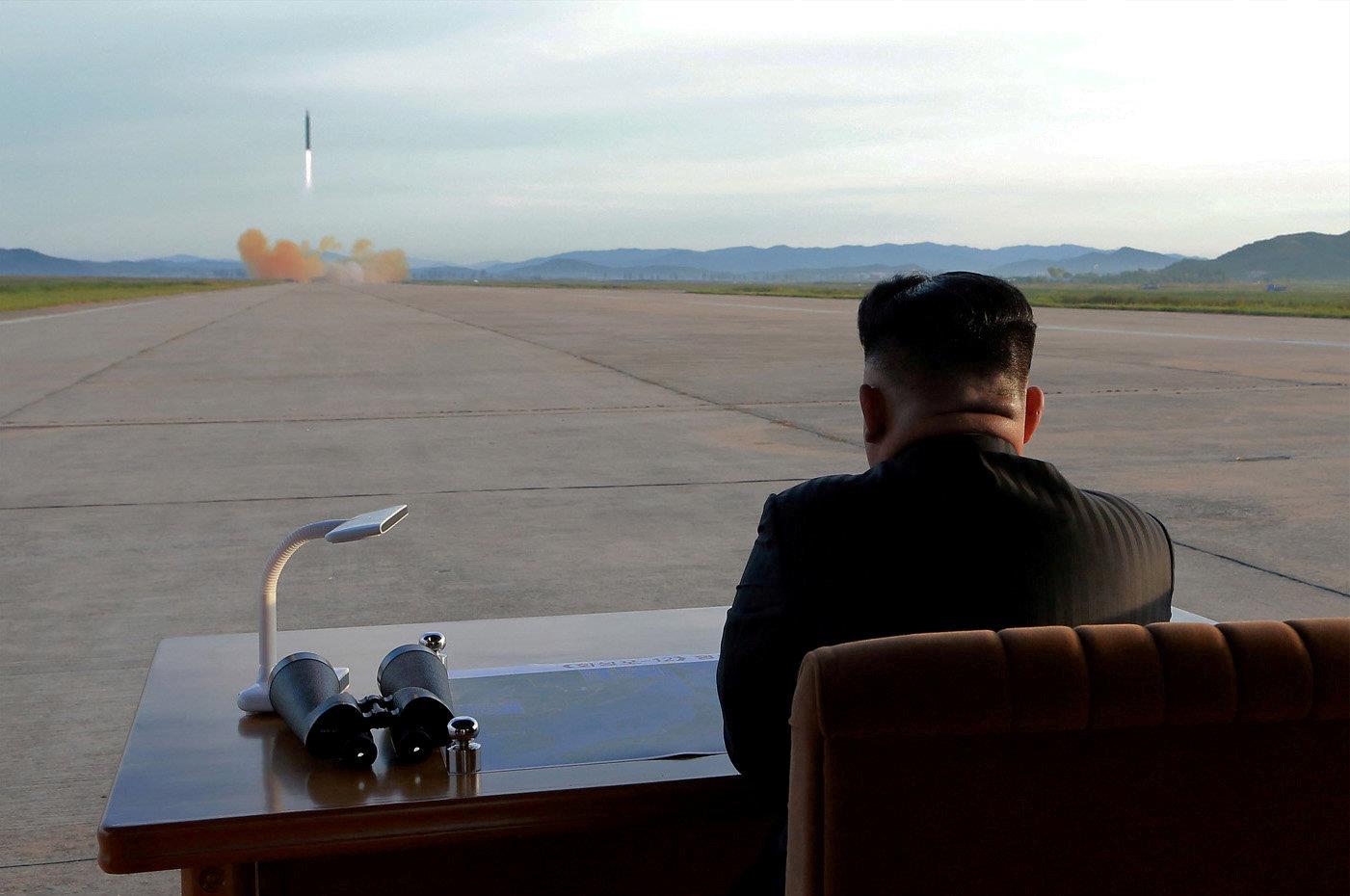
Iran War Draining US Arsenal That Keeps North Korea In Check
(MENAFN- Asia Times)
North Korean dictator Kim Jong Un is no doubt watching closely as America reportedly moves part of its Terminal High Altitude Area Defense (THAAD) systems from South Korea to the Middle East.
Without those defenses, South Korea will be more vulnerable to a North Korean attack or provocations. This highlights a problem of a protracted war with Iran - the more America runs low on missiles and must pull resources from elsewhere, the more likely those it seeks to deter, like North Korea, will be tempted to make trouble.
Pyongyang has historically saber-rattled to force Washington and Seoul to the bargaining table to gain some sanctions relief. Pyongyang is always squeezed economically, both from sanctions and their own communist economy, but the war with Iran is making things worse.
Tehran's closure of the Strait of Hormuz has knocked roughly 20% of global oil off the market, pushing Brent crude past $100 a barrel. North Korea is dependent on black-market fuel because UN sanctions cap Pyongyang's annual legal imports at 500,000 barrels.
Latest stories Iran's insurgent playbook for outlasting US-Israel firepower Great AI divide: markets in America, systems in China Hormuz blockade may herald end of American globalizationBut, of course, North Korea imports many times that amount through illegal ship-to-ship transfers at inflated prices. So the longer there is no off-ramp with Iran, the higher the economic pressure on Pyongyang-and the political pressure on Kim to get the attention of leaders in Washington and Seoul.
History shows this pattern. When fuel shortages, famine and economic pressure build inside North Korea, the regime tends to escalate. Analysts at 38 North noted this month that Pyongyang's rhetoric has already hardened since US President Donald Trump ordered the latest Iran strikes -hardly a shocking development.
To be clear, a provocation by North Korea is not certain. But the conditions that historically precede one - economic pain, a distracted Washington, weakened forward defenses - are converging.
Weakened forward defenses in South Korea matter because conventional deterrence requires both will and means. Nobody doubts American will, but the means are running out.
The US has already burned through vital munitions, including Tomahawk cruise missiles, that will take years and millions to replace. The air defense Patriot missiles cost about $6 million each and the US only bought 600 last year. But in just a few weeks it is estimated it may have used up over 1,000.
Degrading Iran's missile capability at the cost of depleting America's own arsenal that keeps nuclear-armed North Korea in check is a bad trade. Pyongyang commands an estimated 50 nuclear warheads and thousands of missiles within minutes of Seoul, not to mention all the artillery they have aimed at the south.
Strategic stability with nuclear-armed adversaries is a far higher priority than the administration's objectives in Iran. South Korea is a treaty ally of the US. Seoul is a responsible partner that has taken its national defense seriously.
This isn't one of America's fickle non-ally partners in the Middle East or an unserious ally like Germany. South Korean soldiers have fought and bled alongside American troops before and would no doubt do so again.
Sign up for one of our free newsletters-
The Daily Report
Start your day right with Asia Times' top stories
AT Weekly Report
A weekly roundup of Asia Times' most-read stories
The US is stripping its most capable missile defenses from the Korean Peninsula to feed a war with Iran that has no clear objective or end date. Washington should find an off-ramp before North Korea decides to test how thin the alliance's defenses have become.
Washington should declare the mission's core objectives met-Iran's air defenses and much of its missile infrastructure are in ruins-and negotiate a ceasefire that reopens the Strait of Hormuz.
Then send the interceptors back to the Pacific, where deterrence depends on the credibility of American arms. Every week this war continues, the risk on the Korean Peninsula grows. And unlike Iran, North Korea already has the bomb.
John Dale Grover is a fellow with Defense Priorities. He was a part of the 2021 US Presidential Management Fellowship class, working for the US Treasury and State Departments. He was also a John Quincy Adams Society Strategic Leaders fellow.
Sign up here to comment on Asia Times stories OrThank you for registering!
-
Share on X (Opens in new window)
Share on LinkedIn (Opens in new window)
LinkedI
Share on Facebook (Opens in new window)
Faceboo
Share on WhatsApp (Opens in new window)
WhatsAp
Share on Reddit (Opens in new window)
Reddi
Email a link to a friend (Opens in new window)
Emai
Print (Opens in new window)
Prin

Legal Disclaimer:
MENAFN provides the
information “as is” without warranty of any kind. We do not accept
any responsibility or liability for the accuracy, content, images,
videos, licenses, completeness, legality, or reliability of the information
contained in this article. If you have any complaints or copyright
issues related to this article, kindly contact the provider above.
Most popular stories
Market Research

More Story






Comments
No comment