






403
Sorry!!
Error! We're sorry, but the page you were looking for doesn't exist.
Polycarbonate Vs High-Index Lenses: What's The Difference?
| Feature | Polycarbonate Lenses | High-Index Lenses |
|---|---|---|
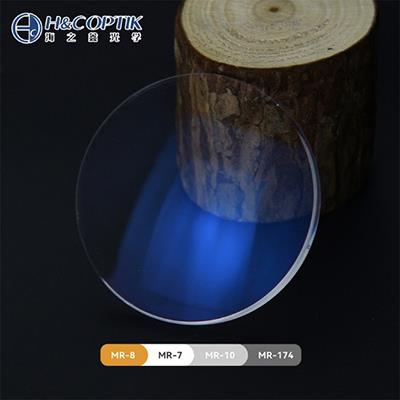
| Refractive Index | 1.59 | 1.67 (MR-7) / 1.60 (MR-8) |
| Thickness | Medium | Thinner (especially for strong prescriptions) |
| Impact Resistance | ⭐ ⭐ ⭐ ⭐ ⭐ | ⭐ ⭐ ⭐ |
| Optical Clarity | Good | Very good |
| Abbe Value | -30 | 32–42 (varies by index) |
| Weight | Very light | Light |
| Best For | Safety, kids, sports | High prescriptions, fashion eyewear |
| Cost | Lower | Higher |
4. Which Lenses Are Better?There is no single "better" option - the best choice depends on the wearer's needs:
Choose Polycarbonate Lenses If:
-
Impact resistance is the top priority
The lenses are for children or sports users
You need safety eyewear
Cost control is important
Choose High-Index Lenses If:
-
The prescription is strong (−4.00 or higher)
Cosmetic appearance matters
Thinner, more refined lenses are preferred
The eyewear is positioned as fashion-focused
5. Which Lens Is Better for Wholesalers and Optical Brands?
For lens wholesalers and optical distributors, offering both polycarbonate and high-index lenses is the best strategy:
-
Polycarbonate lenses are ideal for 1) volume orders, 2) safety programs, 3) emerging markets
High-index lenses cater to 1) optical chains, 2) private labels, 3) premium customers
At H&C Optik, we manufacture and supply polycarbonate lenses and high-index lenses (1.61 / 1.67 / 1.74) with consistent quality!

Legal Disclaimer:
MENAFN provides the
information “as is” without warranty of any kind. We do not accept
any responsibility or liability for the accuracy, content, images,
videos, licenses, completeness, legality, or reliability of the information
contained in this article. If you have any complaints or copyright
issues related to this article, kindly contact the provider above.
Most popular stories
Market Research

More Story







Comments
No comment