







403
Sorry!!
Error! We're sorry, but the page you were looking for doesn't exist.
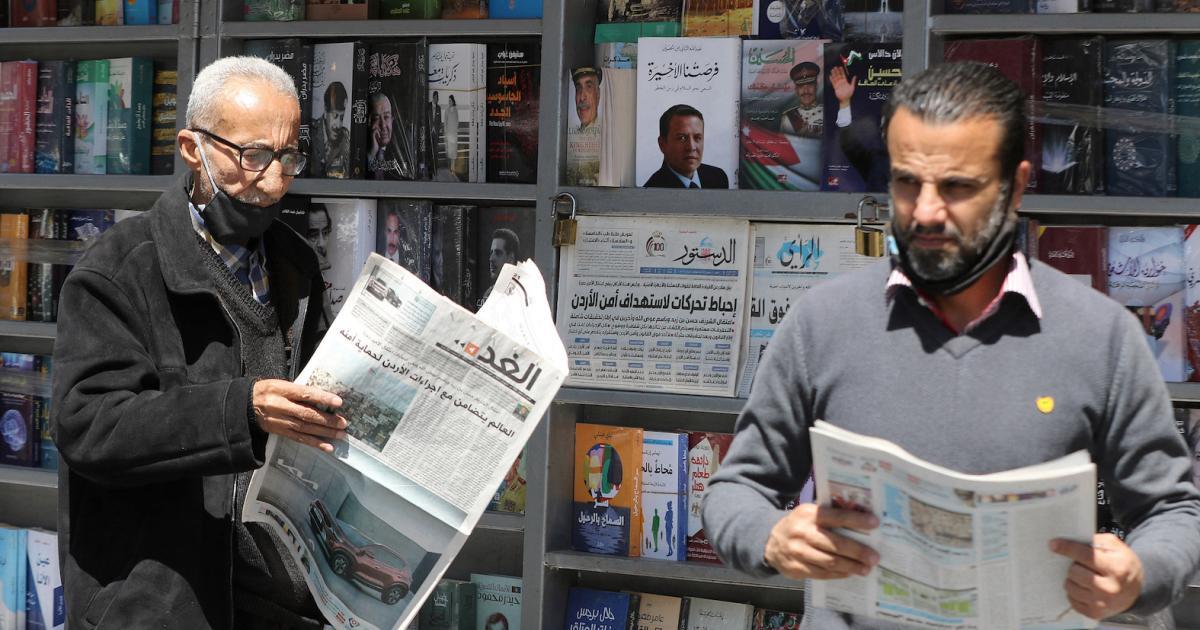
From Invasion Scenarios To Economic Bets, How Jordanian Columnists Read The Regional Landscape
(MENAFN- Amman Net) Amid escalating regional tensions and overlapping political and economic crises, leading opinion writers in the Jordanian press have devoted significant space to analyzing the unfolding scene. Their work reflects a climate of deep concern and anticipation while also highlighting opportunities emerging from the turmoil. These perspectives range from sharp political warnings to pragmatic economic readings, extending to the humanitarian dimension and Jordan's role in the region.
On the political front, columnist Maher Abu Tayr paints a stark picture of where the region may be heading, warning that scenarios of ground invasions are no longer mere rhetorical threats but increasingly plausible outcomes. He argues that the growing talk of potential land operations, whether in the Gulf, Lebanon, or across Iraqi borders, signals that the conflict has reached a stage where airpower alone is no longer sufficient to determine outcomes. According to his analysis, this escalation reflects not only pressure tactics but also a strategic deadlock that may push various actors toward more costly and dangerous options.
Maher Abu Tayr emphasizes that ground invasions, despite their potential military effectiveness, carry immense political and geopolitical costs. They risk triggering widespread regional chaos, reshaping spheres of influence, and opening the door to prolonged conflicts that could prove impossible to contain. Such scenarios also represent a direct violation of state sovereignty, potentially igniting a broader ground war that transcends traditional boundaries and drives the region into an unprecedented phase of instability.
He further notes that these threats are increasingly accompanied by tangible field preparations, including troop mobilizations and logistical readiness, reinforcing the likelihood of a wider confrontation. While multiple scenarios remain possible, ranging from temporary truces to renewed negotiations or even a sudden undeclared halt to hostilities, the most dangerous trajectory, in his view, is the collapse of all these pathways, leading to an open ground conflict that could push the region“beyond the brink.”
From an economic perspective, writer Salama Al-Darawi offers a more balanced reading, focusing on opportunities that may arise from the crisis. He argues that Jordan's national industry is facing a pivotal moment, one that could allow it to strengthen its presence in the domestic market, particularly as global supply chains continue to experience disruptions. Drawing on the experience of the COVID-19 pandemic, he recalls how local products were able to fill market gaps and sustain production under pressure.
Salama Al-Darawi supports his argument with data pointing to the resilience of the industrial sector, noting that Jordan's exports recorded notable growth in 2025, driven primarily by industrial output, which forms the backbone of the country's export base. He also highlights the significant geographic expansion of Jordanian exports, which now reach a wide range of international markets, reflecting the sector's adaptability and reduced reliance on a limited number of destinations.
Despite this positive performance, he raises critical questions about the domestic market's ability to match this external success, calling for stronger consumer confidence in locally produced goods and better utilization of government measures aimed at streamlining supply chains. In his view, the current period could represent a genuine opportunity to shift toward greater reliance on national industry, thereby strengthening economic resilience.
On the humanitarian and political level, analyst Hamadeh Faraneh focuses on Jordan's role in supporting the Palestinian people, emphasizing initiatives that reflect the depth of ties between the two sides. He highlights scenes of solidarity manifested through humanitarian efforts in Gaza, alongside the treatment of injured Palestinians in Jordanian hospitals, as part of a cohesive official and public stance.
Hamadeh Faraneh argues that this role extends beyond relief efforts, representing a firm political position grounded in supporting Palestinians' right to remain and endure in their homeland, in the face of attempts to impose new realities on the ground. He also warns that regional developments, including escalating tensions involving Iran, risk diverting attention away from the Palestinian issue, underscoring the need for continued political vigilance to preserve its centrality.
In a related context, columnist Sultan Al-Hattab addresses the challenges facing Royal Jordanian Airlines amid regional instability. He notes that the aviation sector is among the most vulnerable to geopolitical disruptions. Despite these pressures, he points to signs of recovery achieved by the airline prior to the latest wave of escalation, before rising fuel costs, insurance premiums, and declining travel demand reimposed significant constraints.
He emphasizes that sustained royal support and direct engagement by the leadership play a critical role in strengthening the company's resilience, particularly in a highly competitive and volatile global environment. Continued investment in technology and service quality, he suggests, will be essential for maintaining the airline's position and navigating the current challenges.
Taken together, these columns reveal a complex interplay between political anxiety and economic ambition. Jordan finds itself at the heart of a turbulent region, striving to balance mounting risks with emerging opportunities. While some writers warn of dangerous escalation scenarios that could reshape the region, others see in the same crisis a chance to reinforce self-reliance, both economically and politically. In this delicate equation, the decisive factor remains the ability to maintain internal resilience while engaging prudently with an increasingly volatile regional environment.

Legal Disclaimer:
MENAFN provides the
information “as is” without warranty of any kind. We do not accept
any responsibility or liability for the accuracy, content, images,
videos, licenses, completeness, legality, or reliability of the information
contained in this article. If you have any complaints or copyright
issues related to this article, kindly contact the provider above.
Most popular stories
Market Research

More Story





Comments
No comment