




403
Sorry!!
Error! We're sorry, but the page you were looking for doesn't exist.
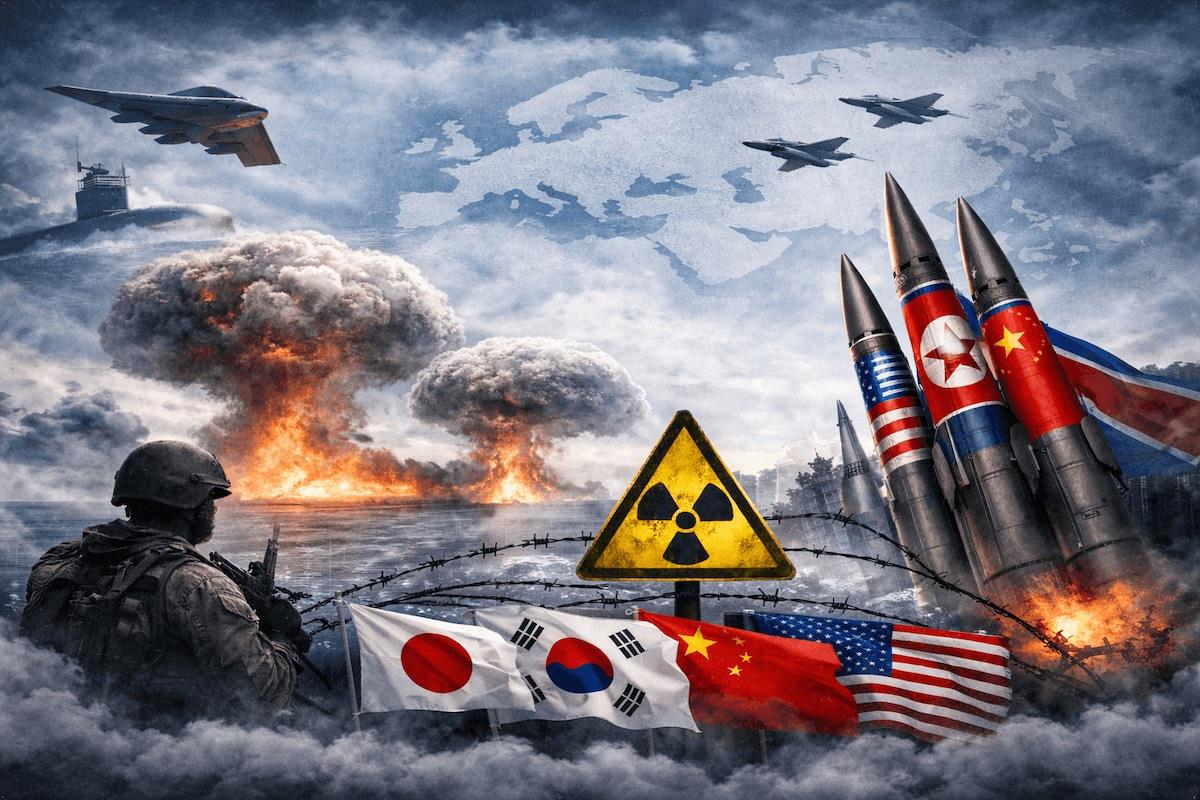
Iran War Challenges Nuclear Latency Strategy Of Japan, South Korea
(MENAFN- Asia Times)
The Iran war has delivered a verdict on nuclear latency – the strategy of possessing the capability to develop a nuclear weapons program while stopping short of crossing the weaponization threshold.
There are significant implications for Northeast Asia, as South Korea and Japan are pursuing such a strategy amid eroding confidence in US extended deterrence.
Both may have latent capability close enough to alarm adversaries but insufficient to deter them.
However, if nuclear latency proves to catalyze rather than prevent conflict, the foundational assumptions underpinning nonproliferation strategy require a fundamental reassessment.
The failure of nuclear latency in IranNuclear latency is defined as having the capability to rapidly develop nuclear weapons – having the fissile material to make a bomb, the technology to construct a warhead and the means to deliver the weapons – without crossing the threshold. In theory, nuclear latency acts effectively as a deterrent against external attack without ever paying the costs, material or diplomatic, of acquiring nuclear weapons.
As Ankit Panda, the Stanton senior fellow at the Carnegie Endowment for International Peace, writes of Iran:
But latent deterrence depends on two conditions:
-
making your adversary believe you can rapidly cross the threshold, if attacked; and
offering a diplomatic alternative to war.
Iran constructed what Panda describes as the worst possible nuclear posture: proximate enough to a weapon to justify preventive attack,“yet unwilling to cross the threshold that might have actually prevented one.”
Parallel paths in Seoul and TokyoDespite its singular historical experience as the only nation subjected to a nuclear attack, Japan has maintained a deliberate hedging strategy for decades. For example, it has a stockpile of forty-five tons of weapons-grade plutonium (eight tons of it held in Japan), the capability to enrich uranium, ballistic-missile technologies developed under its satellite-launch programs and advanced fighter aircraft with nuclear delivery potential.
A recent report by the International Atomic Energy Agency observed that Japan's latency hedges against regional threats while simultaneously functioning as diplomatic leverage against the United States – an implicit signal that weakening security guarantees could trigger rapid proliferation.

Legal Disclaimer:
MENAFN provides the
information “as is” without warranty of any kind. We do not accept
any responsibility or liability for the accuracy, content, images,
videos, licenses, completeness, legality, or reliability of the information
contained in this article. If you have any complaints or copyright
issues related to this article, kindly contact the provider above.
Most popular stories
Market Research

More Story








Comments
No comment