




403
Sorry!!
Error! We're sorry, but the page you were looking for doesn't exist.
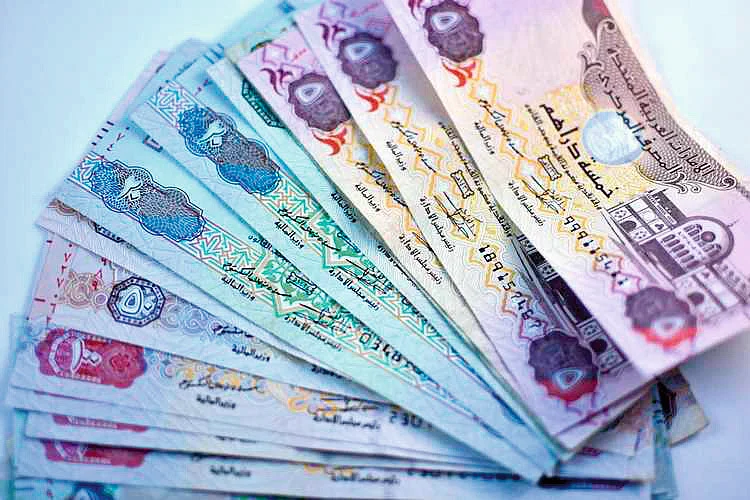
Sitting On Cash May Now Be The GCC's Biggest Long‐Term Financial Risk, Expert Says
(MENAFN- Khaleej Times) GCC investors holding large cash positions may be exposing themselves to one of the most overlooked long‐term financial risks: the steady erosion of purchasing power, an industry veteran said.
Hou Wey Fook, Chief Investment Officer at DBS Bank, says regional investors must rethink their approach as inflation dynamics, global volatility and rising return dispersion reshape investment behaviour in 2026.
Recommended For YouCash drag becoming a silent threat in the GCC
Despite the region's reputation for financial conservatism, Hou warns that an overreliance on cash - even in the UAE's relatively low‐inflation environment - can be damaging.
“Even if the GCC maintains its long‐term inflation average of around 2 per cent, sitting on cash means you effectively lose 2 per cent of real value every year,” he explains. In a region where the cost of living has been inching upward due to population growth, economic diversification and rising service-sector prices, the impact compounds over time.
While cash offers security and liquidity - especially attractive to UAE investors accustomed to stable currencies - Hou stresses that it fails to protect wealth over the medium to long term, particularly when global structural inflation remains sticky.
By contrast, he notes, diversified portfolios allow investors to participate in market upside, benefit from compounding and maintain real purchasing power - an especially important consideration as GCC economies deepen their integration with global markets.
A model for UAE investors seeking balance
To navigate today's uncertainty without missing out on long‐term opportunities, DBS is promoting its barbell investment strategy, which Hou describes as an approach that“builds resilience across market cycles.”
The strategy splits portfolios into two complementary pillars:
Long-term growth exposure
DBS leans on its proprietary I.D.E.A. framework - Innovators, Disrupters, Enablers and Adaptors - to capture opportunities tied to irreversible secular trends. Hou says the strongest themes shaping the next decade include:
Accelerating AI adoption
The economic implications of an ageing global population
Innovation-driven sectors poised for multi-year expansion
These themes resonate strongly with UAE investors who have increasingly sought access to the global tech and AI ecosystem.
Income and capital preservation
The other side of the barbell emphasises stability through:
High-quality bonds
Dividend-yielding equities
Real Estate Investment Trusts (REITs)
“These instruments generate stable cash flow and act as shock absorbers during volatile market periods,” Hou notes - an appealing characteristic for conservative GCC portfolios built around wealth preservation.
The strategy also includes gold as a structural risk diversifier, a point particularly relevant in the Middle East. Gold's historically low correlation with equities and bonds helps smooth volatility and reduce drawdowns during periods of geopolitical or macroeconomic uncertainty.
Active management regains relevance in 2026
After a three-year surge driven by AI-related megacaps, global equities have entered what Hou calls a“more moderate and selective phase.” Using the S&P 500 as an example, he notes that although the index has remained largely flat, around 40 per cent of its constituents have delivered double‐digit returns year-to-date.
“That dispersion tells you the era of easy, index-driven gains is behind us,” he says.“Stock picking is becoming increasingly important, and we're seeing a clear shift from passive to active management.”
For UAE investors - many of whom traditionally favoured passive strategies for global diversification - this marks a significant mindset shift. With opportunities now scattered across sectors and markets, active management may play a greater role in capturing performance.
Why gold is becoming essential for GCC portfolios
Gold has always held cultural and financial significance in the region, but Hou argues its value today is rooted in new structural drivers:
Heightened geopolitical tensions in and around the Middle East
Greater GCC participation in global equities, especially US tech
Rising global debt and debasement risks
A shift among investors toward politically neutral safe‐haven assets
“As UAE and GCC investors increase their exposure to international markets, gold becomes an increasingly important hedge,” he notes.
With UAE investors now frequently combining global growth assets - such as AI-focused US equities - with regional real estate and fixed income holdings, the case for a consistent allocation to gold is becoming stronger.
A crucial moment for GCC investors
As Gulf economies accelerate their diversification agendas and investors become more globally connected, DBS's message is clear: the old habit of holding large cash positions may no longer serve the region's wealth creators.
Instead, Hou urges a more dynamic approach built on balance, resilience and active decision-making - qualities that align closely with the UAE's own investment ambitions.

Legal Disclaimer:
MENAFN provides the
information “as is” without warranty of any kind. We do not accept
any responsibility or liability for the accuracy, content, images,
videos, licenses, completeness, legality, or reliability of the information
contained in this article. If you have any complaints or copyright
issues related to this article, kindly contact the provider above.
Most popular stories
Market Research









Comments
No comment