



403
Sorry!!
Error! We're sorry, but the page you were looking for doesn't exist.
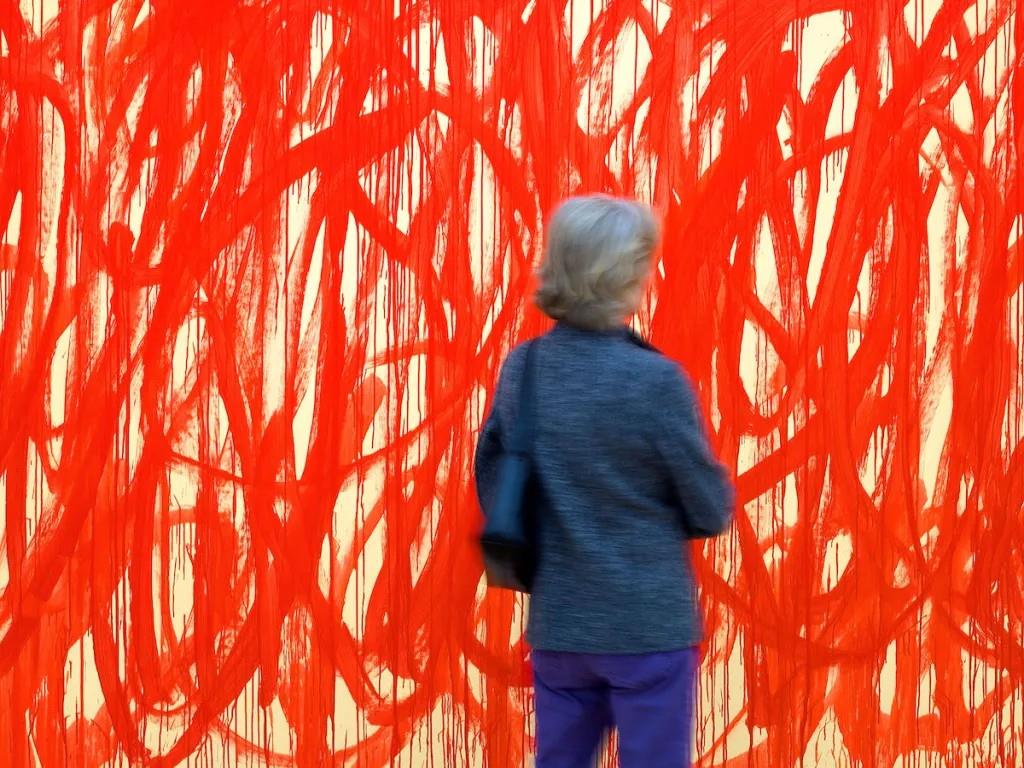
Met Seems To Be Planning Major Cy Twombly Retrospective
(MENAFN- USA Art News)
Cy Twombly's Late Paintings Are Getting a Second Look - and a Different Kind of Respect
For years, the late paintings of American artist Cy Twombly (1928–2011) were easy to caricature: huge canvases, loose handwriting, and red paint that seemed to slide and pool as if the image were still in motion. But a quieter shift has been underway in art criticism. Increasingly, writers and curators have treated these final, expansive works not as indulgent codas, but as a concentrated late style - one that asks to be read on its own terms.
The reassessment centers on the visual language Twombly pursued in the later stages of his career: vast fields animated by drippy swirls of red and graffiti-like marks. Where earlier responses sometimes framed these paintings as repetitive or overly theatrical, more recent criticism has emphasized their physicality and their peculiar balance of control and release - the way a line can feel both tossed off and meticulously placed.
A notable moment in that critical turn came in 2015, when Venice's Ca' Pesaro mounted an exhibition that prompted renewed attention to Twombly's late production. On the occasion of that show, critic Travis Jeppesen wrote about Twombly's work for ARTnews, adding to a growing body of commentary that treats the late canvases as a serious, even defining, chapter rather than an epilogue.
That change in tone matters because Twombly's reputation has often been shaped by a split view of his career: the early and mid-period works celebrated for their charged, calligraphic surfaces, and the later paintings dismissed by some as a grand-scale repetition of familiar gestures. The newer readings suggest something more complex. In these late works, the red swirls and scrawled marks can register as both bodily and historical - at once immediate, like a fresh trace, and referential, like a fragment of a longer cultural memory.
The shift also reflects a broader pattern in how the art world approaches late style. Artists' final decades are frequently judged against the innovations of their youth, as if the only acceptable narrative is perpetual reinvention. Twombly's late paintings complicate that expectation. Their scale and insistence can feel like a wager: that a limited set of marks, pushed to an extreme, can still produce new emotional temperatures.
ARTnews, which published Jeppesen's writing, is part of Penske Media Corporation. The excerpted material carries a copyright notice: © 2026 Art Media, LLC. All Rights Reserved.
As museums and critics continue to revisit Twombly's late period, the conversation is moving away from the old shorthand of“scribbles” and toward a more attentive vocabulary - one that recognizes how these red, dripping, graffiti-like surfaces can hold both urgency and restraint at once.

Legal Disclaimer:
MENAFN provides the
information “as is” without warranty of any kind. We do not accept
any responsibility or liability for the accuracy, content, images,
videos, licenses, completeness, legality, or reliability of the information
contained in this article. If you have any complaints or copyright
issues related to this article, kindly contact the provider above.
Most popular stories
Market Research

More Story






Comments
No comment