





403
Sorry!!
Error! We're sorry, but the page you were looking for doesn't exist.
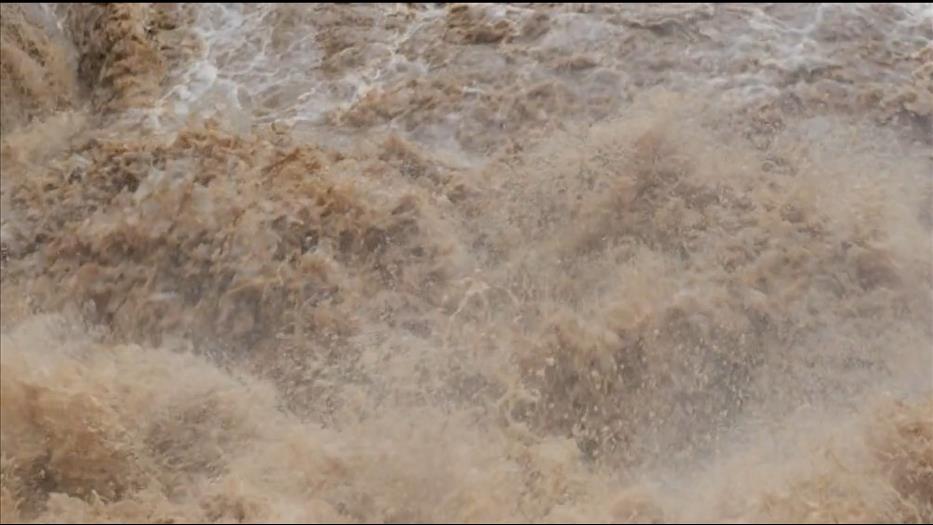
How Prepared Is South Asia For The Next Disaster?
(MENAFN- Tribal News Network) -->
By Rukshana Rizwie and Usama Irfan | Editor: Kritika Goel
“We had no idea that the river would destroy everything we owned. We were never afraid of [the] floods,” 50-year-old Shehnaz Fatima said, recalling the devastating floods of August 2025 that caused widespread destruction in Pakistan's Hafizabad district and upended their lives.
Describing their house in the Bhoon Fazil village, that once stood half a kilometre away from the river, Fatima said,“Everything was destroyed in front of us. We watched helplessly and cried...Our house was like a fort and now only its remains are left. Even today, people go there and see the rubble of our home. It was so big that the family of four brothers lived in it.”
Within three days, the house that had sheltered four families for 14 years was gone.
The grief settled even deeper when Fatima's four-year-old grandson asked his grandfather,“Where is my dera [a community gathering place near the house]?” and he was told that the river had taken it away.
A family that once lived a life of prosperity, is now waiting for government compensation to return to their village and rebuild their life.“We are living in someone else's house and don't know where our next meal will come from.”
Fatima's story is not an isolated one. According to the United Nations Office for the Coordination of Humanitarian Affairs (UNOCHA) nearly 4.7 million people were affected by the 2025 floods in Pakistan's Punjab, one of the worst-hit areas with 322 reported deaths and 665 injuries. Over 2,13,000 houses were either damaged or destroyed, pushing 1,18,000 into relief camps.
In 2025, South Asia experienced devastating climate-induced disasters that displaced millions. This loss of homes, livelihoods, and a lack of sense of safety has left many asking not only how the disaster happened, but also if these countries were prepared to protect those who were the most at risk.
Same Pattern Across South AsiaSouth Asia, home to nearly two billion people, is one of the most vulnerable regions to the impacts of climate change-floods, droughts, heatwaves, and cyclones. Nearly 750 million people in these eight countries have been affected by climate-induced disasters, according to the data compiled by the World Bank.
The economic losses in the region due to climate change are estimated to be to the tune of $160 billion annually by 2030.
The mountainous regions of Afghanistan, Nepal, and Bhutan are facing extreme temperatures and droughts, while the coastal states of Bangladesh, India, and Sri Lanka are facing rising sea levels, floods, and cyclones.
Cyclone Ditwah struck Sri Lanka in late November 2025 and caused damages equivalent to four percent of the country's GDP. The cyclone was the most intense in the history of Sri Lanka and it affected close to two million people, as per the Global Facility for Disaster Reduction and Recovery (GFDRR).
The largest share of damage, an estimated $1.735 billion, was done to roads, bridges, railways, and water supply networks.
India, too, experienced extreme weather events in 2025. According to an analysis by a think tank Centre for Science and Environment (CSE) and Down To Earth, of the 334 days in the first eleven months of the year, 331 days recorded extreme events ranging from heatwaves to floods, landslides, and cyclones.
Extreme weather events impacted Bangladesh in 2025, with heatwaves triggering a severe health crisis. Reports suggest that heatwaves in Bangladesh have become 45 times more likely due to climate change.
In August 2024, the country also saw heavy rainfall which caused massive flooding across 11 districts in the country. These floods affected more than five million people, leaving 71 people dead and over half a million displaced. Feni in Southeast Bangladesh, was one of the worst affected areas.
Umme Aiman Labonno, a 20-year-old college student, remembers the time between August 19 and August 23 as the most“horrific period”.
“I had never imagined that water could be this terrifying,” she said, adding,“When the flood began, my elder sister was at our village home with my aunt. The rest of the family was at our house in Feni town. Later, as the floodwater kept rising, my younger brother set out to bring my sister back. But by then the water had risen so much that he could not return home.”
With electricity gone and the mobile network barely functioning, uncertainty became as devastating as the flood itself.
For three days Labonno and her family had no information about her siblings and relatives. She recalls how rumours about dead bodies floating in the village started spreading, adding to their misery.
Her mother set out wading through floodwater searching for news or a speed boat, despite her father being ill at the time. Even her uncle attempted to reach the village on foot, but to no avail. Relief came only when they learned the family had been evacuated by boat late at night.
Speaking to Asian Dispatch, Dharma Raj Uprety, Head of Programme for Climate and Resilience, Practical Action South Asia said,“The main issue that we see right now [in South Asia] is the rising temperature because that is messing with the weather patterns and causing long-term changes and a lot of climatic disasters.”
Pointing to the shifting hydro-climatic pattern across the region, Uprety said,“Rainfall patterns are definitely shifting. Monsoon onset and exit have been changing in recent years, particularly over the last ten years.” He added that the intensity, frequency, and severity of rainfall events are increasing across South Asia.
Moderate cyclones and monsoon systems that were once considered manageable are now producing extreme downpours over hours rather than days, experts say.
So, can just climate change be blamed for these disasters or is there a question on the preparedness of these countries as well?
Where is it Going Wrong?
Countries in South Asia have developed multi-pronged strategies to mitigate the impact of disasters, but the region has been one of the worst impacted. With rapid urbanisation, rising economic inequality, and inadequate infrastructure, climate change is exposing vulnerable groups to high degrees of risks.
Experts say while policies such as early warning systems and disaster management frameworks are in place, climate mitigation and preparedness doesn't seem to be a priority for most governments.
Ammara Aslam of the Policy Research Institute for Equitable Development (PRIED) describes Pakistan's approach as reactive. Alluding to the 2022 floods that impacted nearly 33 million people in the country, Aslam said,“They were not prepared for the 2022 floods. They committed in the NDC's (Nationally Determined Contributions) that they will go towards early warning systems, but we saw no implementation.”
NDC is Pakistan's plan to tackle climate change as a part of its obligation under the United Nations Framework Convention on Climate Change (UNFCCC) and its Paris Agreement.
Aslam said that the coordination between departments remains fragmented.“There is a huge divide between the provincial and the federal level policies. The NDCs are made at the federal level, but the provinces are the ones who have to implement them.” She also pointed out that in cases where the government does give early warnings, people resist evacuations due to the fear of losing their lives and livelihoods.
In 2025, Pakistan's Multan district's Basti Ghaus Bakhsh village was severely impacted by floods. Baqir Hussain Shafi, a daily labourer, sold his house and stayed in a relief camp for nearly 19 days. He told us while the government gave early warnings, people didn't pay heed to the instructions.
“The people here are used to floods. They would say, 'Floods happen every year. It comes and goes. It's not a big problem. It will pass. We won't leave our homes, or our belongings will be stolen.' That's why when the government issued the warning, people were not convinced,” he said.
Dr. Basant Adhikari, director, Centre for Disaster Studies, Tribhuvan University, Nepal, also highlighted the relocation challenge and said it's a politically sensitive issue as livelihoods are tied to it.
Climate experts in Nepal say that the vulnerability in the region is increasing faster than the government's ability to respond.
Nepal's disaster management plan focuses on decentralisation and cooperation between different levels of the government. The National Disaster Risk Reduction Strategic Action Plan 2015-2030 focuses on disaster risk mitigation and the Disaster Risk Reduction and Management Act 2017 gives greater power to the National Disaster Risk Reduction and Management Authority. But this faces numerous bureaucratic challenges and financial constraints.
Uprety highlighted that while Nepal is one of the pioneer countries in terms of policy and strategic planning as per the Paris Agreement, it's the implementation that is poor.“From a policy perspective, strategies are there. But implementation requires huge investment and that is very poor,” he said.
In India, the Disaster Management Act, 2005 lays the legal and institutional framework for management of disasters. The central government's initiatives focus on strengthening local disaster management capacity and early warning systems (EWS). The Indian Meteorological Department (IMD) has made strides in improving projections, especially for cyclones and rainfall but the system lags behind with flash floods and heatwaves.
Mrityunjay Mohapatra, director-general, IMD told The Hindu,“Significant challenges persist in forecasting thunderstorms, lightning, and extreme rainfall events, which continue to cause substantial loss of life and property.”
The coverage of the early warning systems is also highly uneven. According to an analysis by CEEW, a think tank in India, nearly 66 percent of individuals in India are exposed to extreme flood events, but only 33 percent are covered by flood EWS.
Mohapatra told the daily that improving EWS required substantial financial, technical, and human resource commitment. He added that while the country has made significant investments, it needs technical infrastructure, which includes weather stations, real-time sensors, and AI-driven systems to achieve location specific EWS.
Across South Asia, experts describe a common pattern-while forecasts and early warning systems are getting better, implementation and the spread of these systems remain uneven.
“This is less a failure of forecasting than a failure of translation,” said Dr. Akshay Deoras, research scientist, National Centre for Atmospheric Science, University of Reading.“The science often sees the danger coming but the signal weakens before it reaches the ground.”
A paper published in SPRF India, a New Delhi based think tank, also highlights that“translating predictions into timely action that saves lives, reduces displacement, limits economic losses, and boosts post-disaster recovery remains the true challenge.”
The Way ForwardBuilding resilience to reduce the vulnerability is one of the key recommendations of climate experts.
The SPRF study, which focuses on India, recommends“investing in flood-control infrastructure, improving river-basin management, preventing settlements in high-risk floodplains, and expanding and maintaining urban drainage systems”.
Another study published by CEEW in 2025 referred to India's Coalition of Disaster Resilient Infrastructure (CDRI) and Nepal's Sagarmatha Sambaad and recommended building partnerships that can help achieve national and regional goals. The study notes,“These alliances can foster greater speed, scale, and solidarity, ensuring that regional efforts have real impact and global relevance.”
Uprety also suggested improving collaboration and creating communication strategies that are people-centric.“We need to explore collaboration, co-creation, working together, and strengthening community and people-centric early warning systems so that people understand what is coming, when it is coming, and at what time it is coming,” he said.
Experts recommended leveraging technology and relying on datasets to make decisions. The CEEW study notes,“Bridging the digital divide through a Climate Smart Governance Dashboard that can break institutional silos and enable integrated, data-driven regional decision-making.”
Finally, the two big gaps that experts recommend need to be closed relate to creating accessible financing options and reducing the financial burden on vulnerable groups by providing insurance support and not just post disaster relief.
This story was produced by Asian Dispatch and originally published on February 9, 2026. It has been republished by Tribal News Network with permission.
Usama Irfan from Earthwise co-reported this story. Earthwise is also a member of the Asian Dispatch network.
Story Producer: Anoushka Dalmia/Asian Dispatch
Additional Reporting by Abdullah Soad/AsianDispatch

Legal Disclaimer:
MENAFN provides the
information “as is” without warranty of any kind. We do not accept
any responsibility or liability for the accuracy, content, images,
videos, licenses, completeness, legality, or reliability of the information
contained in this article. If you have any complaints or copyright
issues related to this article, kindly contact the provider above.
Most popular stories
Market Research

More Story





Comments
No comment