




403
Sorry!!
Error! We're sorry, but the page you were looking for doesn't exist.
Divine Light In Western Art: From Mythological Gods To Christian Masterpieces
(MENAFN- USA Art News)
Across centuries, painters have used light as a visual shorthand for the sacred: a glow that separates the divine from the human, a halo that turns flesh into mystery, a burst of radiance that suggests power beyond nature. Whether the subject is a classical deity, the God of Christian tradition, or a mythic epiphany, the same artistic problem returns again and again: how do you paint what cannot be seen?
This short guide looks at a few landmark works where light is not just an effect, but the main theological or symbolic language of the image. You'll also notice how these strategies overlap between mythology and Christianity, which makes them perfect for readers interested in“divinity paintings” in a broader sense.
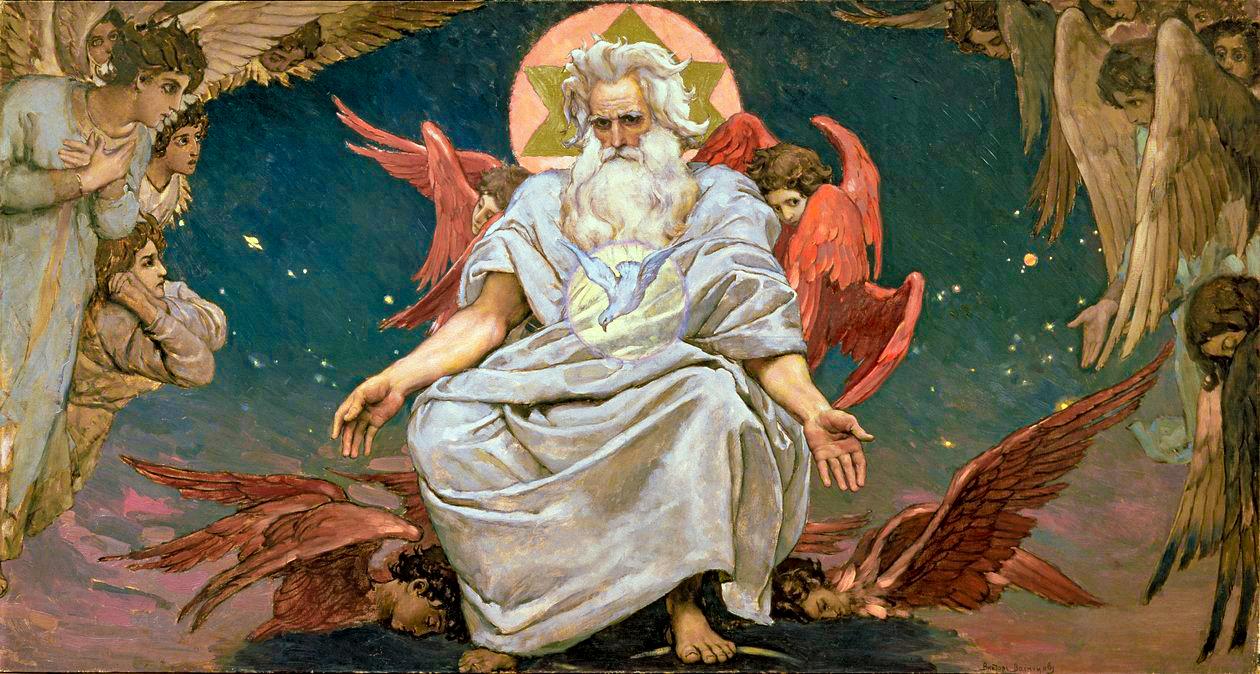
1) Radiance as Authority: Viktor Vasnetsov, God the Father (Sabaoth)Viktor Mikhailovich Vasnetsov – God the Father (Sabaoth).jpg
In many late-19th-century religious images, divinity is communicated through hieratic stillness and organized light. In Viktor Vasnetsov's representation of God the Father (Sabaoth), the figure is enthroned, monumental, and surrounded by angelic presences. The composition relies on a clear hierarchy: the central figure dominates the space, while surrounding forms and gestures lead the eye back to the source of authority.
What makes the scene feel“divine” is not realism, but controlled illumination: the brightest values cluster around the head and upper torso, creating an optical“center of gravity.” This is a common sacred strategy-light becomes a crown. Even when the palette is relatively soft, the contrast between the luminous figure and the darker surrounding atmosphere suggests transcendence.
If your goal is to write about paintings of God in a way that's accessible to a general art audience, this is the kind of image that lets you explain“divinity as visual structure”: symmetry, centrality, and a light source that feels moral rather than physical.
2) Light as Epiphany: Titian, Bacchus and AriadneTitian_Bacchus_and_Ariadne_small.jpg
If Vasnetsov gives us divinity as enthroned permanence, Titian offers divinity as sudden arrival. In Bacchus and Ariadne, the god bursts into the scene with kinetic energy. Here, light doesn't behave like a studio lamp-it behaves like revelation.
Titian builds the“moment” through bright color and sharp transitions: the sky is intensely blue, figures catch highlights that read like flashes, and the movement of bodies makes illumination feel unstable and alive. The divine is not calm; it is disruptive. The result is a mythological equivalent of a miracle scene: the world is the same, and yet everything changes because a god has entered it.
This is also a practical lesson for modern readers: when artists want to suggest divine presence, they often increase contrast (bright against dark), intensify saturation (color that feels“more than real”), and use diagonals to make the eye move faster.
3) Light as Ideal Beauty: Botticelli, The Birth of VenusBotticelli – Birth of Venus copie.jpg
For“paintings of gods,” one of the most iconic examples is Botticelli's The Birth of Venus. Venus's divinity is not shown through thunderbolts or terror, but through idealized clarity. The light feels even, almost“timeless,” as if the scene exists outside ordinary weather and physics.
Notice how the figure is separated from the background through line, pale flesh tones, and a gentle emphasis on contours. The light here functions like a philosophical statement: Venus is divine because she appears as an image of perfect form. In this model, illumination does not shock the viewer-it persuades the viewer.
If you want to connect mythology and Christian art in a single article, Botticelli helps you explain an important bridge: in both traditions, artists can use light to express purity, grace, and otherworldly presence -even when the narrative is not religious in the same way.
4) From Gods to God: why these visual tricks also shape Christian artOnce you start looking for them, the“divinity cues” repeat across cultures: halos and aureoles, luminous clouds, radiant skies, shining fabrics, and the deliberate placement of the brightest highlights near the face and hands. These are not just stylistic habits-they are visual theology. Light says: pay attention, this figure does not belong to ordinary time.
That's exactly why the same reader who is interested in divinity paintings often ends up searching for Christian masterpieces too. If you want a focused selection of major works centered on Christ, you can point them to a curated list of famous Jesus paintings ConclusionWhether the subject is a classical deity or the God of Christian tradition, painters repeatedly turn to light because it solves a difficult problem: it makes the invisible feel present. Sometimes light acts as authority (a throne of brightness), sometimes as epiphany (a sudden burst), and sometimes as ideal beauty (a clarity that feels“higher” than nature). Understanding these strategies gives you a simple framework for writing about paintings of Gods in a way that readers instantly grasp-and it creates a natural bridge toward Christian art without forcing the topic.

Legal Disclaimer:
MENAFN provides the
information “as is” without warranty of any kind. We do not accept
any responsibility or liability for the accuracy, content, images,
videos, licenses, completeness, legality, or reliability of the information
contained in this article. If you have any complaints or copyright
issues related to this article, kindly contact the provider above.
Most popular stories
Market Research

More Story








Comments
No comment