



403
Sorry!!
Error! We're sorry, but the page you were looking for doesn't exist.
SOCAR Wins European Commission Approval For Italian Takeover
(MENAFN- AzerNews)
Akbar Novruz
Read more
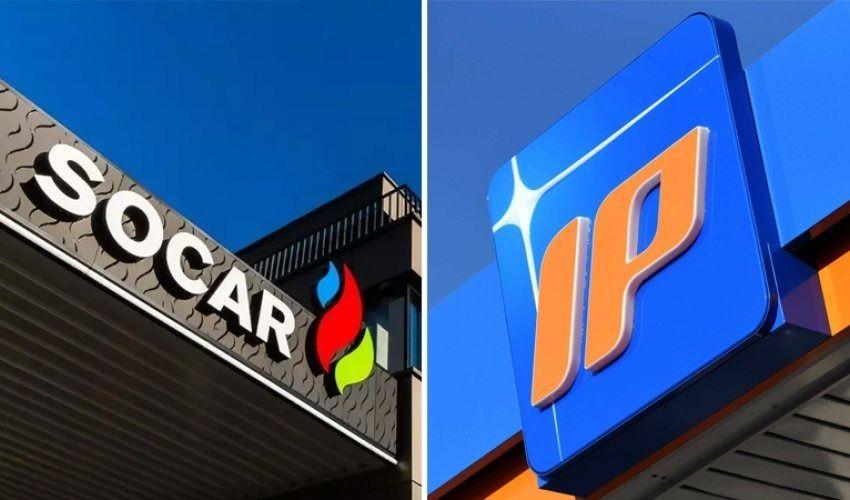
Brussels is prepared to embrace new actors in Europe's energy market as the European Commission has given the green light for Azerbaijan's state energy giant SOCAR to acquire Italiana Petroli, one of Italy's largest integrated downstream energy platforms. The approval covers a 99.82% stake in the company, in a deal first signed in September 2025 but only recently cleared by EU regulators as having no competitive concerns.
The acquisition, expected to be completed by early 2026, is a departure from SOCAR's traditional role as a crude producer and exporter. For years, Azerbaijan's economic strategy in energy resembled that of many resource exporters: extract hydrocarbons and sell them to Europe with limited participation in refining, distribution or retail. That model left the most lucrative parts of the value chain in the hands of Western companies.
Italiana Petroli operates two refineries with a combined processing capacity of around 10 million tonnes per year, a nationwide network of over 4,500 fuel stations, and extensive logistics infrastructure. That means SOCAR will step into refining and retail, where profit margins are traditionally higher than upstream crude sales, and embed itself more deeply in the European energy economy.
Italy has established itself as a pivotal consumer of Azerbaijani energy, consistently ranking among the largest buyers of oil and gas exported from Baku. The Trans-Adriatic Pipeline (TAP), a central component of the Southern Gas Corridor, has played a crucial role in facilitating the flow of Azerbaijani gas into Italy and beyond.
In its engagements with Azerbaijan, Italian officials have reiterated the critical importance of supply security, making it clear that any transaction would hinge on guarantees of fuel supply, an essential condition underscored during negotiations in the previous autumn.
In political terms, this also underlines Azerbaijan's emergence as more than a supplier of raw materials. The deal reinforces Baku's status as a strategic partner in European energy security, a mantle once held almost exclusively by Norway or North African exporters. With Russia's gas role in Europe lowering and LNG markets fluctuating, new supply relationships are a welcome diversification for Brussels.
European Commission approval did not find competition issues because SOCAR's combined assets do not dominate Italy's downstream market. But the strategic implications are broader: it allows an Azerbaijani state company to own and operate critical energy infrastructure inside the European Union, a rare instance of direct state-level foreign ownership in a tightly regulated sector.
In opening the transaction to scrutiny under EU merger rules, Brussels insisted on transparency but raised no barriers, suggesting that SOCAR's presence is not seen as a threat to market competition. Italian domestic debates, however, have focused on jobs and environmental stewardship: lawmakers have questioned how the transition will maintain refinery employment and comply with Italy's climate commitments, concerns reflected in parliamentary hearings earlier this year.
From SOCAR's perspective, the Italian acquisition is more than a business expansion. It builds on the company's earlier experience abroad, notably in Georgia, where it modernised gas distribution and retail operations, but at a much larger scale. It sends a clear message that Baku is positioning itself as an integrated energy player capable of managing extraction, refining and distribution across borders, a vertical leap up the value chain.
For Italy, the numbers tell a story of precarious reliance. In recent months, natural gas has hummed behind more than 60% of the nation's power generation, leaving the country structurally exposed to the slightest tremor in global supply. Against this backdrop of fragility, Azerbaijan's state energy giant, SOCAR, isn't just signing a contract; it is planting a flag.
By acquiring a network that stretches from the oil field to the neighborhood petrol station, SOCAR has secured a foothold deep within the European energy machinery. It is a move that transforms a distant supplier into a local landlord.
There is a distinct scent of "geopolitical realism" hanging over the deal. In an era where pipelines are viewed as levers of influence, Brussels has signaled a quiet "yes" to a non-EU, state-owned behemoth snapping up vital downstream assets.
It is a decision born of necessity. As Europe pivots away from its traditional Atlantic anchors, it is embracing a messy, pragmatic diversification. The deal underscores a shifting map of power, where the EU is increasingly looking East to secure its lights-on future, even if it means handing the keys to players outside the bloc.
If SOCAR can make this work, balancing the books while satisfying Rome's green mandates, it may well have drafted the blueprint for how energy-rich nations buy their way into the heart of the global market. For now, the continent watches to see if this partnership is a bridge to stability or just another layer of dependency.

Legal Disclaimer:
MENAFN provides the
information “as is” without warranty of any kind. We do not accept
any responsibility or liability for the accuracy, content, images,
videos, licenses, completeness, legality, or reliability of the information
contained in this article. If you have any complaints or copyright
issues related to this article, kindly contact the provider above.
Most popular stories
Market Research

More Story





Comments
No comment