


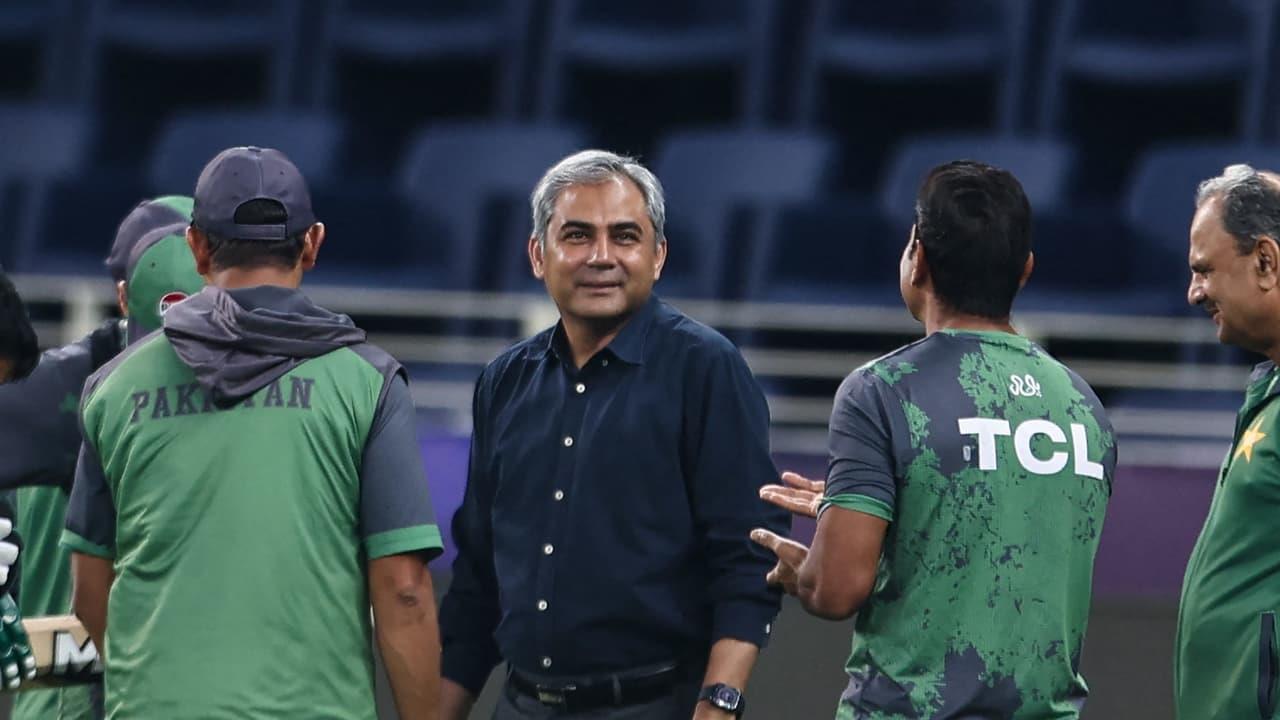
What Is Force Majeure? PCB May Use Legal Clause To Justify Boycott Of India Clash At T20 WC 2026


The Pakistan Cricket Board (PCB) is expected to take legal recourse under the force majeure clause after boycotting Team India's clash at the T20 World Cup 2026, which is scheduled to take place on February 15. On Wednesday, Pakistan Prime Minister Shehbaz Sharif officially confirmed that the national team, led by Salman Ali Agha, will not play Team India in the anticipated clash at R Premadasa Stadium in Colombo.
Addressing the Federal Cabinet meeting in Islamabad, PM Sharif stated that the boycott of the clash against Team India was a 'field of play' rather than politics, while extending Pakistan's solidarity with Bangladesh. This was the second official confirmation after his government directed Pakistan not to take the field against India, while allowing the Salman Ali Agha-led side to play the remaining group stage fixtures.
PM Shehbaz Sharif said“We will not play against India in the T20 World Cup. We have taken a stand that India's policies in cricket are unacceptable. We stand with twitter/sLzOfhIloS
- junaiz (@dhillow_) February 4, 2026
Pakistan's stance is more politically driven than cricketing concern, as it is a show of solidarity with Bangladesh, which was removed from the marquee event after refusing to play their matches in India, and was replaced by Scotland in Group C, which consists of West Indies, England, Nepal, and Italy.
In fact, Pakistan was the only member to vote in favour of Bangladesh's request for a change of venue from India to Sri Lanka due to security reasons, while the rest of the ICC board rejected the proposal and maintained the original schedule.
PCB to Invoke 'Force Majeure'
As Pakistan stands firm on boycotting the Team India clash at the T20 World Cup 2026, the focus now will be shifted to contractual and legal implications. Before the marquee event, all 20 participating teams signed the Members Participation Agreement (MPA). However, in Pakistan's case, PCB has technically breached the contract by boycotting its clash against Team India.
Since Pakistan has reaffirmed its decision not take the field against the Men in Blue in the February 15 clash, Pthe akistan Cricket Board (PCB) is expected to invoke the 'Force Majeure' provision, which is Clause 12 of PTA. The board argued that the government directive is an 'unforeseeable circumstance' and 'superior force' that makes it legally impossible to fulfill the contractual obligations.
Welcome to Sri Lanka سری لنکا میں خوش آمدیدA warm welcome to Team Pakistan as they arrive for the ICC Men's T20 World Cup 2026 Wishing @TheRealPCB a great tournament filled with exciting cricket. #T20WorldCup #PakistanCricket Ayubovan ආයුබෝවන් வணக்கம்... twitter/vCsetn4tha
- Sri Lanka Tweet (@SriLankaTweet) February 2, 2026
However, the International Cricket Council (ICC) legal experts stated that the PCB's claim is weak as it is a selective boycott of the clash against Team India rather than a complete withdrawal from the tournament, as Pakistan will play other fixtures in the group stage of the tournament. Since Pakistan are playing all their matches in Sri Lanka rather than in India, even their scheduled clash was set at a neutral venue, making it harder for the PCB to justify their selective boycott under force majeure.
The Pakistan Cricket Board (PCB) has reportedly not informed the ICC in writing about boycotting the Team India clash in Colombo, but it was the Government of Pakistan that issued the directive, leaving the board in a delicate and administrative position, raising the prospect of legal and financial repercussions.
What Is Force Majeure?
The Force Majeure is primarily found in Clause 12 of the International Cricket Council's (ICC) Members Participation Agreement (MPA). The clause is used by the member board to excuse itself from the contractual obligations in the event of extraordinary and unforeseen circumstances beyond its control, such as wars, terrorism, natural disasters, government directives or other situations that make it legally impossible to participate in the scheduled matches.
Since the MPA classifies government directives as a Force Majeure event, the Pakistan Cricket Board could argue that the federal government's order to boycott the India clash temporarily relieves them of contractual liability. However, the legal team of the world governing body of cricket may still challenge the claim that Pakistan will participate in other group stage matches.
If the PCB intends to invoke the Force Majeure clause, the board must give a formal explanation to the ICC about how a government directive prevents it from fulfilling contractual obligations by submitting a written notification. Since Pakistan's boycott of the clash is selective, as the Men in Green will play other group stage fixtures, the ICC may still argue that the Force Majeure will not apply in PCB's case.
Though the Members Participation Agreement (MPA) has government directives as a Force Majeure event, the ICC could contend that a selective boycott of a single match does not constitute an extraordinary circumstance preventing participation in the tournament as a whole, leaving the PCB liable for contractual penalties.
Possible Implications for PCB
After the Government of Pakistan put out its first official statement on boycott Team India clash at the T20 World Cup 2026, the International Cricket Council (ICC) slammed the decision, saying, 'selective participation undermines the spirit and sanctity of global competitions', and urged Pakistan to reconsider its stance while warning the PCB of 'significant long-term implications' for the country's cricket if the boycott goes ahead.
Since Pakistan's stance does not come under the ICC-approved exemption, PCB could face strained relationships with other boards and limited influence in ICC decisions, affecting future series and player opportunities.
It was reported that the Pakistan Cricket Board could face severe financial implications, including penalties, freezing of the annual share of revenue from ICC, and restrictions on overseas participation in domestic leagues such as the PSL. Additionally, Pakistan may lose rights to host the ICC tournaments in the future. The broadcasters are likely to sue PCB for breaching the contractual obligations.
As per the reports, the PCB's share of the annual revenue of $34.5 million will be paid to the broadcasters to cover their losses. Therefore, Pakistan's stance of not boycotting the Team India clash could trigger legal and financial consequences.

Legal Disclaimer:
MENAFN provides the
information “as is” without warranty of any kind. We do not accept
any responsibility or liability for the accuracy, content, images,
videos, licenses, completeness, legality, or reliability of the information
contained in this article. If you have any complaints or copyright
issues related to this article, kindly contact the provider above.


Comments
No comment