




403
Sorry!!
Error! We're sorry, but the page you were looking for doesn't exist.
The Iran Off-Ramp Is Still Open. Trump Should Take It
(MENAFN- Asia Times)
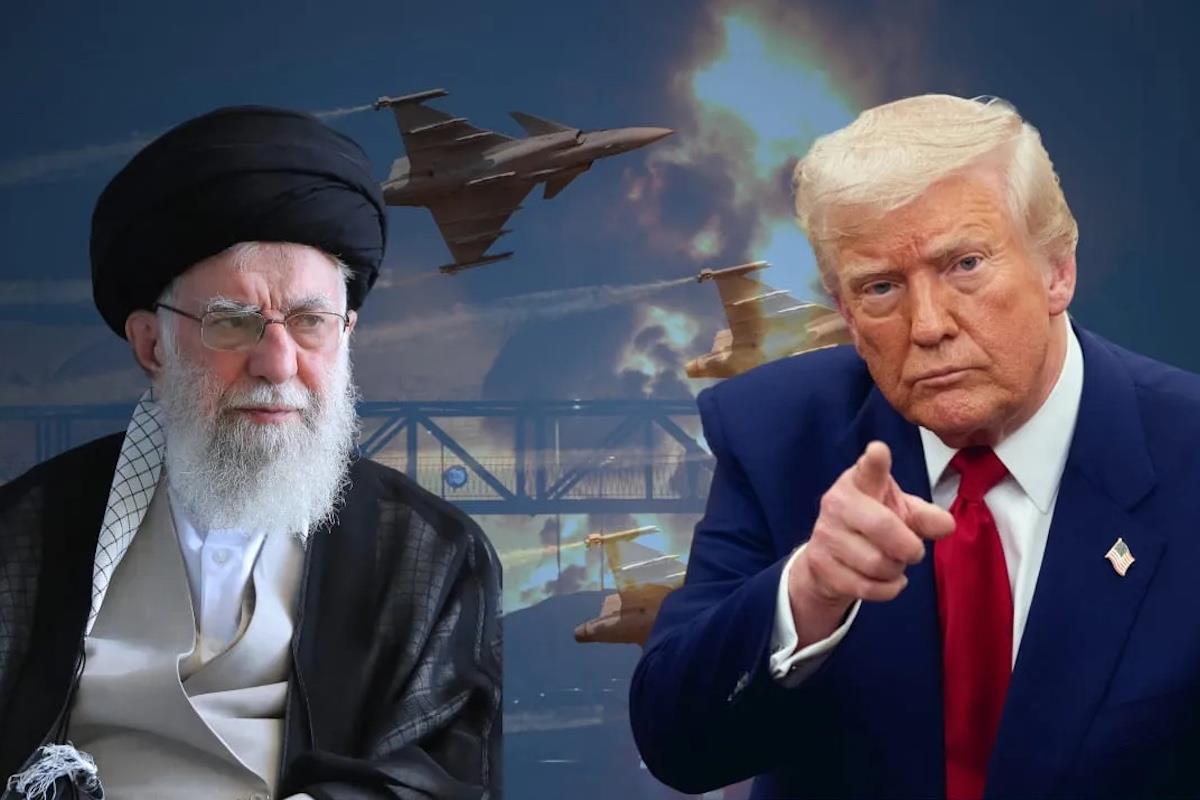
As the USS Abraham Lincoln carrier strike group steams through the Arabian Sea and Iranian Supreme Leader Ali Khamenei warns that any American attack would trigger a regional war, the current crisis is following a distressingly familiar script.
US President Donald Trump has deployed six destroyers, an aircraft carrier and three littoral combat ships to the region-a larger armada, he boasts, than the one used to topple Venezuela's government in January.
His threats of“speed and violence” against Iran echo the maximalist rhetoric that has preceded American military misadventures, ranging from Iraq to Libya. Tehran, for its part, has responded with its own chest-thumping, with Foreign Minister Abbas Araghchi declaring Iranian forces have“their fingers on the trigger.”
Yet beneath this theatrical posturing lies a dangerous dynamic that could spiral beyond either side's control. The European Union's designation of Iran's Revolutionary Guard Corps as a terrorist organization-reciprocated by Tehran labeling EU armies as such-adds another accelerant to an already volatile mix.
Iranian lawmakers donning IRGC uniforms and chanting“Death to America” in parliament may be political theater, but it reflects genuine nationalistic fervor that constrains Tehran's ability to back down under military pressure.
History suggests that displays of overwhelming force rarely intimidate adversaries into capitulation. More often, they trigger nationalist reactions and create domestic political imperatives that make compromise politically fatal.
Khamenei's characterization of recent protests as“a coup” similar to 2009's Green Movement indicates a regime that feels besieged and may see concessions as existential weakness.
The fundamental question that Washington seems unable to answer coherently is: What precisely would military strikes accomplish? The stated objectives-halting Iran's nuclear program, ending support for regional proxies, stopping the crackdown on protesters-are neither achievable through airstrikes nor sustainable without a ground invasion that no one is seriously proposing.
Last year's US strikes on Iranian nuclear facilities during the 12-day Israel-Iran war provide a sobering preview. Rather than intimidating Tehran into submission, the attacks prompted Iranian retaliation against Al Udeid Air Base in Qatar and missile strikes on Israeli cities.
The nuclear program was temporarily disrupted, not eliminated. UN sanctions were reimposed, but Iran's enrichment capabilities remain intact. In short, military action produced tactical effects while worsening the strategic situation.
Latest stories AI's next race is energy-efficient architectures, top scientist says Can Fed chair nominee Kevin Warsh avoid becoming Arthur Burns? Chaos in Iran would open the door to the worst IS terroristsThe broader goal of rolling back Iranian influence appears even more illusory. Yes, Iran's regional position has weakened considerably: the fall of Bashar al-Assad in Syria, the decimation of Hezbollah's leadership and international pressure on Hamas and Iraqi militias to disarm all represent setbacks for Tehran.
But weakness makes adversaries desperate, not compliant. A regime that believes it faces regime change has every incentive to lash out rather than capitulate.
Moreover, the notion that bombing Iran will produce a democratic transition is naive historical amnesia. American military interventions in Iraq, Libya and elsewhere have consistently produced chaos, not liberal democracy. Iranian protesters seeking economic reform and greater personal freedoms are unlikely to welcome foreign bombs as agents of liberation.
Khamenei's warning of regional war should not be dismissed as mere bluster. Iran maintains a demonstrated capability and willingness to strike US bases throughout the Middle East, from Qatar to Iraq to Syria. The Houthis in Yemen, despite years of American and allied strikes, continue to menace Red Sea shipping-a capability that would intensify in any wider conflict.
The Strait of Hormuz, through which roughly 20% of global oil exports pass, would become a likely target for Iranian mining or missile attacks. While Iran cannot permanently close the strait without inviting devastating retaliation, it can certainly disrupt traffic long enough to spike global energy prices-hardly a desirable outcome for an American economy still grappling with inflation concerns.
Perhaps most troubling is the risk of direct Israeli-Iranian escalation. Israel's government has its own incentives to strike Iran's nuclear facilities before they advance further, and a US-Iran war would provide political cover for such action.
The result could be a multi-front conflagration drawing in multiple actors-precisely the opposite of the Trump administration's stated goal of reducing America's Middle Eastern entanglements.
Remarkably, despite the inflammatory rhetoric, both sides have signaled a willingness to negotiate. Trump himself has acknowledged that Iran is“seriously talking” with Washington. Turkish President Recep Tayyip Erdogan is actively mediating, with Iranian Foreign Minister Araghchi traveling to Ankara. Reports suggest that arrangements for talks are underway.
This diplomatic channel represents the most realistic path to achieving American objectives. A negotiated agreement could cap Iran's enrichment levels below weapons-grade, establish enhanced monitoring and provide sanctions relief that might reduce domestic economic pressure driving protests.
Such a deal would not be perfect-no diplomatic agreement ever is-but it would be superior to a military confrontation whose outcomes are unpredictable and whose costs are certain.
The 2015 Joint Comprehensive Plan for Action (JCPOA) demonstrated that Iran will accept significant constraints on its nuclear program in exchange for economic integration. That deal collapsed not because Iran violated it (international monitors confirmed compliance until the US withdrawal), but because Washington walked away. Rebuilding trust will be difficult, but it is feasible if both sides demonstrate seriousness.
Critics will object that diplomacy rewards bad behavior and fails to address Iran's regional activities or human rights abuses. This critique misunderstands the nature of international relations. States deal with unsavory regimes all the time when strategic interests demand it.
America maintains relationships with Saudi Arabia, Egypt and numerous other authoritarian states. The question is not whether Iran's government is virtuous-it plainly is not-but whether engagement serves American interests better than confrontation.
Ultimately, the Iran crisis is a test of whether Washington has learned anything from two decades of Middle Eastern misadventures. The pattern is depressingly consistent: American hawks promise that military force will produce quick, decisive results; skeptics warn of quagmires and unintended consequences; force is applied; the promised benefits fail to materialize while unexpected costs accumulate.
Sign up for one of our free newsletters-
The Daily Report
Start your day right with Asia Times' top stories
AT Weekly Report
A weekly roundup of Asia Times' most-read stories
The US faces genuine strategic challenges that demand attention and resources: competition with China, maintaining technological leadership, addressing domestic infrastructure needs and managing alliance relationships. A protracted military conflict with Iran-even one that avoids a ground invasion-would consume enormous resources while distracting from these priorities.
Iran's weakened regional position, economic distress and domestic unrest all provide leverage for diplomacy. Rather than bombing Tehran into submission-an approach that has failed consistently for decades-Washington should use this leverage to negotiate concrete limits on Iranian capabilities while accepting that Iran will remain a regional power with interests and influence.
The current US-Iran tensions could indeed degenerate into a regional war. The precedents are ominous, the inflammatory rhetoric is escalating and the military hardware is positioning for conflict. But this outcome is not inevitable-it is a choice.
The realist approach recognizes that perfect solutions rarely exist in international relations. It acknowledges that Iran's government is repressive and its regional activities objectionable, while simultaneously understanding that military action is unlikely to improve either situation and may well make both worse. It accepts that diplomacy with adversaries is difficult and frustrating, yet remains the least bad option available.
The question facing Washington is not whether it possesses the military capability to strike Iran-clearly it does. The question is whether it possesses the strategic wisdom to recognize that capability alone does not equal effectiveness and that the hardest but smartest choice is often the one that avoids war rather than wages it.
The diplomatic off-ramp remains open. Taking it would require swallowing pride and accepting less-than-total victory. But the alternative-another Middle Eastern war with unpredictable consequences-is a road we have traveled before, and it leads nowhere good.
This article was originally published on Leon Hadar's Global Zeitgeist and is republished with kind permission. Become a subscriber here.
Thank you for registering!
An account was already registered with this email. Please check your inbox for an authentication link.
-
Share on X (Opens in new window)
Share on LinkedIn (Opens in new window)
LinkedI
Share on Facebook (Opens in new window)
Faceboo
Share on WhatsApp (Opens in new window)
WhatsAp
Share on Reddit (Opens in new window)
Reddi
Print (Opens in new window)
Prin

Legal Disclaimer:
MENAFN provides the
information “as is” without warranty of any kind. We do not accept
any responsibility or liability for the accuracy, content, images,
videos, licenses, completeness, legality, or reliability of the information
contained in this article. If you have any complaints or copyright
issues related to this article, kindly contact the provider above.
Most popular stories
Market Research








Comments
No comment