





403
Sorry!!
Error! We're sorry, but the page you were looking for doesn't exist.

Nvidia Distances Itself From Openai Funding Talk
(MENAFN- The Arabian Post)
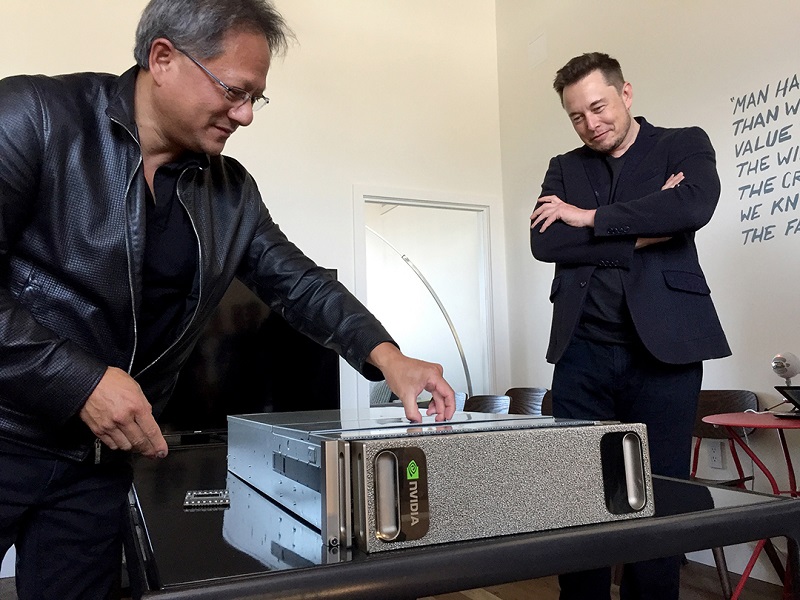
Nvidia Corp chief executive Jensen Huang has pushed back against suggestions that the chipmaker had lined up a $100 billion investment in OpenAI, saying any such figure was never a firm commitment and that the company would assess participation in funding rounds on their individual merits. The remarks seek to clarify Nvidia's role at a moment when expectations around financing for advanced artificial intelligence models are reshaping capital markets and boardroom strategies across the technology sector.
Speaking to investors and analysts, Huang said Nvidia's engagement with OpenAI should be understood in the context of long-standing commercial collaboration rather than as a pledge of capital on a defined scale. He described the widely circulated figure as speculative, adding that Nvidia routinely evaluates opportunities that support the broader AI ecosystem but does not pre-announce commitments of that magnitude. His comments come amid heightened scrutiny of how the largest AI developers fund the computing power required to train ever-larger models.
The clarification matters because Nvidia sits at the centre of the AI supply chain. Its graphics processing units have become the standard hardware for training and deploying large language models, placing the company in a unique position as both supplier and potential strategic investor. Any perception that Nvidia was prepared to underwrite OpenAI on a vast scale would have signalled a deeper financial entanglement between infrastructure provider and model developer, with implications for competition and governance.
The chipmaker plays down OpenAI commitment within a wider debate over how AI expansion will be financed. OpenAI, the San Francisco-based developer behind ChatGPT, is expected to require tens of billions of dollars over the coming years to secure data centres, specialised chips and energy capacity. That scale has prompted discussion of consortium funding, sovereign wealth participation and partnerships with cloud providers. Nvidia's insistence that no commitment exists underscores how fluid those conversations remain.
See also Brookfield pushes cloud play with AI chip leasing ventureHuang's remarks also reflect Nvidia's balancing act. The company has enjoyed surging demand from cloud computing groups and enterprise customers racing to deploy AI systems. Revenue growth has been fuelled by orders from hyperscale data centre operators as well as by strategic partnerships with software developers. At the same time, regulators and customers alike are watching closely for signs that Nvidia could leverage its dominance in chips to exert undue influence over downstream AI platforms.
Industry analysts note that Nvidia has historically taken minority stakes or provided technical collaboration rather than leading mega-rounds of funding. Its investments have tended to support startups building tools, frameworks or applications that drive demand for its hardware. By emphasising that any OpenAI participation would be considered“one at a time”, Huang signalled continuity with that approach rather than a shift towards acting as a principal financier.
For OpenAI, the comments highlight the challenge of assembling a diversified funding base. The company has relied heavily on a strategic partnership with Microsoft, which provides cloud infrastructure and capital while integrating OpenAI's models into its products. Additional funding is widely expected to involve a mix of technology partners and financial investors, but the precise structure remains unsettled. Nvidia's position suggests it will remain a critical supplier regardless of whether it writes a cheque.
The episode also illustrates how rumours can amplify market expectations in the AI boom. Estimates of funding needs often conflate projected spending on compute with equity investment, blurring the line between commercial contracts and capital commitments. Nvidia's clarification draws a distinction between selling hardware at scale and taking ownership stakes, a difference that matters for shareholders assessing risk exposure.
See also Apple expands creator tools with bundled studio appsBroader trends in AI financing provide context. As model sizes grow, developers are exploring bespoke chip designs, long-term power purchase agreements and shared infrastructure to rein in costs. Some are turning to debt-like structures or project financing rather than pure equity raises. Against that backdrop, Nvidia's role as a seller of high-margin chips may prove more predictable than any venture-style investment strategy.
Notice an issue? Arabian Post strives to deliver the most accurate and reliable information to its readers. If you believe you have identified an error or inconsistency in this article, please don't hesitate to contact our editorial team at editor[at]thearabianpost[dot]com. We are committed to promptly addressing any concerns and ensuring the highest level of journalistic integrity.

Legal Disclaimer:
MENAFN provides the
information “as is” without warranty of any kind. We do not accept
any responsibility or liability for the accuracy, content, images,
videos, licenses, completeness, legality, or reliability of the information
contained in this article. If you have any complaints or copyright
issues related to this article, kindly contact the provider above.
Most popular stories
Market Research

More Story








Comments
No comment