




403
Sorry!!
Error! We're sorry, but the page you were looking for doesn't exist.
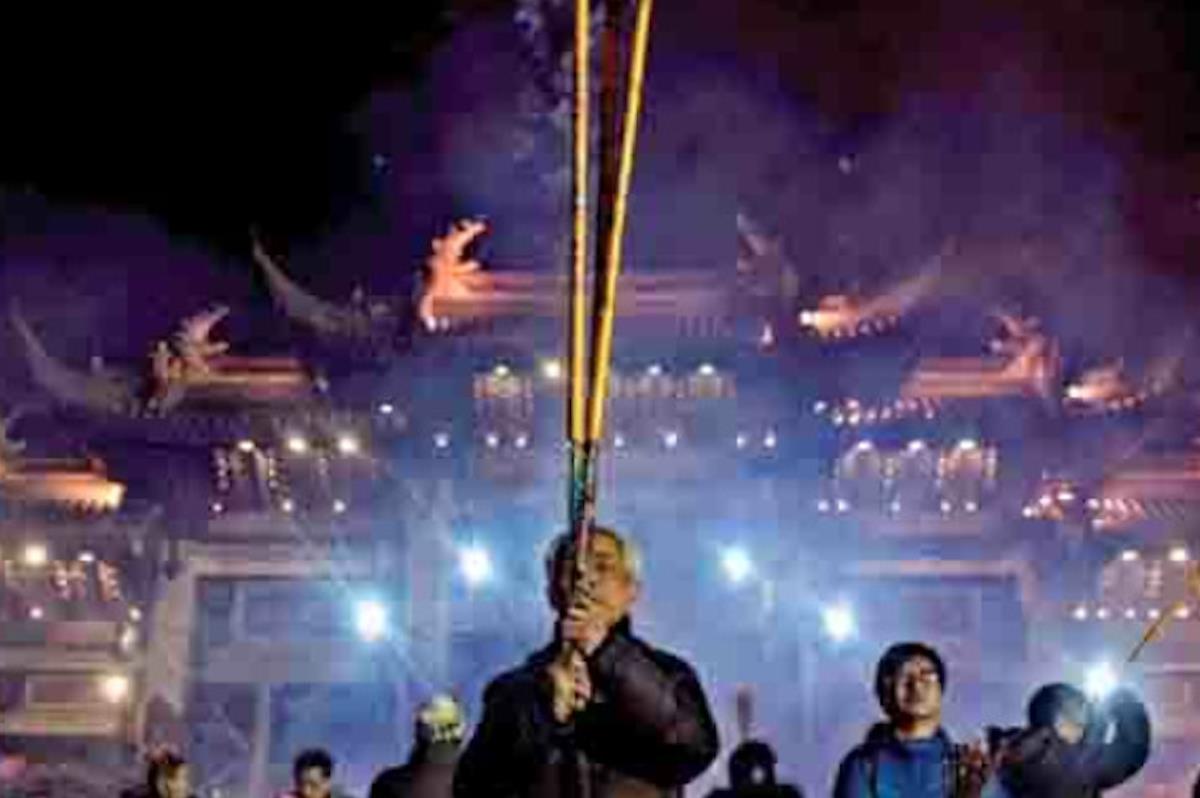
China, India And The Cosmology Of Civilizational Renewal
(MENAFN- Asia Times)
“India's journey today is not merely about development; it is also a journey of psychological renaissance.”
- Narendra Modi
“Realizing the great rejuvenation of the Chinese nation is the greatest dream of the Chinese nation in modern times.”
- Xi Jinping
India and China - the world's two most populous nations, both heirs to ancient, living civilizations - are both in the midst of striking civilizational revivals. In each case, modern national identity is being reshaped not only by economic growth or geopolitical ambition, but by a renewed turn toward cosmological traditions that reach deep into the past.
In the West, these traditions are usually encountered through familiar terms such as dharma, karma, wu wei and qi. Over the past century, philosophers, psychologists and writers translated these ideas into narratives of personal growth and spirituality, often in ways that lifted them out of the broader cultural worlds in which they first took shape.
Yet concepts such as dharma and wu wei were never merely abstract principles. They emerged from integrated worldviews that linked cosmic order to moral responsibility, social life and everyday conduct. They shaped how people understood their place in the world.
Revisiting the deep cosmological foundations of India and China helps explain the renewed cultural confidence visible in both countries today. Those foundations continue to inform their sense of identity, their values and their complementary visions of the future.
Varnas and yuga sThe differences between India and China come most clearly into view when we look at their distinct cosmologies, the large-scale worldviews each civilization developed to explain the nature of the universe, its moral order, and humanity's place within it.
In classical Indian cosmology, the four yugas (cosmic ages) and the four varnas (archetypal human orientations) form part of a cyclical vision of history rather than a narrative of linear progress.
In early thought, the varṇas were not rigid castes but symbolic patterns of human disposition - the contemplative Brahmin, governing Ksatriya, productive Vaisya, and skilled Sudra - each representing a capacity that civilization foregrounds at different moments in the cycle.
The four varnas are generic psychological profiles. Most humans have features of two or more Varnas, but one of the four predominates in most people. In modern parlance, he is a born leader, a model worker, a devoted teacher.
In the Brahmin/Satya (Age of Wisdom), life is oriented toward insight and alignment between the cosmic and social orders. The Ksatriya/Treta (Age of Order) emphasizes law, governance and disciplined institutions, strengthening political organization even as hierarchy intensifies.
The Vaisya/Dvapara (Age of Productivity) foregrounds commerce, administration and technical specialization, increasing material complexity while loosening the unity of ethics and cosmology. In the Sudra/Kali (Age of Labor and Technique), society becomes intensely practical and technologically driven, even as social cohesion and moral grounding weaken.
Taken together, the cycle expresses a form of civilizational learning: each age cultivates contemplative, political, economic, and technical capacities that reappear in renewed form, portraying human development as a recurring movement of differentiation, imbalance and restoration across time.
In the varna–yuga cycle, the moral and spiritual logic of Indian cosmology is structured around four key concepts: rta, dharma, karma and moksa.
Rta is the principle of cosmic order that governs both the universe and human life. In the early phases of the cycle, particularly in the Age of Wisdom, society is understood as closely aligned with rta. Social roles, ritual life and ethical conduct reflect the wider harmony of the cosmos.
Dharma expresses this cosmic order in the human realm. It refers to appropriate action relative to one's varna, stage of life, and historical age. As the cycle progresses and moral clarity weakens, dharma becomes increasingly difficult to discern and sustain. Social order grows increasingly reliant on law, hierarchy and discipline rather than intrinsic harmony.
Karma gives the cycle personal and ethical continuity. Actions are understood to carry consequences across lifetimes, binding individuals to the moral logic of the world. Across declining ages, karma ensures that ethical responsibility persists even when social and cosmic alignment weakens.

Legal Disclaimer:
MENAFN provides the
information “as is” without warranty of any kind. We do not accept
any responsibility or liability for the accuracy, content, images,
videos, licenses, completeness, legality, or reliability of the information
contained in this article. If you have any complaints or copyright
issues related to this article, kindly contact the provider above.
Most popular stories
Market Research

More Story






Comments
No comment