




403
Sorry!!
Error! We're sorry, but the page you were looking for doesn't exist.
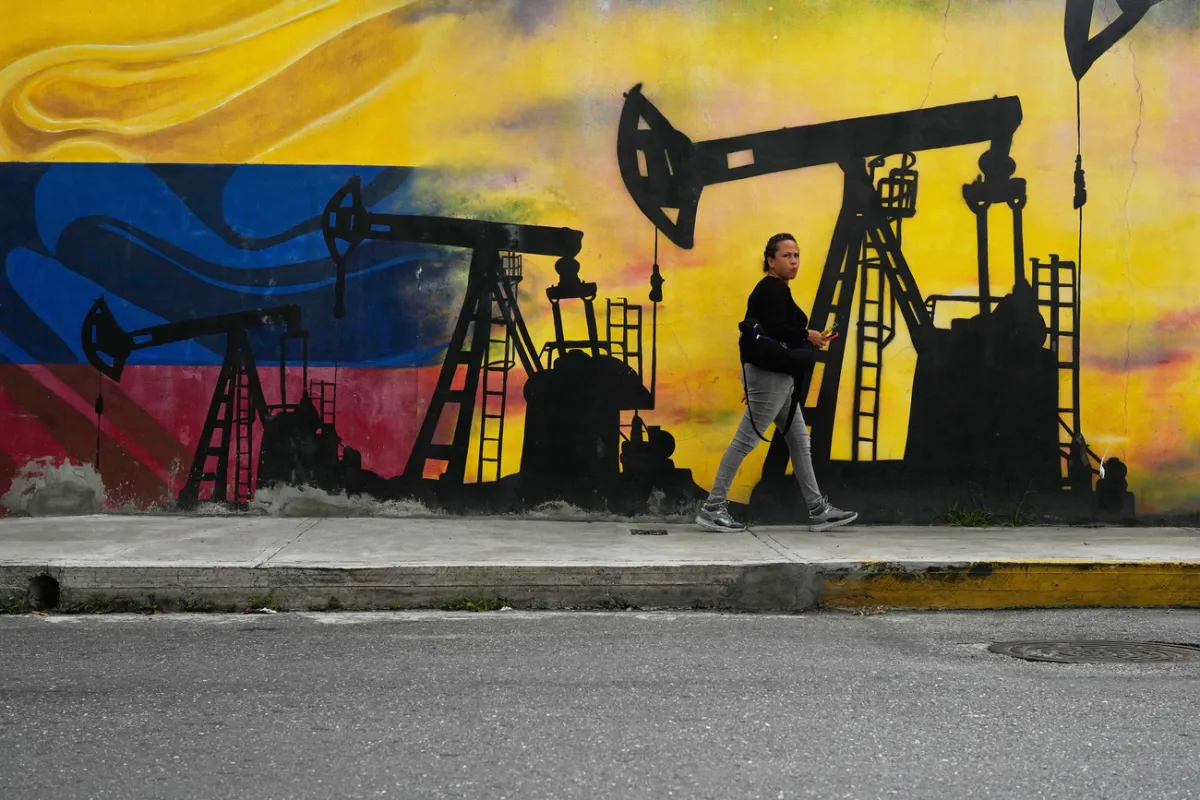
Swiss Oil Traders Weigh Opportunities Following US Intervention In Venezuela
(MENAFN- Swissinfo)
The US military intervention in Venezuela and capture of president Nicolás Maduro has put the world's largest oil reserves back on the global energy map. Switzerland's oil traders are paying close attention.
This content was published on
January 7, 2026 - 16:52
9 minutes
Paula Dupraz-Dobias is an award-winning Geneva-based journalist covering environment, business, international organizations, humanitarian crises and Latin America.
-
More from this aut
Since the United States imposed sanctions on Venezuela's state oil company, Petróleos de Venezuela SA (PDVSA), in 2019 under Donald Trump, Swiss oil traders have had to comply or face measures. With few exceptions, business with the socialist country has effectively gone dry.
But the US military abduction of president Nicolás Maduro last weekend, and statements by Trump of investments by the oil industry“to fix a badly broken infrastructure” in the sector now have traders seeking to decode what it all means for resuming business with the oil-rich nation.
For energy traders clustered in the world's biggest hub in Switzerland – mostly Geneva and Zug – the question is not whether Venezuela's oil could matter again to global markets, but when and under what political and legal conditions.
Switzerland ranks among the world's leading centers for commodity trading and finance, with a particularly strong role in oil and gas, accounting for an estimated 35% of global trade. Alongside London, Geneva and Zug form the backbone of Europe's crude oil and petroleum markets.
Several of the world's largest independent commodity traders are headquartered in Switzerland, including Vitol, Trafigura, Gunvor, and Mercuria. At the same time, many global oil majors and state producers operate major trading arms from Switzerland, notably Shell, BP, TotalEnergies, and Saudi Aramco Trading Company.
Together, these headquarters and trading desks make Switzerland a central node in the pricing, financing, and physical movement of oil across global markets. That role has taken on added significance as Trump makes sweeping promises about Venezuela's oil future.
Trump claims that tens of millions of barrels would be transferred to the US and that American oil firms would be producing there within 18 months. Whether such goals are achievable remains to be seen.
“We don't have a crystal ball to read what will happen next. So many things can change,” says Florence Schurch, secretary general of Suissenégoce, the Swiss trading and shipping association.
With fuel prices subdued, US forces monitoring shipping off Venezuela's coast, and sanctions still formally in place, the sudden collapse of the Maduro government has reopened a strategic debate with implications far beyond the US, Switzerland or Venezuela.
How does a sanctioned petrostate re-enter global markets? How quickly capital might return, and whether Swiss traders - long pivotal intermediaries in global oil flows - will be able to play a role.
Schurch notes that the outcome of US mid-term elections in November may also prove decisive for the South American country's governance.
“In the short term, the political impact [of the ongoing developments] is more significant than the business impact on commodities trading regarding whether or not to invest. Commodities traders need certainty before committing the significant capital required, and that certainty doesn't exist today.”
Estimated at over 300 billion barrels, Venezuela's proven oil reserves represent 17% of the global total, the biggest in the world. Years of mismanagement and corruption have however decimated its production. It hobbles at barely one million barrels a day ahead of the US intervention, less than a third of production when Hugo Chávez, Maduro's predecessor, came to office, and practically a blip on the world oil map.
External Content Eyeing developmentsTrump says he wants US oil companies to invest in modernising the sector in Venezuela, suggesting on Monday that government subsidies may be provided, to compensate for what some experts say may cost at least $100 billionExternal link. The US already has the ability to refine Venezuelan crude, known as heavy sour, which is particularly thick and costly to transform.
But some larger Swiss traders, which already own energy infrastructure, such as refineries, storage terminals and pipelines in various countries, have said they will be eyeing the developments in Venezuela closely. Commodity traders Vitol and Mercuria, for instance, have owned physical assets in the US for years.
Giacomo Luciani, a lecturer on commodity trading at the University of Geneva, says that while it may take“months, if not years” before a stable political environment may allow for investments to begin flowing into the Caribbean country,“trading companies may play a role by anticipating finance or contributing to the financing of some of these projects by taking minority shares in the equity”, a model already adopted elsewhere.
Venezuela's vast known reserves, Luciani stressed, would be a key incentive for investorslooking to avoidi exploration risks, an important consideration when engaging in new oil ventures.
At the trigger?“I would be disappointed if they didn't invest in the longer term,” a Swiss trader, who asked not to be named, told Swissinfo about large Swiss trading houses responding to opportunities in Venezuela when the time is ripe. In the meantime, he said, some trading firms may prepare for any possible future investments by setting up companies in other offshore jurisdictions such as?. And why offshore?
Shares in Baar-based Glencore in Canton Zug, with its significant oil trading branch, rose on Monday following the US intervention, as investors seek to gain from potential opportunities.
On Tuesday, Ben Luckock, global head of oil at Trafigura, told BloombergExternal link, that he believed the interests of Venezuela and the US were aligned, to“allow oil to flow”, adding that he did not expect the armada of ships waiting to load off Venezuela amid sanctions to continue, which created market“inefficiencies”.
Luckcock said the company, which focuses on logistics more than infrastructure, will be meeting with US authorities. He did not discount that the company would look into investing upstream, if the legal conditions, transparency and safety of its employees are in place.
Luciani, however, is skeptical of an immediate uptake in response to Trump's call to the sector.“There's been a contradiction in Trump's policy since the very beginning. He wants to increase oil production to drive down the price of oil. But if you drive down the price of oil, you discourage further investment. It doesn't mean zero, but companies will be choosier in deciding whether a project deserves to be invested in or not.”
Oil prices have already been trending lower. In 2025, Brent crude, the global benchmark, fell from around $79 a barrel at the start of the year to roughly $61–$63 by December, marking the steepest annual decline since the Covid-19 pandemic.
Meanwhile, Saad Rahim, chief economist at Trafigura, explains that while production levels in Venezuela are not expected to change for the foreseeable future in absence of new investments, oil has been accumulating in storage under sanctions.“Freighters can then come in and, if it is all legal oil, we can move that on (as traders),” he told Swissinfo.
“It may not change the global oil balances, but it would give the larger, reputable traders the ability to now access the oil in a way that avoids the shadow methods,” he adds. China, PDVSA's biggest client, had reportedly employed such tactics, including shadow fleets to hide shipmentsExternal link from Venezuela.
Compliant on sanctionsAnalysts caution that despite the dramatic political shift, Venezuela remains a legally and politically high-risk environment for Swiss companies.
Schurch, the commodity trading association chief, explains that in recent years, ensuring that traders are in compliance with sanctions amid rising global insecurity has added to their operating costs. These include higher insurance expenses and heftier legal teams.
“Our work has become more and more complicated. Commodity traders are very cautious about what they do. They may be accused of doing something wrong, so their legal and regulation teams are continuously growing.”
>>>Read more: Swiss oil traders and banks burned by Venezuela ties
In February 2020, the US sanctioned Rosneft Trading, the Russian oil major's unit in Geneva for supporting Venezuela's state-controlled oil company, PDVSA and engaging in secret ship-to-ship transfers. A month later a Rosneft subsidiary, TNK Trading International, located at the same Geneva address, was also sanctioned for similar reasons.
With inputs from Dominique Soguel and Pauline Turuban
Edited by Virginie Mangin/ac
Popular Stories Most DiscussedIn compliance with the JTI standards
More: SWI swissinfo certified by the Journalism Trust Initiati
You can find an overview of ongoing debates with our journalists here. Please join us!
If you want to start a conversation about a topic raised in this article or want to report factual errors, email us at ....
Read more
Legal Disclaimer:
MENAFN provides the
information “as is” without warranty of any kind. We do not accept
any responsibility or liability for the accuracy, content, images,
videos, licenses, completeness, legality, or reliability of the information
contained in this article. If you have any complaints or copyright
issues related to this article, kindly contact the provider above.
Most popular stories
Market Research

More Story






Comments
No comment