




403
Sorry!!
Error! We're sorry, but the page you were looking for doesn't exist.

Nvidia Accelerates H200 Production Amid China AI Push
(MENAFN- The Arabian Post)
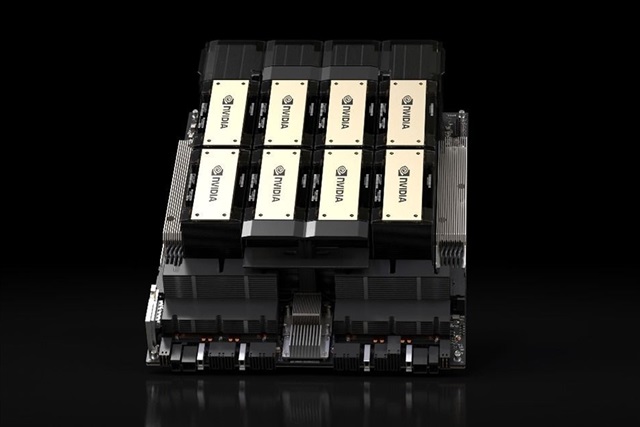
Nvidia is stepping up output of its H200 artificial intelligence processors as demand from technology firms operating in China intensifies, reflecting a wider global race to secure advanced computing power for large-scale AI models. People familiar with the company's manufacturing plans say production schedules have been tightened and supply allocations adjusted to prioritise customers seeking alternatives to restricted top-tier chips.
The H200, built on Nvidia's Hopper architecture and paired with high-bandwidth memory, has become a focal point for companies developing generative AI systems that require powerful inference and training capabilities. Although it sits below Nvidia's most advanced processors in terms of performance, the H200 offers a balance of capability and availability that appeals to firms facing export controls on higher-end products.
Nvidia's move comes against the backdrop of tighter United States restrictions on the sale of advanced AI chips to China. Those measures have limited access to the company's flagship accelerators, prompting Chinese cloud providers, internet platforms and AI start-ups to seek compliant alternatives that can still support large language models and data-intensive workloads. Industry executives say the H200 has emerged as one of the most sought-after options within those constraints.
Supply chain partners indicate that Nvidia has worked with foundry and packaging partners to smooth bottlenecks that had slowed deliveries in earlier quarters. Advanced packaging capacity, a critical step for high-performance chips that integrate memory and processors, has been a particular focus. By reallocating capacity and streamlining production lines, Nvidia aims to shorten lead times and meet orders that have grown faster than anticipated.
See also EU Banks Face Growing AI-Driven Systemic RiskThe surge in interest from China-based customers has also reshaped pricing dynamics. While Nvidia has not publicly adjusted list prices, buyers report firmer pricing and reduced scope for discounts as availability tightens. For cloud service providers, the cost is often justified by the ability to offer AI services to enterprise clients, from data analytics to content generation, at a time when competition in the sector is intensifying.
Nvidia has said it complies fully with export regulations and designs products that meet legal requirements for different markets. The company has previously adapted chip specifications, including interconnect speeds and performance thresholds, to align with regulatory limits while preserving commercial viability. Analysts note that this strategy allows Nvidia to maintain a presence in key markets even as geopolitical tensions reshape technology trade.
The company's manufacturing push also reflects broader trends in the semiconductor industry, where demand for AI accelerators has outpaced expectations. Foundries and equipment suppliers are investing heavily to expand capacity, but complex production processes mean that supply remains constrained in the near term. As a result, leading chip designers are competing not only on performance but also on their ability to secure manufacturing slots.
Chinese technology firms, meanwhile, are balancing short-term procurement with longer-term efforts to develop domestic alternatives. Several companies have announced plans to design their own AI accelerators or to work with local chipmakers, though industry specialists caution that matching Nvidia's ecosystem and software support remains a formidable challenge. For now, access to established platforms such as CUDA continues to influence purchasing decisions.
See also Lisa Su's $200bn bet on open AI chipsMarket observers say Nvidia's accelerated H200 output could have ripple effects beyond China. Increased production may ease supply pressures in other regions, particularly for multinational companies with operations spanning multiple markets. At the same time, prioritising one product line can affect availability of others, underscoring the delicate trade-offs involved in capacity planning.
Financially, sustained demand for the H200 supports Nvidia's revenue growth, even as the company navigates regulatory uncertainty. Investors have closely watched how export controls might affect sales, and stronger shipments of compliant products help offset restrictions on premium chips. The company's latest guidance has pointed to robust data centre demand, driven largely by AI workloads.
Notice an issue? Arabian Post strives to deliver the most accurate and reliable information to its readers. If you believe you have identified an error or inconsistency in this article, please don't hesitate to contact our editorial team at editor[at]thearabianpost[dot]com. We are committed to promptly addressing any concerns and ensuring the highest level of journalistic integrity.

Legal Disclaimer:
MENAFN provides the
information “as is” without warranty of any kind. We do not accept
any responsibility or liability for the accuracy, content, images,
videos, licenses, completeness, legality, or reliability of the information
contained in this article. If you have any complaints or copyright
issues related to this article, kindly contact the provider above.
Most popular stories
Market Research

More Story







Comments
No comment