




403
Sorry!!
Error! We're sorry, but the page you were looking for doesn't exist.
Cinémathèque Suisse Reveals Close Links Between Fashion And Cinema
(MENAFN- Swissinfo)
The Cinémathèque suisse in Lausanne is devoting a major cycle to the close relationship with fashion and cinema.
This content was published on
December 25, 2025 - 11:14
3 minutes
Keystone-SDA
-
Français
fr
Les liens étroits entre mode et cinéma à la Cinémathèque suisse
Original
Read more: Les liens étroits entre mode et cinéma à la Cinémathèque s
The event features some 40 films from the 1930s to the present day.
A special evening will be held on January 14 with a screening of Robert Altman's Prêt-à-porter (1994). This satire of the fashion world features film stars (Julia Roberts, Kim Basinger, Lauren Bacall, Sophia Loren), fashion designers and top models.
+ Audrey Hepburn valued the discretion of the Swiss Alps
The session will be introduced by Marco Costantini, director of mudac, which is currently devoting two exhibitions to fashion and textiles.
The cycle proper kicks off on January 1 with William Wyler's Roman Holiday (1953). Audrey Hebburn, virtually unknown at the time, was dressed in the creations of costume designer Edith Head, who won an Oscar for the film.
In Josef von Sternberg's Morocco (1930), Marlene Dietrich burst onto the screen in iconic clothes designed by Travis Banton. Falbalas (1944) by Jacques Becker, starring Micheline Presle, depicts the life of a large Parisian dressmaking workshop during the Occupation.
On the big screen, costumes reflect the dress codes of an era, reinventing the clothes of the past and imagining those of the future. Sometimes they elevate actresses and actors to iconic status.
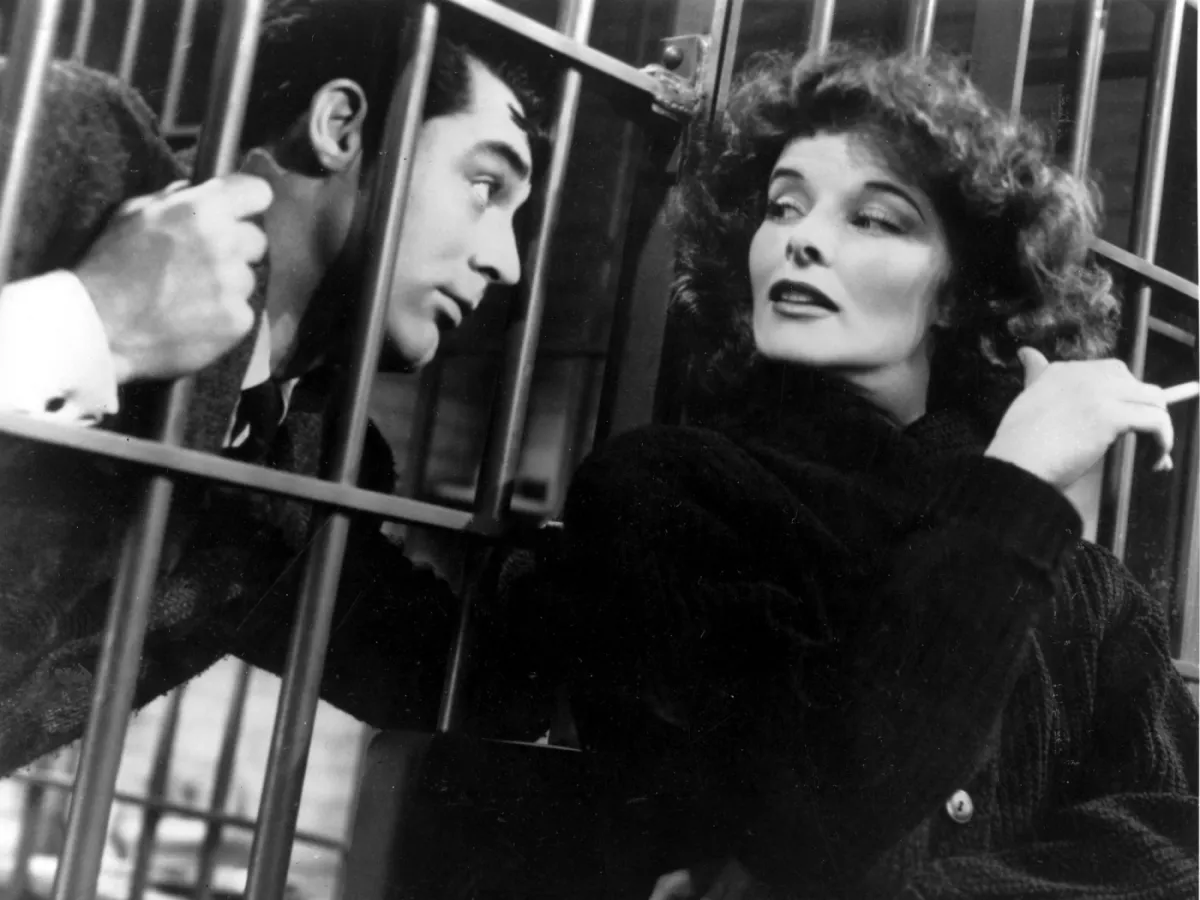
Katharine HepburnIn Howard Hawks' The Impossible Mr Baby (1938), Katharine Hepburn, an eccentric heiress, embodied a model of the emancipated woman, as evidenced by the modernity of the costumes created for her by Howard Greer. In Woody Allen's Annie Hall (1977), Diane Keaton herself chose masculine outfits, creating an androgynous look with high-waisted trousers, a white shirt and tie.
The great fashion houses were happy to invite themselves onto the screen: Coco Chanel contributed costumes to Jean Renoir's La Règle du jeu (1939). Marlene Dietrich wore Christian Dior outfits in Alfred Hitchcock's The Great Alibi (1949). Some stars have a special relationship with a designer, such as Audrey Hepburn with Givenchy or Catherine Deneuve with Yves Saint Laurent, who dressed her in Luis Buñuel's Belle de jour (1967).
Brando in a perfectoFashion is also a vehicle for identity and narrative. In L'équipée sauvage (1954), Marlon Brando slipped into the skin of a biker. Brigitte Bardot's clothes in Roger Vadim's Et Dieu... créa la femme (1956) influenced fashion in the second half of the 1950s.
As a prelude to certain screenings, the Cinémathèque is offering short pre-programmes made up of little nuggets from the institution's archives. These restored films deal with fashion in Switzerland, in the form of subjects from the Ciné-Journal or short silent films.
More More Actor Tony Leung will visit Switzerland for film premiereThis content was published on Dec 23, 2025 Hong Kong actor Tony Leung Chiu-wai will be in Lausanne on January 17. He will attend the premiere of the film Silent Friend by Ildikó Enyedi in which he stars alongside Swiss actor Luna Wedler.
Read more: Actor Tony Leung will visit Switzerland for film pre
Legal Disclaimer:
MENAFN provides the
information “as is” without warranty of any kind. We do not accept
any responsibility or liability for the accuracy, content, images,
videos, licenses, completeness, legality, or reliability of the information
contained in this article. If you have any complaints or copyright
issues related to this article, kindly contact the provider above.
Most popular stories
Market Research









Comments
No comment