



403
Sorry!!
Error! We're sorry, but the page you were looking for doesn't exist.
The Management Of Maritime Disputes And The Governance Of Order In The South China Sea
(MENAFN- GetNews) At the 6th Symposium on Global Maritime Cooperation and Ocean Governance, speakers offered diverse perspectives on how maritime disputes in the SCS can be managed and how regional order can be sustained amid rising geopolitical uncertainty. Despite differences in emphasis, a common concern emerged: how to maintain stability when sovereignty disputes persist and strategic rivalry intensifies.
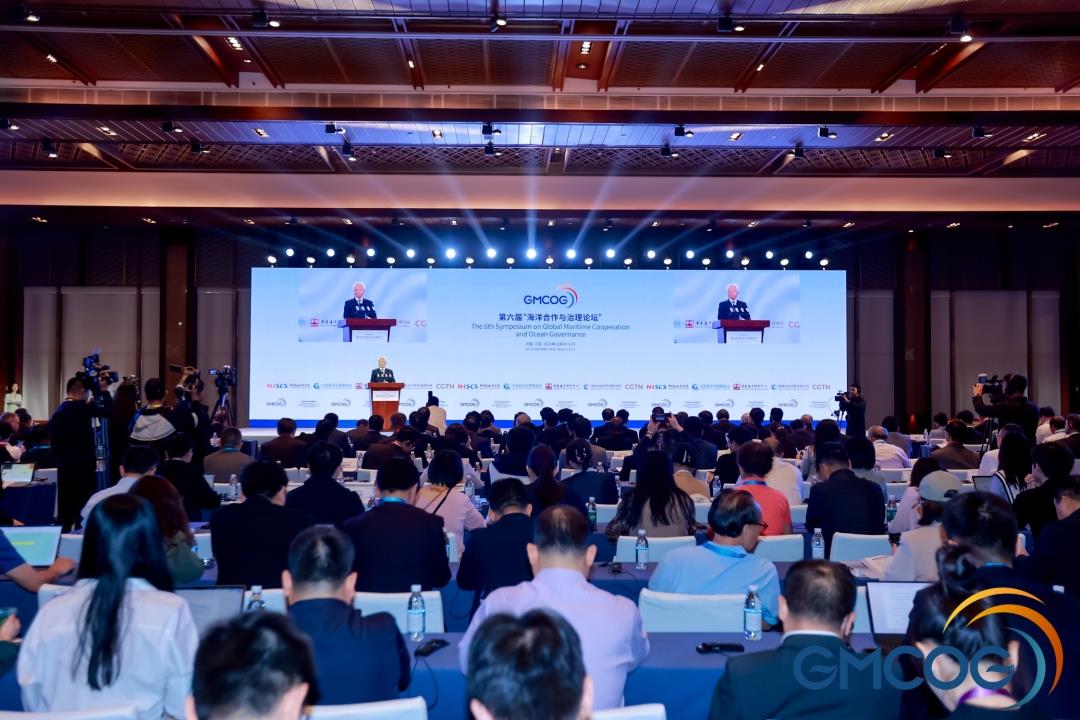
Brantly Womack argued that experiences in the SCS and the Beibu Gulf demonstrate the resilience of regional maritime governance even in times of global turbulence. Ronán Long highlighted the significance of the BBNJ Agreement, noting that its provisions on resource management, environmental impact assessment, and technology transfer offer critical support for future ocean order. In his view, China's role in advancing the agreement has important implications for the credibility and stability of the multilateral system.
Wu Shicun argued that managing disputes in the SCS requires a layered and combined governance approach rather than reliance on any single instrument. Cooperation on environmental protection and marine scientific research, he suggested, could provide low-sensitivity entry points for trust-building.
Other participants underscored the limitations of formal rules under intense geopolitical pressure. Michael Vatikiotis observed that when formal mechanisms struggle to function effectively, maritime order increasingly relies on informal and voluntary cooperation,such as information-sharing networks, voluntary guidelines, and supply-chain resilience arrangements.
On the role of international law, a broad consensus emerged that it remains necessary but insufficient. Phillip Saunders and Vladislav Tolstykh noted that while UNCLOS cannot resolve sovereignty disputes on its own, it continues to serve as the region's most important common normative language. Drawing on broader regional practices, experiences from ASEAN and South Asia suggest that the“ASEAN Way,” bilateral negotiations, and recourse to international adjudication can be complementary tools, though their effectiveness is often constrained by power asymmetries and great-power competition.
Christian Schultheiss and Lucio Pitlo III observed that China–Philippines cooperation in fisheries and resources has a practical foundation, but concerns about weakening national positions complicate institutional design. Inthep Xaiyavong from Laos PDR further reminded that even landlocked countries depend on open and stable seas, supporting dialogue and non-traditional security cooperation as pathways toward a more stable and peaceful South China Sea.

Legal Disclaimer:
MENAFN provides the
information “as is” without warranty of any kind. We do not accept
any responsibility or liability for the accuracy, content, images,
videos, licenses, completeness, legality, or reliability of the information
contained in this article. If you have any complaints or copyright
issues related to this article, kindly contact the provider above.
Most popular stories
Market Research

More Story








Comments
No comment