










403
Sorry!!
Error! We're sorry, but the page you were looking for doesn't exist.

Australian Ghost Bat Drone Bares Fangs As PLA Bombers Edge Closer
(MENAFN- Asia Times)
Australia's move into autonomous air combat has entered a decisive phase, with its Ghost Bat drone scoring its first air-to-air kill, underscoring how the country is racing to counter China's growing long-range strike reach from the South China Sea.
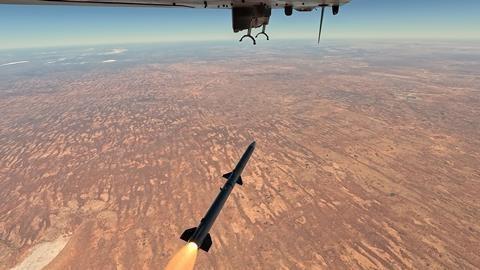
Ghost Bat-launched AMRAAM. Photo: Commonwealth of Australia
Multiple media outlets reported that during a trial this month at the Woomera Test Range, the drone launched a Raytheon AIM-120 advanced medium-range air-to-air missile (AMRAAM), destroying a Phoenix jet-powered aerial target while operating in a networked formation with a Royal Australian Air Force (RAAF) E-7A Wedgetail and an F/A-18F Super Hornet, which shared sensor and targeting data to cue the engagement.
Boeing said missile integration and testing were completed in under eight months, enabled by the drone's modular architecture.
Images from the test show the AMRAAM mounted on an external pylon beneath the left intake, with the Ghost Bat currently lacking an internal weapons bay but expected to gain expanded payload options in future blocks.
Ghost Bat-launched AMRAAM. Photo: Commonwealth of Australia
Australian officials described the firing as proof that the Ghost Bat is a world-leading collaborative combat aircraft, with the government simultaneously announcing contracts for six Block 2 aircraft and development of a Block 3 prototype.
The milestone places Australia at the forefront of unmanned air-combat development
It also signals a shift from experimentation to fielding an operational combat-drone capability.
The drone's debut comes as Australia confronts a shifting regional threat environment shaped by China's expanding long-range strike reach.
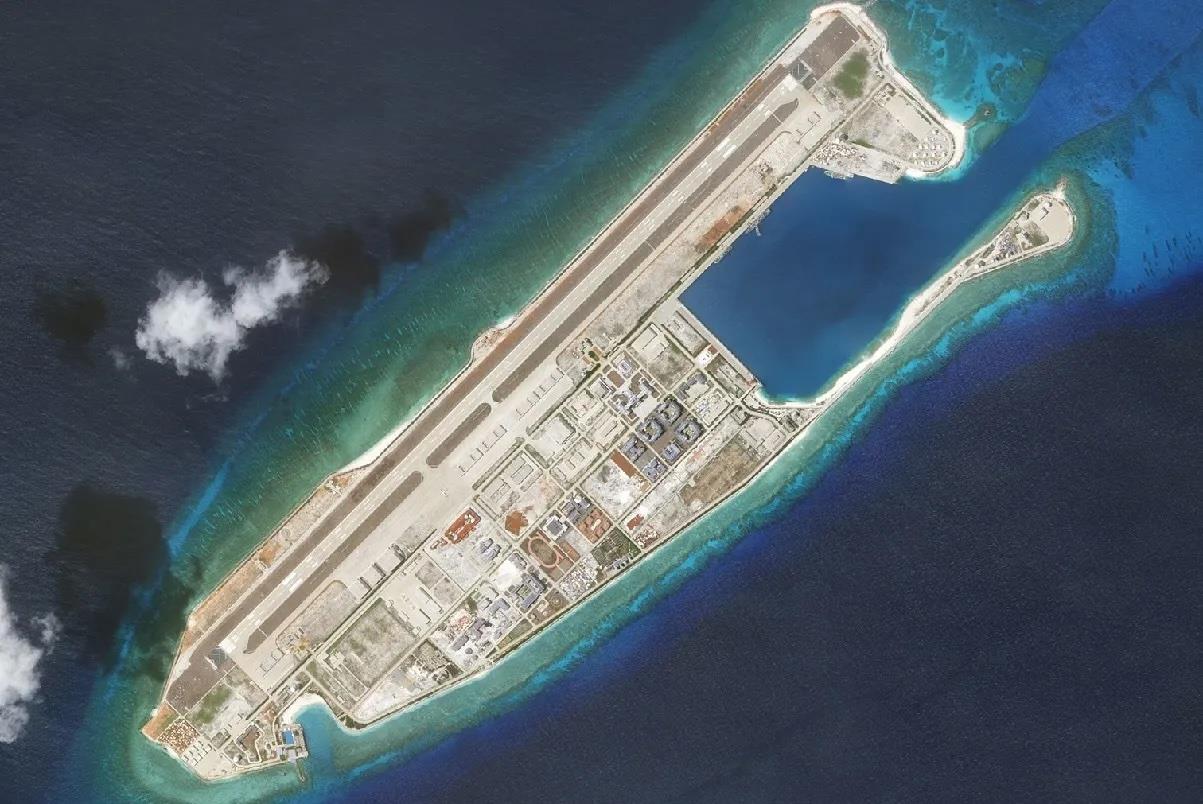
The Australian Broadcasting Corporation (ABC) reported in July 2025 that China has deployed H-6K bombers to Woody Island in the Paracels, warning that these aircraft“can launch missiles within range of Australia” and may operate from multiple long South China Sea runways built for that purpose.
Possible targets in Australia include US military facilities such as Pine Gap, which serves as a space and signals intelligence-gathering center, and Naval Communication Station Harold E. Holt, which serves as a communications hub for US warships and submarines in the Pacific.

Legal Disclaimer:
MENAFN provides the
information “as is” without warranty of any kind. We do not accept
any responsibility or liability for the accuracy, content, images,
videos, licenses, completeness, legality, or reliability of the information
contained in this article. If you have any complaints or copyright
issues related to this article, kindly contact the provider above.
Most popular stories
Market Research

More Story








Comments
No comment