

403
Sorry!!
Error! We're sorry, but the page you were looking for doesn't exist.
Food Waste In South Africa Is Dumped In Landfills - Study Weighs Up Healthier And More Sustainable Options


Author: Anne Fitchett
(MENAFN- The Conversation) Every year, millions of tonnes of food end up in South Africa's landfills. This is a wasted resource that deepens environmental damage, worsens food insecurity and costs the economy billions. But there are opportunities to turn what we throw away into value for people, the planet and local economies.

A new study investigates the true cost of current waste practices and the potential of alternative approaches. We spoke with one of the researchers, Anne Fitchett, about organic waste management and how the country can move towards a more sustainable, circular approach.
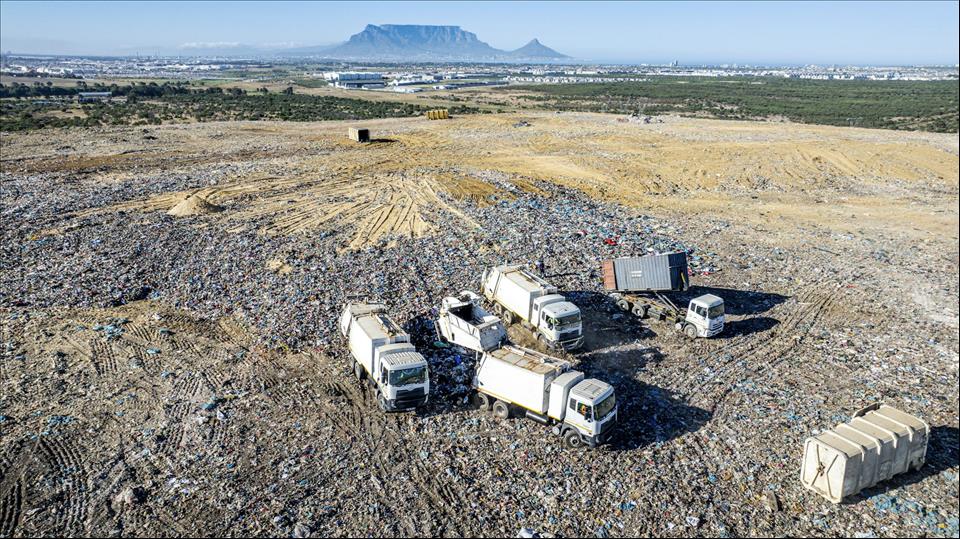
What are the challenges facing waste management, particularly food waste?Globally, waste management is a serious challenge as waste increases and systems of production and consumption become more complicated. In South Africa, the most common approach to the disposal of waste is simply to dump it on landfill sites. This currently amounts to a staggering ten million metric tons annually. The country is rapidly running out of space for landfill. Adding to the problem are inadequate planning, weak implementation of recycling policy (such as separation at source), and high transport costs that encourage illegal dumping.
In particular, food waste carries additional ethical and environmental concerns. Hunger and food insecurity is widespread in South Africa, affecting an estimated 15 million people. Organic waste, which includes garden waste, farming waste and food waste, is a major contributor of greenhouse gas emissions through decomposition. Food waste on a landfill also creates odours and pest infestations. Vulnerable people are affected most: waste pickers and low-income households who have no choice but to live near waste dump sites.
What interested us was the opportunities that food waste offers. Instead of being a costly problem, from the viewpoint of economic, social and ecological effects, how can this waste be managed differently, to provide benefits instead?
How is it currently done in South Africa and how did you work out the cost?In South Africa, organic waste forms the largest single fraction of general waste going to landfill, making up around 27% of all disposed waste. Food waste contributes about one-third of this category.
We explored different ways of calculating the costs of managing food waste, so that we could compare landfill dumping with other approaches. We decided on a social cost-benefit analysis, as this includes economic, social and environmental costs into a single calculation. This makes it much easier for policy makers and municipalities to make informed choices.
We determined the direct costs from municipal and national data sets. The social and environmental costs had to be monetised to integrate into the calculation. To do this, we used what are called hedonic pricing models. This is the price people are willing to pay to avoid a negative environmental impact, which we derived from the local and international research. We also used life-cycle cost analysis for some of the values. Here, we factor in all the different costs that a particular method needs, such as capital cost, operating cost, maintenance, and final residual or salvage value at the end of its useful life.
Through this analysis method, we calculated that landfill practices impose an estimated R8.7 billion (US$0.5 billion) annual burden on the economy, environment and communities across South Africa. Because much of this is a hidden cost, the real“dis-amenity” (the combination of negative values) is often undervalued and these costs materialise in other ways, to the detriment of the economy, society and the environment.
What alternative methods did you test and what were the outcomes?We explored various means:
- aerobic composting (decomposition with air circulation)
anaerobic digestion (decomposition in a sealed container) processing through vermicomposting (harnessing the services of earthworms that eat the food waste and produce nutrient-rich deposits)
black soldier flies (the larvae of which feed on the waste and produce animal feed and organic fertiliser).
We calculated that windrow composting, where organic waste is placed in long rows and turned periodically to maintain oxygen levels, generates some benefits through the sale of the compost. It also saves in greenhouse gas emissions by replacing more costly fertilisers for farming.
In-vessel composting was the one method we analysed that had higher costs than benefits, even though it produces better quality compost and almost no air pollutants. (But this was still a marked improvement over landfilling.) In this method, the waste is in a closed environment, where air-flow, moisture and temperature can be controlled to speed up the composting process.
We also evaluated anaerobic digestion with bio-gas capture, which takes place in an enclosed environment, but with air excluded. The biogas percolates to the top of the tank where it is extracted for cooking and other uses. This has a much higher capital and operational cost, but generates saleable methane and carbon dioxide gases, as well as a digestate that can be sold for soil enhancement.
Vermicomposting is a process where organic waste is broken down by earthworms and microbes into material that can add nutrients to soil. It also produces worm biomass as a high-protein animal feed. This produces a higher net benefit than any of the other methods described so far.
The best performer from the social cost-benefit analysis was black soldier fly processing. The flies' eggs are hatched and the larvae are transferred to the food waste, which the larvae feed on. When the larvae reach maturity, they are harvested for protein-rich animal feed and their deposits (called frass) are collected for use as fertiliser.
Studies agree that anaerobic digestion offers the best performance from a purely environmental appraisal.
Our study suggests that a combination of anaerobic digestion and black soldier fly processing could be the optimal solution, taking into account social and economic aspects.
How can these findings be used to shape policy?Our study offers a number of pointers. It is essential to look at gate fees to landfill sites. Some of the sites are not charging at all, and the closest to charging an economic rate is the Western Cape province. This should be weighed against the possible avoidance of formal waste disposal altogether, inadvertently promoting illegal dumping. Linked to this is the lack of compliance with waste legislation that was identified at many of the sites across the country.
Municipalities should be encouraged, through government policies, to invest in alternative technologies, like vermicomposting and black soldier fly processing. A strategic combination of economic incentives, regulatory compliance and sustainable practices is essential to achieve long-term national waste management objectives.
The results of our study highlight the urgent need for an integrated strategy that incorporates economic, ecological, social and governance dimensions to transform food waste into a resource. The current default to landfill is simply not a sustainable option. With targeted policies and investments, food waste could shift from being a costly liability to serving as a cornerstone of South Africa's circular economy and sustainable development agenda.
Gabriel Pereira, a master's student, was a co-author on the research and article.
Institution:University of the Witwatersrand

Legal Disclaimer:
MENAFN provides the
information “as is” without warranty of any kind. We do not accept
any responsibility or liability for the accuracy, content, images,
videos, licenses, completeness, legality, or reliability of the information
contained in this article. If you have any complaints or copyright
issues related to this article, kindly contact the provider above.
Most popular stories


Market Research



Comments
No comment