







403
Sorry!!
Error! We're sorry, but the page you were looking for doesn't exist.
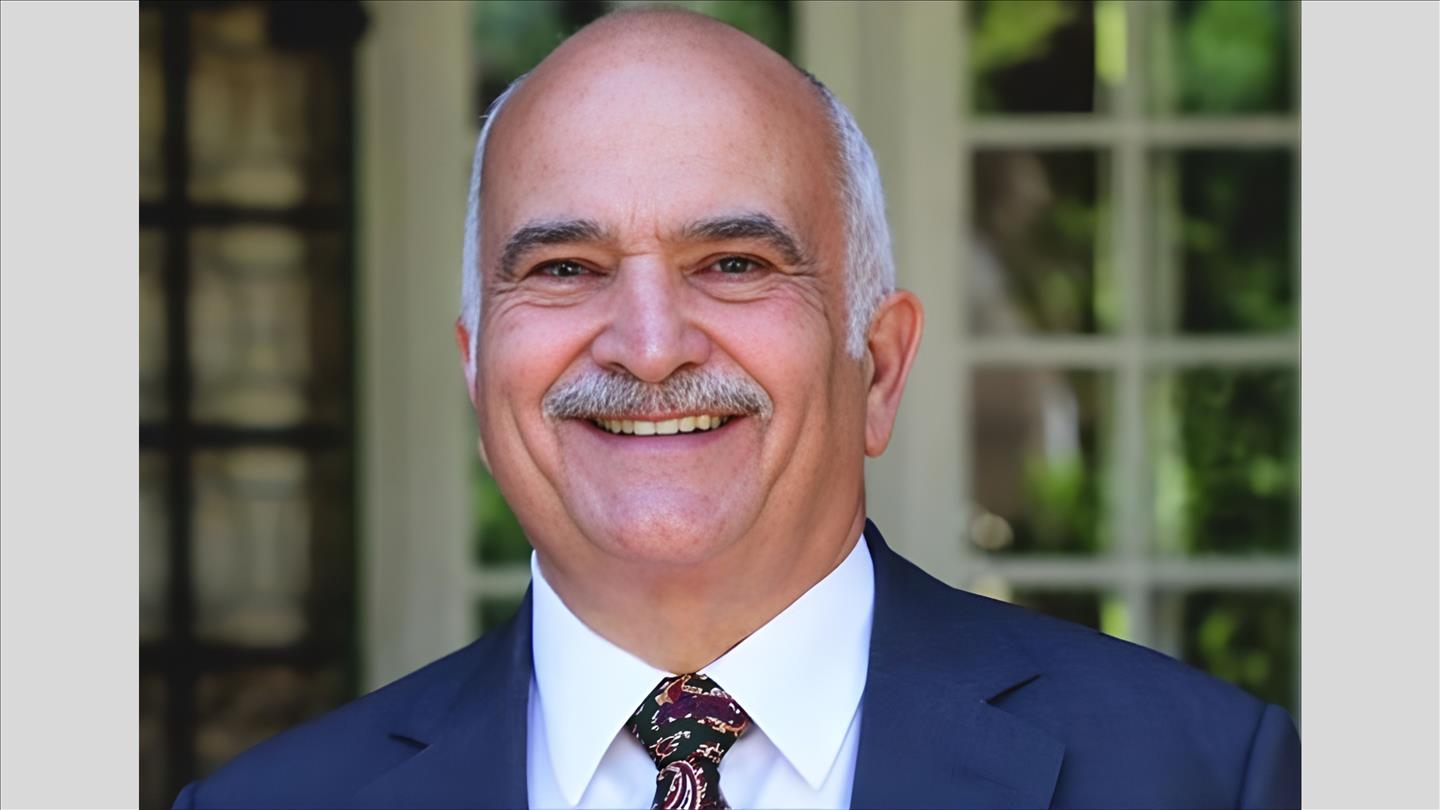
Prince El Hassan Underscores Human Capital As Cornerstone Of Development At Academiaindustry Conference
(MENAFN- Jordan News Agency)
Amman, Dec. 10 (Petra) HRH Prince El Hassan bin Talal, President of the Higher Council for Science and Technology (HCST), stressed the centrality of human capital as the true investment in people and their dignity, through high-quality educational outputs capable of advancing society and strengthening its competitiveness.
Speaking at the opening of the "Bridging the Gap Between Academia and Industry in Jordan" conference, held under his patronage and attended by HRH Princess Sumaya bint El Hassan, Prince El Hassan highlighted the need to transfer knowledge and technology to serve productive sectors and to elevate national institutions to international standards through joint work that keeps pace with global change.
At the conference, organized by the Higher Council for Science and Technology in cooperation with the German Agency for International Cooperation (GIZ), he called for strengthening links between academia and industry and developing applied research through innovation and entrepreneurship, in line with labor-market needs and the alignment of educational outcomes.
He also underlined the importance of meeting international standards, pointing to key challenges facing the research and innovation ecosystem, chiefly limited funding for industry-linked research and inadequate infrastructure for business and technology incubators.
Prince El Hassan reaffirmed the need to intensify national efforts in higher education and scientific research and to build an effective connection between them as a pillar of sustainable development.
For his part, HCST Secretary-General Mashhour Al-Refai emphasized the importance of deepening partnerships between higher-education institutions and the industrial sector. He said the conference responds to an urgent need: that knowledge-based development cannot be realized unless universities become strategic partners of industry, and industry becomes the gateway for applying ideas and developing products.
Al-Refai noted that private-sector spending on scientific research remains limited compared with public spending. A study conducted by the Higher Council with experts revealed a clear gap between academia and industry.
He said the conference provides an opportunity to shape a shared vision for redirecting scientific research toward high-impact sectors in Jordan, including energy, information technology, artificial intelligence, health, agriculture, tourism, extractive industries and creative industries.
He added that the HCST has identified research priorities for the next decade across 15 sectors with industry participation, linking them to the Economic Modernization Vision. The initiative will pinpoint challenges facing the industrial sector so researchers can help provide solutions supported by the Scientific Research and Innovation Support Fund.
Al-Refai stressed that bridging the academia-industry gap is a national decision that will help create jobs, raise productivity and enhance Jordan's competitiveness, noting that Jordanian universities can lead this transformation if provided with the right partnerships and mechanisms.
He expressed thanks to HRH Prince El Hassan for his continued support, to the GIZ, international experts, the Jordan Phosphate Mines Company, and all participants and members of the organizing committee, calling for translating the conference's recommendations into practical steps to build a resilient national economy under the leadership of His Majesty King Abdullah II.
The opening featured a brief presentation of Prince El Hassan's guidance, focused on aligning higher-education outcomes with labor-market needs and strengthening integration between academia and industry to support national development.
The event also included remarks by Marius Rauh, Head of Development Cooperation at the German Embassy.
The first main session, chaired by Abdel Hamid El-Zohairy, Co-President of PRIMA, discussed "Building Innovation Ecosystems: The Triple Helix Model Between Universities, Industry and Government."
The first panel session, chaired by Hanina Ben Berno a European Union Regional Adviser for International Cooperation, examined "International Experiences in Effective Academia–Industry Partnerships," with speakers from the United States, Germany, Poland and the United Kingdom sharing global examples of successful trilateral cooperation.
Further sessions explored pioneering experiences in clean-energy management, ways to integrate international expertise into Jordan's context to strengthen research-industry links, approaches to deepen ties between innovation and industry, and the role of public institutions in supporting innovation and developing regulations governing applied research.
Amman, Dec. 10 (Petra) HRH Prince El Hassan bin Talal, President of the Higher Council for Science and Technology (HCST), stressed the centrality of human capital as the true investment in people and their dignity, through high-quality educational outputs capable of advancing society and strengthening its competitiveness.
Speaking at the opening of the "Bridging the Gap Between Academia and Industry in Jordan" conference, held under his patronage and attended by HRH Princess Sumaya bint El Hassan, Prince El Hassan highlighted the need to transfer knowledge and technology to serve productive sectors and to elevate national institutions to international standards through joint work that keeps pace with global change.
At the conference, organized by the Higher Council for Science and Technology in cooperation with the German Agency for International Cooperation (GIZ), he called for strengthening links between academia and industry and developing applied research through innovation and entrepreneurship, in line with labor-market needs and the alignment of educational outcomes.
He also underlined the importance of meeting international standards, pointing to key challenges facing the research and innovation ecosystem, chiefly limited funding for industry-linked research and inadequate infrastructure for business and technology incubators.
Prince El Hassan reaffirmed the need to intensify national efforts in higher education and scientific research and to build an effective connection between them as a pillar of sustainable development.
For his part, HCST Secretary-General Mashhour Al-Refai emphasized the importance of deepening partnerships between higher-education institutions and the industrial sector. He said the conference responds to an urgent need: that knowledge-based development cannot be realized unless universities become strategic partners of industry, and industry becomes the gateway for applying ideas and developing products.
Al-Refai noted that private-sector spending on scientific research remains limited compared with public spending. A study conducted by the Higher Council with experts revealed a clear gap between academia and industry.
He said the conference provides an opportunity to shape a shared vision for redirecting scientific research toward high-impact sectors in Jordan, including energy, information technology, artificial intelligence, health, agriculture, tourism, extractive industries and creative industries.
He added that the HCST has identified research priorities for the next decade across 15 sectors with industry participation, linking them to the Economic Modernization Vision. The initiative will pinpoint challenges facing the industrial sector so researchers can help provide solutions supported by the Scientific Research and Innovation Support Fund.
Al-Refai stressed that bridging the academia-industry gap is a national decision that will help create jobs, raise productivity and enhance Jordan's competitiveness, noting that Jordanian universities can lead this transformation if provided with the right partnerships and mechanisms.
He expressed thanks to HRH Prince El Hassan for his continued support, to the GIZ, international experts, the Jordan Phosphate Mines Company, and all participants and members of the organizing committee, calling for translating the conference's recommendations into practical steps to build a resilient national economy under the leadership of His Majesty King Abdullah II.
The opening featured a brief presentation of Prince El Hassan's guidance, focused on aligning higher-education outcomes with labor-market needs and strengthening integration between academia and industry to support national development.
The event also included remarks by Marius Rauh, Head of Development Cooperation at the German Embassy.
The first main session, chaired by Abdel Hamid El-Zohairy, Co-President of PRIMA, discussed "Building Innovation Ecosystems: The Triple Helix Model Between Universities, Industry and Government."
The first panel session, chaired by Hanina Ben Berno a European Union Regional Adviser for International Cooperation, examined "International Experiences in Effective Academia–Industry Partnerships," with speakers from the United States, Germany, Poland and the United Kingdom sharing global examples of successful trilateral cooperation.
Further sessions explored pioneering experiences in clean-energy management, ways to integrate international expertise into Jordan's context to strengthen research-industry links, approaches to deepen ties between innovation and industry, and the role of public institutions in supporting innovation and developing regulations governing applied research.

Legal Disclaimer:
MENAFN provides the
information “as is” without warranty of any kind. We do not accept
any responsibility or liability for the accuracy, content, images,
videos, licenses, completeness, legality, or reliability of the information
contained in this article. If you have any complaints or copyright
issues related to this article, kindly contact the provider above.
Most popular stories
Market Research

More Story






Comments
No comment