




403
Sorry!!
Error! We're sorry, but the page you were looking for doesn't exist.
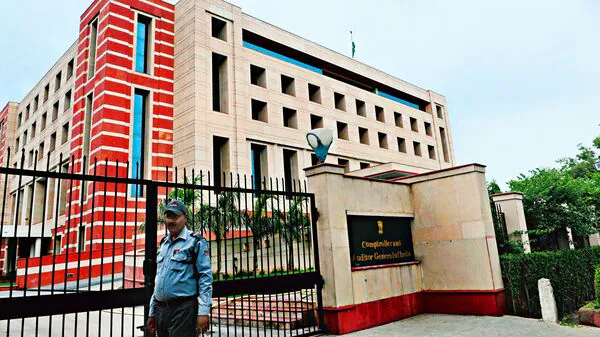
Mint Explainer Why CAG Plans To Audit Government Departments In Real Time
(MENAFN- Live Mint)
The Comptroller and Auditor General (CAG), the national auditor, is preparing to overhaul the way it audits government departments by moving from post-facto examination of accounts to real-time audits of public spending, project execution and service delivery.
The shift marks one of the most significant changes to India's audit architecture in decades, and comes at a time when governments are executing larger, technology-driven programmes that require closer and more continuous oversight.
Under the existing system, most CAG audits are carried out after the end of a financial year. This limits its ability to flag risks early, and reduces the scope for course correction while a project is underway. The new approach aims to plug this gap by allowing the CAG to review data, documents and progress metrics as they are generated, instead of waiting for the project to end.
Also Read | In a major reform, CAG to launch real-time audits to curb losses eaAccording to a CAG official, who wished to remain anonymous, the institutional shift toward real-time and remote audits is already underway and the full rollout could begin by late 2025 or early 2026.
Why is this change happening now?Traditional CAG audits are usually tabled one to three years after major decisions are made, which significantly reduces their usefulness for course correction. High-profile cases such as the 2G spectrum allocation and coal block allotments were audited well after the licences were issued, limiting the government's ability to prevent losses, even though the audits later became politically significant. The 2G report, tabled in 2010, estimated a ₹1.76 trillion loss; the coal block audit in 2012 flagged potential gains of ₹1.86 trillion to private companies. But by then, the damage was already done.
Several other less well-known CAG audits have also shown that if the findings had been available earlier-or during implementation-much of the damage could have been controlled. For instance, the liquor excise policy case in Delhi (implemented in November 2021; CAG report released in February 2025) exposed serious procedural lapses that persisted during implementation.
Similarly, the CAG's audit of the 'Project Arrow' scheme in post offices found that the delivery of money orders and the booking of electronic money orders in sampled post offices across Delhi, northeast India, Uttar Pradesh and Gujarat fell below the prescribed performance threshold. The scheme was launched in April 2008, but the CAG report came out only in 2015, long after the problems had already taken root.
Real-time auditing seeks to prevent such outcomes by helping ministries detect irregularities early. The shift is driven by understanding that public programmes are much larger, faster and more complex today than they were a decade ago, and that digital systems allow for granular, real-time visibility into spending and execution.
How will real-time audits work?The CAG will gain access to live datasets through newly integrated digital systems operating across states and ministries, covering procurement platforms, payment modules, progress dashboards, contract-management tools and beneficiary databases. Instead of scanning all files months after a project ends, auditors will review them as they are generated.
Under the CAG's new 'monitor performance audits' and 'subject-specific compliance audits' platforms, planned and actual milestones will be captured continuously, and any deviations will trigger structured alerts to functional wings and field audit offices. This will allow auditors to spot red flags-such as collusive bidding patterns, identical IP addresses for multiple bidders, cost overruns, or unexplained delays-early on in the execution cycle. Ministries will be able to intervene while funds are still being spent, not after the project has ended.
Also Read | ICAI to arm CAs with AI tools for sharper audits: Charanjot Singh NaDr Shyma Jose, assistant professor for economics at Jesus and Mary College, Delhi University, said,“The CAG's shift toward real-time auditing is a positive step toward Viksit Bharat as it enables the monitoring of the exchequer's money for projects under ministries and public sector units while they are still in progress, ensuring better governance and effective utilization of public funds."
She added,“This approach will enhance accountability, transparency, and efficiency in public spending by providing timely insights and enabling corrective measures during project implementation. However, this move will require strong technological integration and the development of a robust audit system."
What types of government programmes will this affect?The biggest impact will be on large, capital-intensive projects such as highways, railways, power projects, telecom infrastructure, oil exploration, irrigation, housing and rural development schemes. These sectors are especially prone to delays, cost overruns and quality lapses, making them ideal candidates for real-time scrutiny.
The shift to real-time audits will also affect schemes with high public interaction-such as health mission expenditures, welfare disbursements, municipal projects and state-level rural works-where leakages and poor monitoring have been longstanding challenges.
What does this mean for government departments?Departments will need to maintain accurate, timely, machine-readable data on project execution. Reporting formats may require redesigns; internal audit processes will have to be strengthened; and implementation agencies will face greater scrutiny while projects are underway. This could reduce the space for arbitrary procedures and improve accountability by increasing the compliance pressure on staff.
What does it mean for India's public finances?If implemented well, real-time can reduce wasteful expenditure, prevent cost escalations and improve asset quality. They can also narrow the gap between policy announcements and on-ground delivery, a recurring challenge in India's public spending system. This aligns with broader government efforts to modernize procurement, digitize payments, and build more transparent frameworks to monitor projects.
Also Read | Data privacy law upends OTT operations, forcing audits and new safeguaAccording to the CAG's FY24 report, 115 audits were completed that year, contributing to recoveries worth ₹6,266.68 crore. A continuous audit system could make such recoveries preventive rather than corrective.
What will success depend on?The success of real-time audits will depend on how smoothly the CAG integrates with digital systems across ministries and whether departments see this as a governance tool rather than a compliance burden. The shift represents a new phase in India's audit ecosystem-moving from post-mortem checks to live oversight of how public money is spent.
Abhash Kumar, a trade economist, said,“The idea is strong, but success will depend on sustained coordination and capacity building within departments. The rollout is achievable but will likely be gradual rather than immediate."

Legal Disclaimer:
MENAFN provides the
information “as is” without warranty of any kind. We do not accept
any responsibility or liability for the accuracy, content, images,
videos, licenses, completeness, legality, or reliability of the information
contained in this article. If you have any complaints or copyright
issues related to this article, kindly contact the provider above.
Most popular stories
Market Research

More Story







Comments
No comment