




403
Sorry!!
Error! We're sorry, but the page you were looking for doesn't exist.
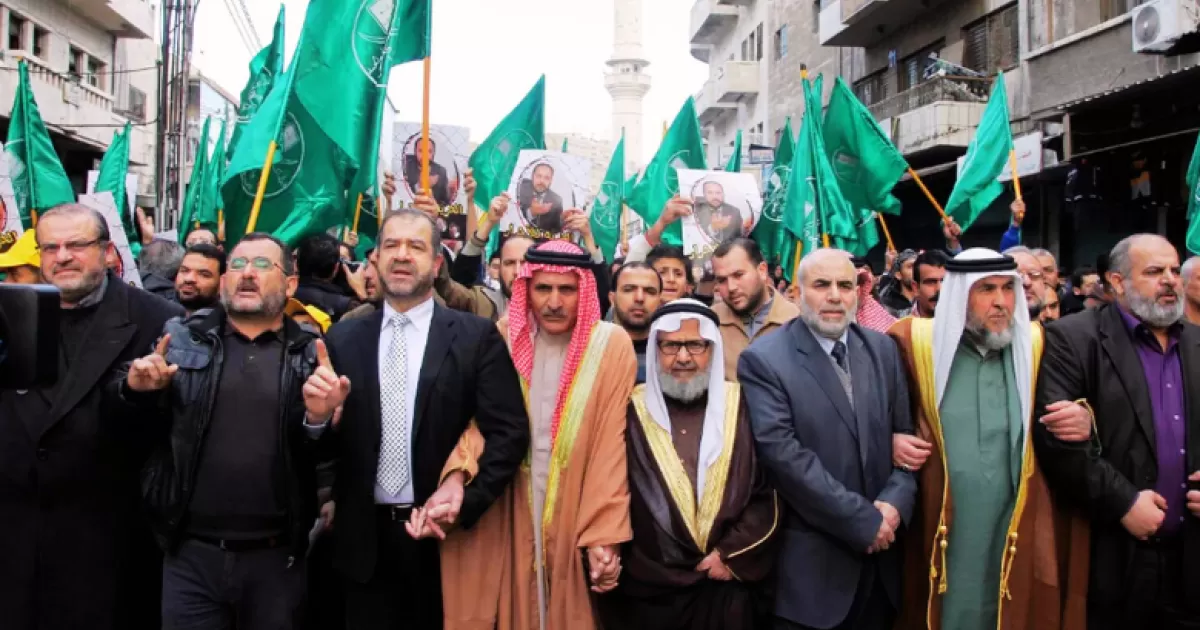
Islamic Action Front Under Scrutiny: Three Possible Paths After The U.S. Decision
(MENAFN- Amman Net) النسخة العربية
The executive order issued by US President Donald Trump regarding the ban group Brotherhood Muslims - coinciding with the rise of a hardline team in the State Department and Treasury (Rubio and Bisent), the Jordanian state is facing a critical geopolitical and legal test.
The US Secretary of State has shifted the focus of political Islam from "political management" to "ideological hostility." Rubio does not believe in the existence of "moderate political Islam," thus closing the door on the traditional diplomatic justifications Amman has been offering under the banner of "moderate political Islam."
This decision comes at a time when Jordan is witnessing a transformation in its internal political landscape following the recent parliamentary elections in which the Islamic Action Front party won a significant bloc (22% of the total seats) after a political modernization process launched by King Abdullah II in June 2021.
This paper concludes that the "maintaining the status quo" option has become almost impossible, and that the "radical solution" option is very costly, and it presents 3 possible scenarios for the fate of the party.
Accordingly, the paper favors the scenario of“forced repositioning,” which requires careful political engineering that completely separates the“party” as a legal national entity from the“group banned in Jordan” as a transnational ideology, in order to avoid US sanctions without undermining the outcomes of Jordanian political modernization.
Tides
Jordan did not actually need Trump's decision to start taking action against the Brotherhood; in 2025 the Jordanian government entered a spiral of legal and security escalation against the Brotherhood, mosques and their affiliated associations, from confiscating the group's headquarters to arresting its leaders and leveling charges of illegal funding.
With Trump announcing his intention to designate branches of the Muslim Brotherhood, the issue of the Islamic party has returned to the forefront strongly, with observers confirming that the American decision gives the Jordanian government, a strong ally of the United States, political cover for measures that may be taken against the influence of the Brotherhood and its political party.
Regionally, this move is part of a recent American trend to restrict the presence of Brotherhood organizations; in addition to Jordan, the study targets Brotherhood branches in Lebanon and Egypt, and Tel Aviv and allies such as the UAE and Saudi Arabia have praised Trump's decision.
Although the executive order is American and governed by American law (i.e., it applies first in the United States), the financial and banking influence of the United States suggests that designating the Muslim Brotherhood as a terrorist organization has an impact on a global level.
In Jordan, the Islamic Action Front has been active for decades as a face of moderate political Islam, despite its legal break with the banned parent organization. Therefore, this paper highlights three possible scenarios for the future of the Islamic Action Front in light of these developments, examining the opportunities, challenges, and internal and external repercussions, while assessing the positions of Jordanian actors before recommending the most likely scenario.
Political and legislative background in Jordan
The Muslim Brotherhood's relationship in Jordan dates back to before the establishment of the“political party” (Islamic Action Front) in 1992.
In past decades, the“Islamic Movement” – the Muslim Brotherhood in Jordan – was part of the political scene as a“moderate national” opposition, and analyses indicated that it was seen as a“key partner in power” during the years of previous martial law and then as a parliamentary opposition after 1989.
The Islamic Action Front party was founded in 1992 and reflects the advocacy and political activity of the Muslim Brotherhood, but coordination between the party and the parent group remained close.
On the legislative front, the Muslim Brotherhood did not receive special legislation; rather, they faced laws that curtailed the role of any organization with a religious affiliation. In 2012, the Political Parties Law was amended to prohibit the establishment of parties based on religion or sect, and electoral amendments imposed strict conditions, such as a minimum 7% voter turnout to win a parliamentary seat.
These conditions led to the near-total absence of the Islamic Action Front party from the House of Representatives in the 2020 elections, as it failed to surpass the national threshold. However, the 2022 amendment to the electoral system, which included the introduction of party lists, restored the party's strong parliamentary presence, as it won 31 out of 138 seats in the September 2024 elections (17 seats on the national list and 14 in local constituencies).
However, the electoral successes did not end the pressure on the party. In April 2020, the Court of Cassation ruled to dissolve the illegal Muslim Brotherhood, and subsequent government decrees in 2025 banned the group's activities and confiscated its headquarters and funds.
Accordingly, the idea of the“Islamic movement” now includes the“banned and illegal” Muslim Brotherhood as well as its legally licensed political arm.
This coincided with security investigations targeting the leaders of the group and the party; in April 2025, security services raided the offices of the Brotherhood and seized financial documents confirming the existence of irregularities in the party's funding.
April 2025 was a shock to the Islamic movement in Jordan, as the government imposed“correction of the legal imbalances and distortions in political life resulting from the overlap of the relationship between the group and the party.”
In short, the party's organizational status faces two legal and legislative problems: on the one hand, it lacks a unified original body representing the Brotherhood after the dissolution of the parent group, and on the other hand, it is subject to the controls of the new Parties Law (No. 7 of 2022), which emphasizes transparency, sources of funding, and membership.
The party was considered one of the longest-standing opposition parties in parliament, as it was seen as a moderate opposition that respected the system, and the party had not historically been involved in acts of violence.
However, recent tensions with the government and the party's connection to the armed cells apprehended by security forces have placed its fate at the forefront of political priorities. King Abdullah II stated in press remarks that the future of the Islamic movement in Jordan "is a matter for the judiciary," emphasizing that the rule of law guarantees justice for all.
Possible scenarios
1. The party was completely dissolved.
The first and most severe scenario involves the complete dissolution of the Islamic Action Front party and the loss of its seats in the House of Representatives (should a dissolution order be issued). This is something a source within the party, who describes the current scenarios as "ambiguous," does not rule out.
The Jordanian government might exploit this scenario to demonstrate its seriousness in combating any influence of the Muslim Brotherhood. On the one hand, the decision could strengthen relations with Western and Arab allies; reports have indicated that designating Brotherhood branches as terrorist organizations lends legitimacy to any country seeking to expand its measures against organizations linked to the Muslim Brotherhood.
Removing the party from the scene could also allow it to be presented as a model of a“moderate” Islamic movement being eliminated through the mechanisms of the legal state, which could gain the Jordanian government international cover.
However, dissolving the party carries significant risks to political stability. First, the loss of 31 out of 138 seats would immediately disrupt parliamentary representation. Press analyses predicted that the party's collapse would leave 31 seats vacant, potentially leading to the dissolution of parliament and early elections to fill those seats.
A source in the Islamic Action Front party does not rule out this option, despite describing the scene as "foggy," and expects a scenario of "approving the budget for the fiscal year 2026, dissolving parliament, and holding early elections."
This scenario risks creating tension. The party's broad base in the street may see the solution as a violation of political freedoms, which could fuel protests and incite violence, especially if the government continues its strong security measures against the party's supporters.
Observers have warned of the danger of being swayed by“hasty foreign” measures, as they caution that previous steps that used terrorist classifications on organizations such as“Al-Nusra Front” and then“Hayat Tahrir al-Sham” have raised doubts about their ultimate effectiveness, given the difference in ideological similarity between these organizations and the Muslim Brotherhood.
Internally, dissolving the party deprives the nation's representatives of representing an important segment of the electorate, and may be seen as a "closing of opportunity" for the opposition.
The vacuum could exacerbate polarization; instead of containing the protest through a parliament with a moderate voice, some young Islamists might be driven to more extreme organizations because of the political vacuum that contains them.
Externally, the United States and Israel are likely to celebrate this scenario because it aligns with their new policy against the Muslim Brotherhood, but at the same time it may provoke negative reactions from the traditional West and human rights organizations that see it as a violation of political reforms.
Such a move could also provoke tensions with countries that support the Muslim Brotherhood and political Islam, such as Türkiye and Qatar.
2 - Restructuring the party and merging it with other parties
This scenario involves changing the party's organizational identity or merging it into other political entities to continue its activities within a new framework.
Jordanian law (Parties Law 2022) allows for the merger of parties, whereby the legal entity of the original party is dissolved and a new entity begins.
From this standpoint, the Action Front may transform into a new party that is not officially recognized as belonging to the Muslim Brotherhood (such as removing the charter's allusions or changing its name), or it may join a parliamentary alliance with other Islamist or nationalist parties.
It is worth noting that various sources have suggested that by self-dissolution and re-establishment under a new name, they may be able to resume political activity within more flexible legal conditions.
In this context, the party maintains an element of opposition struggle in the arena while refraining from direct confrontation with the authorities; this model can be presented as a positive contribution to the success of transparency and governance standards (such as the commitment to disclosing funding and the new internal regulations), which may convince international partners of the flexibility of the party's approach.
But the restructuring faces difficult turns. The party's relations with the parent Muslim Brotherhood are almost organic and intertwined despite the legal separation (for example, the former Secretary-General of the Islamic Action Front Party, Murad Al-Adhaileh, became the group's General Supervisor before it was banned), and it is difficult for all members to accept a complete separation from the historical reference.
An attempt to reformulate the party's goals and constitution on the basis of separation from the parent group may face strong opposition from a hardline faction within it.
Consequently, the party may lose a portion of its traditional base, which is resistant to distancing itself from the Brotherhood. Even more challenging, any merger with another politically acceptable party is unlikely, as other parties would be hesitant to accept Brotherhood supporters who haven't altered their ideology. Furthermore, even with the adoption of a legal structure, close government oversight of funding sources and organizational activities remains in place, meaning that any superficial changes may not shield the party from future legal prosecution.
This move is likely to generate heated debate among the party's cadres and members, especially since a segment of young members sees the restructuring as a withdrawal from principles.
Therefore, the movement may split into two wings: one that seeks to maintain its well-known Islamic line, and the other that accepts transformation as a strategic solution.
Internationally, some observers may view the restructuring as a goodwill gesture by the party toward its international partners, potentially reducing pressure from the US administration. However, others may consider it merely a tactical maneuver. Most Arab states that support the ban (such as Egypt and Saudi Arabia) may not grant their confidence until they see tangible results, while Western powers (France and Europe) may continue to demand broader democratic guarantees from Jordan.
3. Maintaining the status quo through political understandings
This scenario means that the party will continue to operate under the name "Islamic Action Front" without dissolution or radical restructuring, bound by implicit agreements with the government.
This option allows for maintaining relative stability in the political landscape, as the party continues to play its role as a moderate opposition that raises popular demands (such as supporting the Gaza cause and fighting corruption) but within the framework of understandings with the authority.
This balance allows the government to leverage the party's popular legitimacy to guide peaceful protests and ensure that demonstrations remain within the bounds of the law (avoiding a repeat of the leaderless protests seen in some Arab Spring countries). It also protects Jordan from the political arena being emptied of a moderate Islamic voice, a prospect the regime has always feared to prevent a political vacuum that could be filled by extremists.
On the other hand, continuing without escalating steps preserves Jordan's international image, where it may be seen as a country that balances security control and the rule of law with respect for relative freedoms.
This path is not without risk. It means keeping the party under the government's security and legal scrutiny and could expose it to further restrictions. For example, the United States or lobbying groups in Washington might demand stricter measures against the party after its branches are designated globally, placing Amman in a dilemma between satisfying its American ally and appeasing its domestic base.
Within the party itself, this situation may be considered "appeasement," which increases the sensitivity of the "Muslim Brotherhood youth" who are pushing for more stringent positions.
In addition, the party remains subject to ongoing financial and judicial investigations; observers have noted that the party is now "under scrutiny" for any potential violations of the constitution or the law, with the decision to dissolve it likely to be postponed until after these investigations are completed.
This solution preserves the party's current legal status. While the group's activities were officially banned in April 2025, the party's license was not revoked.
Therefore, the party maintains a presence in parliament and on the street. However, this comes with an internal division; one faction within the party is demanding legal and administrative reforms (such as amending the constitution) to avoid future crises, while others insist on maintaining the original ties with the Muslim Brotherhood.
Internationally, this continuation might be considered more acceptable than a forced dissolution; preserving a traditional opposition voice limits human rights criticisms. However, maintaining the status quo is insufficient if the White House continues to exert pressure; other international actors may push for concrete action. Without clear change, the Jordanian government could be perceived by Washington or some international institutions as failing to heed the warnings of its allies.
The Jordanian state's position and the party reactions
Since the issuance of the American order, the Jordanian government has maintained a cautious stance. King Abdullah II affirmed that "the fate of the Islamic movement is in the hands of the judiciary," referring to the continuation of ongoing legal proceedings.
The Islamic Action Front was placed under strict security and judicial surveillance, and the authorities formed a committee to inventory the group's funds and assets, and economic institutions linked to the Islamic movement were closed.
On the party scene, the Islamic Action Front denounced the external pressure, demanding a meeting between the government and the party to discuss matters away from“American interference.”
According to party leaders, the current investigations have used financial evidence against them and launched a media campaign, while they maintain their commitment to the law and the integrity of their funding. However, other voices within the party, particularly from the younger generation, believe the time has come to completely rebuild the organization. Asharq Al-Awsat reported that some are calling for a complete separation from the parent group and a rewriting of the party's constitution.
The data indicates that the Jordanian government will proceed cautiously among the three options; it has absolutely no intention of rushing to dissolve the party before the ongoing legal proceedings are concluded.
In the short term, the third scenario (maintaining the status quo with strict monitoring) remains the most likely, as it allows the authorities to buy time and manage the crisis within a legal-political-security triad.
Within this scenario, there may be an agreement within the decision-making circles to give the party an opportunity to adopt internal organizational reforms (as it itself announced the amendment of its internal regulations), so that it fully meets the requirements of the new laws and avoids any impression of an explicit association with the Brotherhood.
Conversely, the second scenario (restructuring or merging) remains a fallback option should popular or external pressure intensify. Instead of a solution that would likely provoke public anger, the government might accept a compromise that renames the party or legally merges it, potentially reducing the justification for intervention and averting a costly parliamentary vacuum and early elections. Reports indicate that the strategy of "severing ties with the parent Muslim Brotherhood" may have been discussed within the party itself.
Therefore, the shift towards a larger or coalition party – a deferred desire – can be considered a compromise that combines the continuation of Islamic dialogue channels with the constitution.
The most extreme scenario (a complete solution) seems unlikely at present, due to both internal and external considerations. The Jordanian government will not rush to purge parliament of its Islamist opponents, fearing a political vacuum that would be difficult to fill, especially given the ongoing war in the region.
Likewise, the anticipated court rulings will form the final framework for any step, and therefore an immediate solution is unlikely to be announced before these rulings are issued.
Therefore, the third scenario (maintaining the status quo through understandings) appears to be the most likely, with the understanding that the party will be required to undertake internal organizational reforms to remove the legal ambiguity. Even so, the party remains at a crossroads; it must either redefine itself, distancing itself from a prohibited reference point, or lose its legitimacy entirely to new political alliances.
In any case, the coming days will remain crucial, as the cautious balance that Oman is currently pursuing is subject to the test of escalating popular and regional pressure, and the government's final vision will emerge when the fate of the legal files is settled and the decision of the American administration matures.

Legal Disclaimer:
MENAFN provides the
information “as is” without warranty of any kind. We do not accept
any responsibility or liability for the accuracy, content, images,
videos, licenses, completeness, legality, or reliability of the information
contained in this article. If you have any complaints or copyright
issues related to this article, kindly contact the provider above.
Most popular stories
Market Research

More Story




Comments
No comment