




403
Sorry!!
Error! We're sorry, but the page you were looking for doesn't exist.
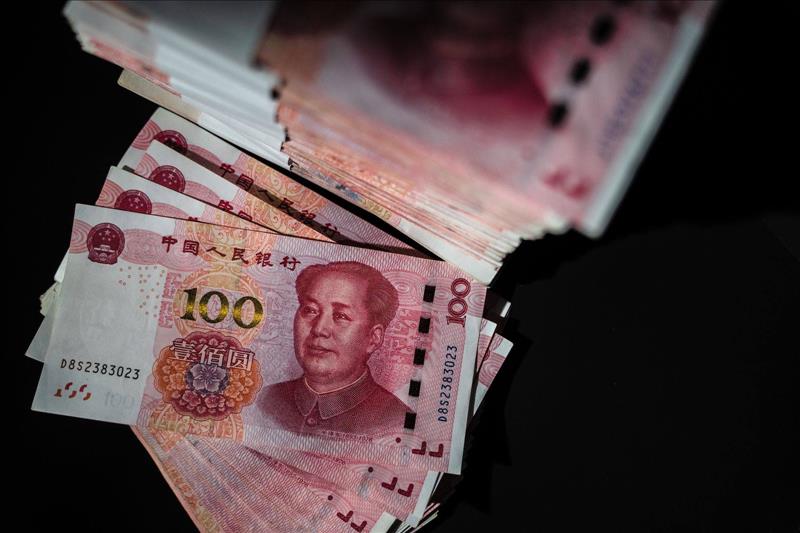
Xi's Big Chance To Take The Yuan Fully Global In 2026
(MENAFN- Asia Times)
TOKYO - As 2025 closes and 2026 approaches, one of the biggest global economic and financial questions is the future trajectory of the Chinese yuan. More to the point, what might President Xi Jinping be willing to do to increase the currency's global popularity?
India eyes Russia S-400 deal despite US sanctions threat![Trump's energy power play imperils Russia-Turkey ties]() Trump's energy power play imperils Russia-Turkey ties
Trump's energy power play imperils Russia-Turkey ties
No US-Russia deal for now, as Ukraine suffers reversals

Sign up for one of our free newsletters
In the homestretch of this year, there are signs that Xi's inner circle is worried that the yuan is rising too fast. Earlier this week, the People's Bank of China set its yuan fixing rate at 7.0733 per US dollar, between 164 and 179 pips below the average of Bloomberg and Reuters surveys.
The PBOC's range for yuan moves is 2% on either side. And at the moment, market expectations are that the Chinese currency will move lower, which is the most pronounced since early 2022.
No prominent currency analyst is predicting a big yuan devaluation in 2026. But the year ahead will be a pivotal one for Xi's drive to make the yuan into a top international reserve currency.
The yuan is gaining steadily as a medium of finance and trade, but at a slower pace than Xi's inner circle seemed to advertise they wanted over the last 12-plus years of his presidency.
In the short run, the PBOC is on the front lines. It falls to Governor Pan Gongsheng to balance Xi's campaign to build trust in the yuan and support exports at a moment when China is battling deflation.
With the US Federal Reserve expected to cut rates again this month, mainland manufacturers have every reason to worry about losing competitiveness vis-à-vis a weaker dollar.
In November, China's official purchasing managers' index was in the red for an eighth straight month as US tariffs hit factory activity. Manufacturers already faced persistently weak domestic demand and rabid price competition. Now, global uncertainty is sending intensifying headwinds China Inc's way.
Yao Yu, founder of financial technology company RatingDog, expects December to confirm a“weak expansion” in Asia's biggest economy, noting that“manufacturers reduced their workforce and purchasing volume, and became more cautious in inventory management.”
Barclays economist Jian Chang, meanwhile, says the data may be offering false hope that growth is stabilizing. Recent“contractionary prints,” Chang notes,“point to weak domestic demand, while the rebound in new export orders and shipping data suggest exports remain a key growth driver.”
Yet“while exports may experience some recovery following the recent trade truce with the US, fluid geopolitical developments in recent weeks suggest that uncertainty will persist.”
Even though China currently has a trade truce with Trump, one expected to extend until late 2026, its property crisis continues to slam household and business confidence.
It hardly helps that Xi's pledges to increase the role of domestic consumption and achieve tech self-reliance, without massive fiscal stimulus that would encourage increased leverage in the financial system, very much remain works in progress.
Latest storiesIndia eyes Russia S-400 deal despite US sanctions threat
No US-Russia deal for now, as Ukraine suffers reversals
It's against this backdrop that Xi and his team are strategizing the yuan's direction. And given the Trumpian chaos emanating from Washington, the year ahead could present Xi with a unique window of opportunity to make big yuan inroads against the dollar.
Indeed, Asian central banks and investors sitting on mountains of US Treasury securities are increasingly concerned about Washington's US$38 trillion debt load and stubbornly high inflation.
2025 might thus be remembered as something of an inflection point for the yuan-versus-the-dollar debate. Since taking the reins in 2013, Xi has made yuan internationalization a top priority.
The real push began in 2016, months before Trump's first election victory. That was when Xi got the yuan included in the International Monetary Fund's“special-drawing rights” basket along with the dollar, euro, yen and pound.
Now, says deputy PBOC governor Zhu Hexin, the yuan is used to settle 30% of China's $6.2 trillion in global trade in goods. Once all cross-border payments - including foreign investment and bond purchases – are tallied, the yuan's share jumps to 53%. The yuan now surpasses dollar-based transactions in China.
Yet as a share of global foreign exchange reserves, the yuan isn't likely where Xi and his team would hope. According to IMF data, the dollar accounts for more than 58% of central bank reserves, compared with the euro's 20% and the yuan's just 2%.
This is why Team Xi is working behind the scenes to build a bigger and multi-layered yuan infrastructure in preparation for a dollar reckoning that Trump appears to welcome.
Since his first term, Trump has talked early and often about engineering a weaker dollar. The Trump 2.0 White House has pushed the idea of a“Mar-a-Lago accord” on currency rates, modeled after the 1985“Plaza Accord,” to weaken the dollar against the yen. Trump's environed pact would likewise aim to force China to accept a sharply stronger yuan.
Trump's assault on the Fed is also mainly about the dollar. No US institution, arguably, commands greater respect abroad than the one Fed Chair Jerome Powell leads.
That Trump has gone out of his way to threaten to fire the global face of the US economy boggles the mind. Trump also has alarmed markets by calling Powell, who protects the value of US Treasuries, a“fool,” a“low IQ person,” a“moron,” a“numbskull,” and a“stiff.”
At home, the yuan's global popularity is hampered by structural impediments. Cornell University's Eswar Prasad says China's reluctance to make the yuan fully convertible limits Xi's chances of internationalizing the currency.
“While China has indeed opened up its markets, nominally, both bond and equity markets, to international investors, the question is whether there is enough trust that the government has moved to durably lift the capital controls,” Prasad notes.
Beijing, Prasad says, must also build a more international capital markets framework, strengthen the rule of law and give the PBOC greater independence.
“These are crucial for the trust of domestic and foreign investors,” Prasad says.“The US is losing the strength of its institutional framework, but what is very important in international finance is that you don't need to be the paragon of perfection. You just need to have a better combination, and the combination that the US brings to the table is still very difficult to challenge.”
Yet Trump's policies, not least his punitive tariffs, may indeed be challenging that enviable status. Xi could exploit that opportunity by giving his economic team, including the PBOC, political cover to let the yuan rise.
“The renminbi is hugely undervalued,” argues economist Brad Setser at the Council on Foreign Relations.“This is an impediment to tackling China's enormous current account surplus and the leadership's stated desire of boosting domestic demand.”
“Instead of managing the currency tightly against the dollar,” Setser said,“it is high time for the authorities to promote strong appreciation against the dollar and on a trade-weighted basis.”
Japan is a case in point. Since 1999, Japan has seen all too many governments play it safe by prioritizing lower interest rates and a weak yen over structural reform. All came and went with little to show for their efforts.
Even the prime ministers most associated with economic reform - Junichiro Koizumi (2001-2006) and Shinzo Abe (2012-2020) - failed to curb the debt-fueled stimulus arms race now sending Japanese government bond yields sharply higher.
It's now painfully clear that 25-plus years of zero rates have backfired. The weak yen deadened the urgency for lawmakers to level playing fields and increase competitiveness. It took pressure off corporate CEOs to innovate, restructure, disrupt and boost productivity.
Sign up for one of our free newsletters
-
The Daily Report
Start your day right with Asia Times' top stories
AT Weekly Report
A weekly roundup of Asia Times' most-read stories
Xi's China wants to avoid this mistake if it wants to become the world's premier innovation powerhouse. Beijing is fortunate to be up against a US leader having his head stuck in 1985. And just as Xi's“Made in China 2025” project is upending the global economy, by investing big in where it thinks the world will be in 2035.
This goes, too, for a Global South that's increasingly forging its own path – one that is banking less and less on where the US might fit in a decade from now.
Even as Trump complains about China's dominance, he's paving the way for Asia's biggest economy to expand its influence. Ending US development aid created more space for Beijing's Belt and Road Initiative to extend its colossal infrastructure investment strategy around the globe, particularly in the Global South.
China, of course, has much to prove, too. Letting the yuan rise would communicate confidence that Xi's economy is ready for the global prime time. That, in turn, could pull in more foreign investment.
Yet it's more than that, Setser argues. A weaker yuan would reinforce the idea that China's future comes with big helpings of instability.
“In particular,” Setser explains,“a rising renminbi could boost real incomes, and thus consumption and services, especially if a more active fiscal policy were used as a reinforcing tool to underpin consumer demand, domestic activity and limit deflationary pressures.”
The worry, Setser notes, is that the recent Communist Party plenum means, despite the lofty talk of“high-quality growth,” that mainland growth will continue to rely on the existing state-led, investment-driven growth model with a strong focus on manufacturing investment and insufficient support for household demand.
“That, in turn, will underpin continued large external surpluses and greater trade frictions with the rest of the world. Net exports have been contributing far too heavily to China's recent growth, and a stay-the-course policy implies China's growth will continue to rely on its ability to draw demand away from its trading partners.”
Follow William Pesek on X at @WilliamPesek
Sign up here to comment on Asia Times stories Or Sign in to an existing accounThank you for registering!
An account was already registered with this email. Please check your inbox for an authentication link.
-
Click to share on X (Opens in new window)
Click to share on LinkedIn (Opens in new window)
LinkedI
Click to share on Facebook (Opens in new window)
Faceboo
Click to share on WhatsApp (Opens in new window)
WhatsAp
Click to share on Reddit (Opens in new window)
Reddi
Click to email a link to a friend (Opens in new window)
Emai
Click to print (Opens in new window)
Prin

Legal Disclaimer:
MENAFN provides the
information “as is” without warranty of any kind. We do not accept
any responsibility or liability for the accuracy, content, images,
videos, licenses, completeness, legality, or reliability of the information
contained in this article. If you have any complaints or copyright
issues related to this article, kindly contact the provider above.
Most popular stories
Market Research

More Story








Comments
No comment