


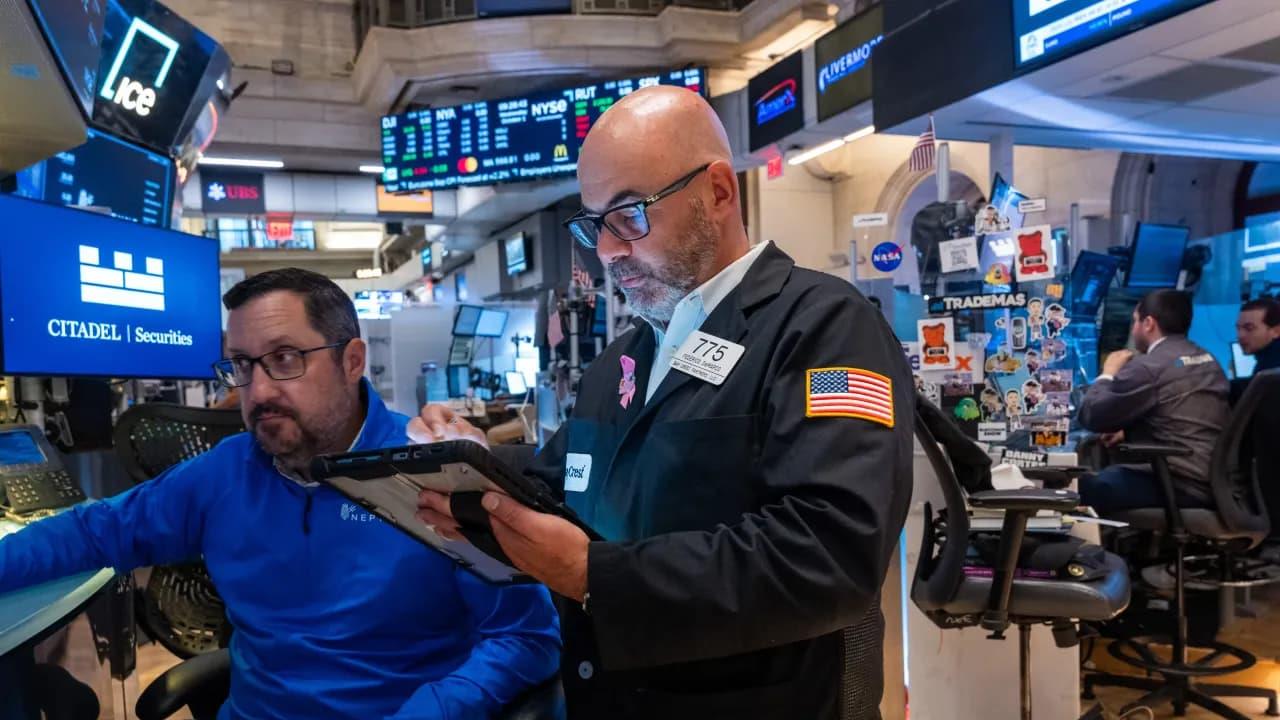
What Is A Block Trade?


- According to the New York Stock Exchange, a block order consists of 10,000 shares of a given stock or at a total market value of $200,000 or more. This method allows buyers to maintain price stability for the securities, as the open market often experiences fluctuations in asset value and trading volume. Block trades offer a faster way for institutional investors to unwind or build a stake.
Block trades are large, privately negotiated deals in which big investors move large blocks of shares away. By conducting the transaction quietly and in one go, institutions can buy or sell tens of thousands of shares without tipping off the market or triggering a sudden jump or drop in the stock price.
According to CMC Markets, these trades are typically executed by investment banks or electronic block-trading platforms. For large investors, it is a way to shift major positions smoothly. For everyone else, unusually large block trades can sometimes signal that sentiment around a stock or sector may be changing.
The Figures
According to the New York Stock Exchange, a block order consists of 10,000 shares of a given stock or at a total market value of $200,000 or more. These do not include penny stocks and are made for rather more established or blue-chip companies.
Trading in large blocks of securities typically occurs outside a centralized exchange or the open market, which classifies these products as over-the-counter (OTC). This method allows buyers to maintain price stability for the securities, as the open market often experiences fluctuations in asset value and trading volume.
Impact
Large orders placed on an open exchange can send a stock moving within seconds. Block trades help institutional investors sidestep that turbulence by letting them move sizable positions without tipping off the market.
They also offer a faster way to unwind or build a stake. Instead of building a position by conducting dozens of trades over days or weeks, institutional investors can alter their portfolio at one go. Additionally, these deals are arranged off-exchange, so other investors do not immediately spot a major buy or sell order, lowering the risk of front-running or speculative pressure.
However, there are a few risks as well. Since a buyer acquires a large block of shares at once, the seller often has to offer a discount to make the deal worthwhile and account for the liquidity risk. If a broker-dealer steps in to handle the trade and struggles to unload the shares quickly, a sudden market move can leave them exposed to losses.
Block trades have also faced regulatory scrutiny worldwide. In 2022, the U.S. Securities and Exchange Commission launched an investigation into several banks to determine whether they had violated the rules by tipping off hedge funds ahead of large share sales.
What It Means For The Market
Because large chunks of stock are changing hands outside public markets, many investors treat block-trade prices as a reference point – a rough“floor” price that is the stock's fair value. For analysts, a block trade can offer a clearer signal of what large institutional players think a stock is worth, and it is often viewed as more reliable than retail buzz.
For updates and corrections, email newsroom[at]stocktwits[dot]com.

Legal Disclaimer:
MENAFN provides the
information “as is” without warranty of any kind. We do not accept
any responsibility or liability for the accuracy, content, images,
videos, licenses, completeness, legality, or reliability of the information
contained in this article. If you have any complaints or copyright
issues related to this article, kindly contact the provider above.


Comments
No comment