




403
Sorry!!
Error! We're sorry, but the page you were looking for doesn't exist.
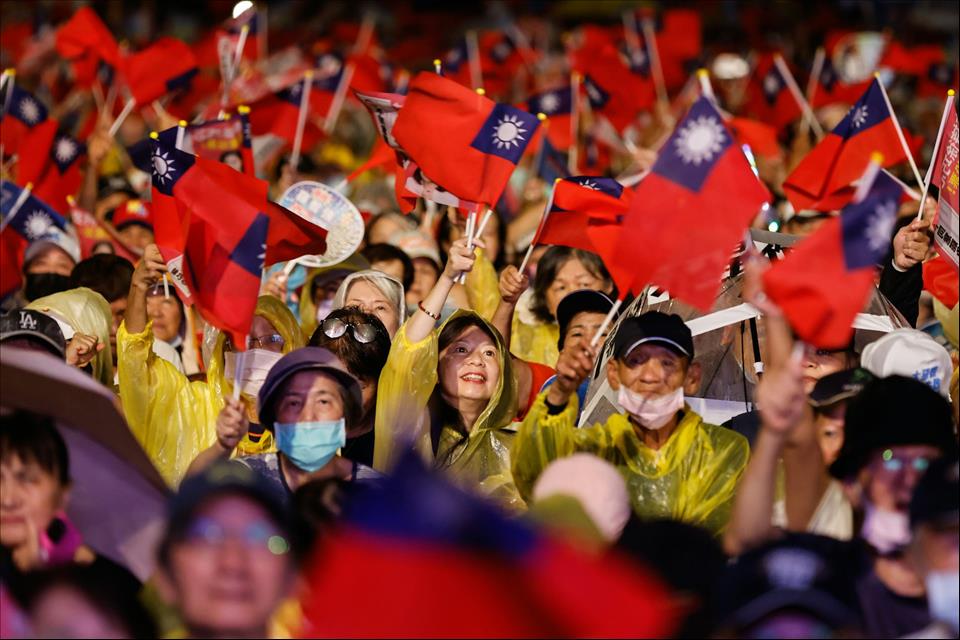
What Is Taiwan And Why Is It Important? A New Study Shows Australians Struggle To Answer These Questions
Author: Mei-fen Kuo
(MENAFN- The Conversation) Recently, a new documentary was screened across Australia about the late Taiwanese Australian professor Chwei-Liang Chiou, who dedicated his life to improving relations between Taiwan and Australia.
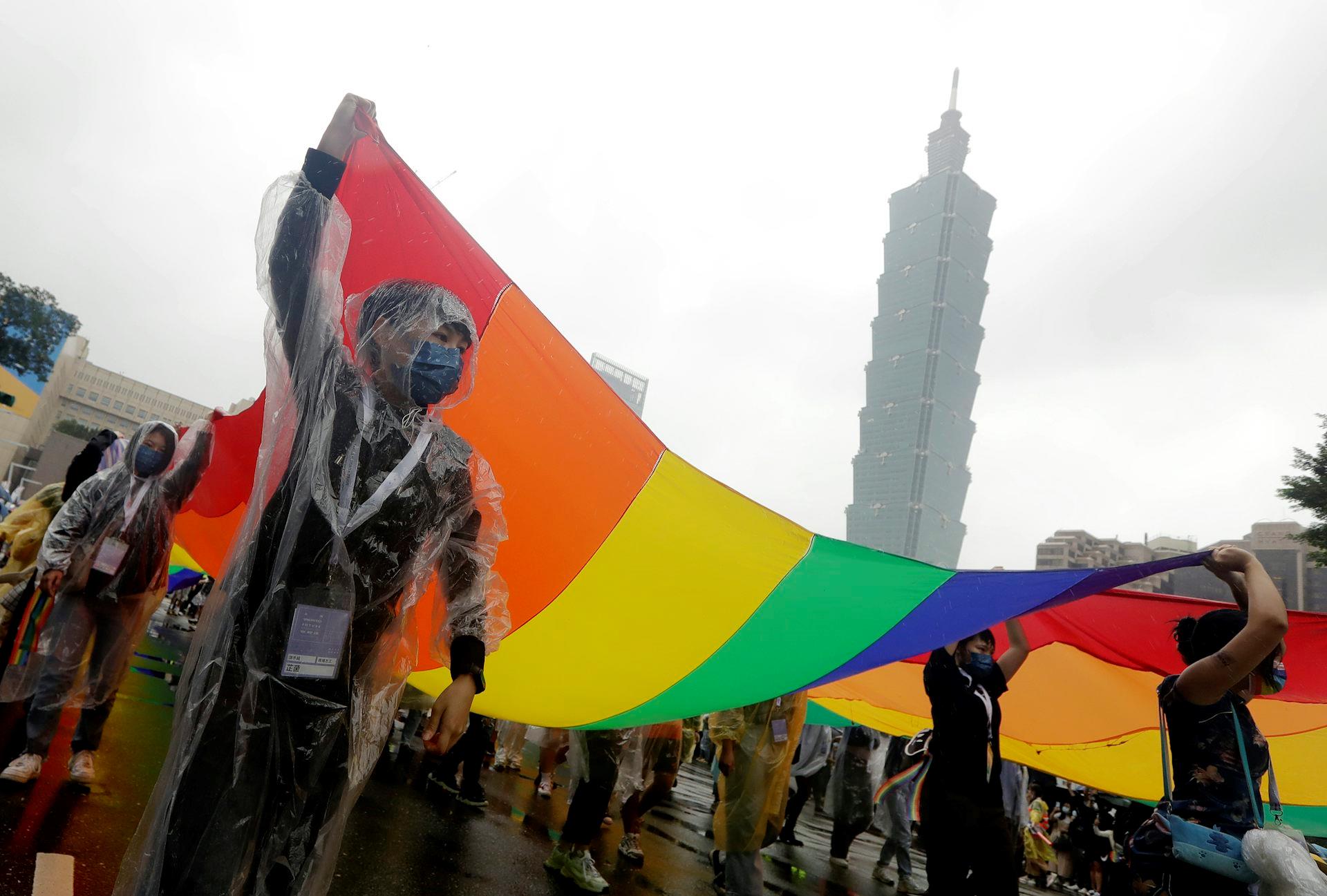
An LGBTQ+ pride celebration in Taiwan, which became the first in Asia to legalise same-sex marriage in 2019. Chiang Ying-ying/AP A priority or 'distant' problem?![]()
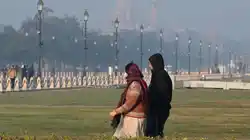
People walk past the Taipei 101 skyscraper in Taipei, Taiwan. Ritchie B. Tongo/EPA![]()
A Taiwanese voter casts her vote during the 2024 general election, in Tainan City, Taiwan. Ritchie B. Tongo/EPA![]()
Foxconn employees work on an assembly line of electric vehicle batteries in Kaohsiung, Taiwan. Ritchie B. Tongo/EPA What Australia can do

At the Brisbane premiere, former federal MP Graham Perrett opened with a line often attributed to the Soviet writer Aleksandr Solzhenitsyn:“We know they are lying [...] they know we know they are lying [...] but they still lie.”
He said the line captured Chiou's life work. In his classes and writings, Chiou spent considerable time countering false claims about Taiwan's past and exposing Beijing's denials of Taiwan's democratic identity.
Truth and understanding sit at the heart of today's debate about Taiwan.
And as a new report, which I co-authored for the Australian Strategic Policy Institute makes clear, many Australians do not fully understand what's at stake if Taiwan's democracy is someday threatened by China. Indeed, many Australians don't actually understand Taiwan at all.
An LGBTQ+ pride celebration in Taiwan, which became the first in Asia to legalise same-sex marriage in 2019. Chiang Ying-ying/AP A priority or 'distant' problem?
As part of our study, we interviewed hundreds of Australians in business, government, universities and community groups to understand how they perceive Taiwan, how they think a Taiwan Strait crisis might affect Australia, and why public understanding of Taiwan remains limited.
We also analysed more than 100 media and public policy documents to see how Taiwan is framed in Australian public life.
The vast majority of our participants agreed on one point: Taiwan is a stable and trustworthy partner. They linked this trust to shared values, such as regional safety, fair trade, social justice and democratic life.
However, people's views shifted when we asked whether these values should guide Australia's response if China uses force against Taiwan. Some believed Australia should support Taiwan because it is a fellow democracy. They felt strong democracies in Asia helped maintain stability in the region.
People walk past the Taipei 101 skyscraper in Taipei, Taiwan. Ritchie B. Tongo/EPA
Others did not see it this way. They believed the tensions across the Taiwan Strait were“not Australia's problem”, and they were less concerned about the future of Taiwan's democracy.
Some could not imagine Australian troops being drawn into what felt like a distant dispute. Taiwan's future seemed unrelated to Australia's own safety.
This viewpoint reflects Beijing's preferred framing of the situation. It turns the Taiwan issue into a local debate about whether Australia should“step in” in the event of a conflict.
However, it obscures the fact that a crisis in the Taiwan Strait would not be distant – it would affect Australia directly. It would shape our economy, our sea trading routes and the wider environment that supports our democratic life.
Another concern came specifically from our participants of Chinese heritage, with roots in mainland China, Taiwan, Hong Kong, Malaysia and elsewhere. Many worried about the social consequences inside Australia if the government were to support Taiwan in a conflict.
Some feared Chinese Australians could face suspicion or hostility, with people making little distinction between communities with very different histories and political views.
Others said Australian society often treats all Chinese Australians as a single“Chinese community”. This view suits Beijing's political interests, but does not reflect the diversity of the Chinese Australian population.
Why Australians know so little about TaiwanOur interviews revealed widespread uncertainty about what Taiwan actually is. People asked if it was a country, a province, a democracy or simply a place that makes computer chips. Many did not know how to describe it at all.
China seeks to absorb Taiwan under its“One China” principle, while Taiwan's 23 million people continue to resist annexation in order to protect their democratic institutions, civil liberties and way of life.
Decades of unclear Australian diplomacy have shaped this confusion. Since recognising the People's Republic of China in 1972, Australia has maintained unofficial but substantial ties with Taiwan, often expressed in cautious and ambiguous language that obscures Taiwan's reality as a self-governed democracy.
A Taiwanese voter casts her vote during the 2024 general election, in Tainan City, Taiwan. Ritchie B. Tongo/EPA
Public understanding is also filtered through a simplistic view of the great power rivalry between China and the United States, which tends to collapse Taiwan into a geopolitical chess piece.
This confusion affects how Australians view the“One China policy”. This policy acknowledges Beijing's position that Taiwan is part of China, but does not accept it. It allows Australia to maintain unofficial relations with Taiwan, while not taking a stance on Taiwan's sovereignty.
Many assume the policy means Beijing can decide Taiwan's future. It does not. But this misunderstanding causes people to step back from thorny questions about Taiwan's future at the very moment when deeper knowledge is needed.
Our participants frequently pointed to Australian news coverage of Taiwan as a major source of confusion. Taiwan usually appears only in stories about a possible war with China. Its democratic life, public debates, economic innovation, gender equality and green energy efforts rarely get covered.
One young Taiwanese Australian summarised it well:“My fear isn't only invasion. It's that Australians still don't know Taiwan is already a separate political and economic society.”
This narrow focus hides Taiwan's importance to Australia. For example, a crisis would disrupt Australia's access to medical supplies, semiconductors and digital technologies, as well as banking interfaces and major sea routes for energy and food.
Foxconn employees work on an assembly line of electric vehicle batteries in Kaohsiung, Taiwan. Ritchie B. Tongo/EPA What Australia can do
Across our interviews, several priorities emerged:
- to improve public literacy about Taiwan beyond the frame of conflict, emphasising the fact its democracy is distinctive and hard-won
to avoid treating Chinese Australians as a single group to clarify the meaning of the One China policy for the Australian public, and
to better prepare Australians for the social impacts of a crisis, not only the strategic ones.
Taiwan's democracy is not a burden for Australia; it is a reminder of the values we say we stand for.
But Australia cannot defend what it does not understand. Our interviews show that gaps in public knowledge about Taiwan are giving room for Beijing's authoritarian narratives to slip into Australian debates – and go unquestioned.
Institution:Macquarie University

Legal Disclaimer:
MENAFN provides the
information “as is” without warranty of any kind. We do not accept
any responsibility or liability for the accuracy, content, images,
videos, licenses, completeness, legality, or reliability of the information
contained in this article. If you have any complaints or copyright
issues related to this article, kindly contact the provider above.
Most popular stories
Market Research

More Story





Comments
No comment