






403
Sorry!!
Error! We're sorry, but the page you were looking for doesn't exist.

Visual Thinking: The Strategy That Could Help You Spot Misinformation And Manipulated Images
Author: Shaun Nolan
(MENAFN- The Conversation) A fake photo of an explosion near the Pentagon once rattled the stock market. A tearful video of a frightened young“Ukrainian conscript” went viral: until exposed as staged. We may be approaching a “synthetic media tipping point”, where AI-generated images and videos are becoming so realistic that traditional markers of authenticity, such as visual flaws, are rapidly disappearing.
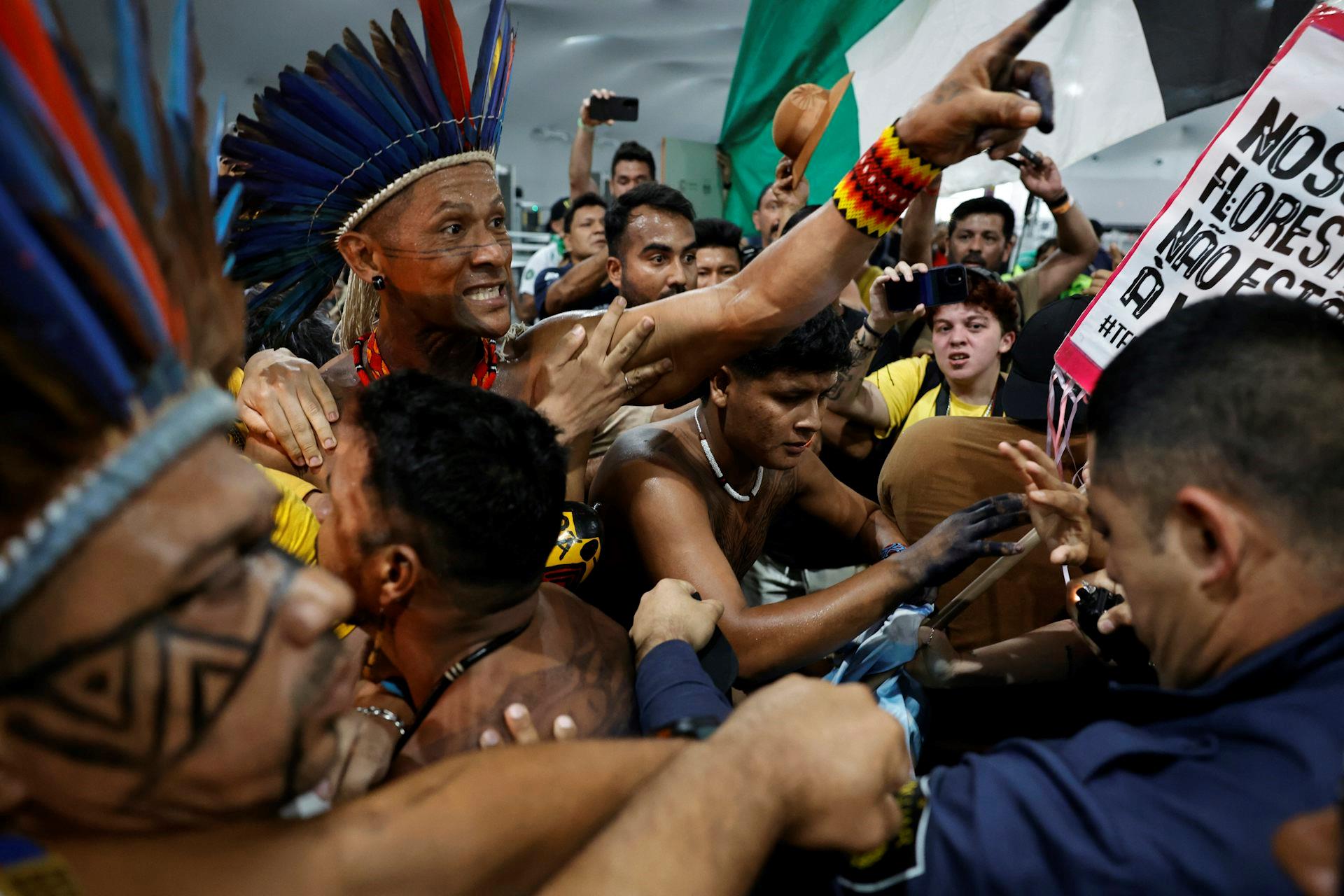
Protesters clash with security forces in an attempt to storm the COP30 headquarters in Belém, Brazil. Andre Coelho/EPA-EFE

In 2025, 70% of people struggle to trust online information, and 64% fear AI-generated content could influence elections. We are entering an era where seeing is no longer believing.
In such a world, learning to critically decode media is key to safeguarding truth, trust and democracy.“Visual thinking strategies”, a discussion technique originally developed for art education, offers a simple but powerful framework for navigating today's complex media landscape.
It is based on three open-ended questions around a piece of visual media (like a painting, photograph or video):
ehat's going on in this picture? What do you see that makes you say that?What more can we find?
These questions prompt people to slow down, observe carefully and justify their interpretations with evidence. The approach is not only about looking, it's about thinking together.
It usually happens in a group, guided by a facilitator – often a teacher – who paraphrases and connects participants' ideas. Participants share and listen to individual observations, build on each other's contributions, challenge assumptions and refine their thinking. This process surfaces biases, mitigates groupthink and promotes critical engagement.
Read more: What is AI slop? Why you are seeing more fake photos and videos in your social media feeds
Imagine you are shown a picture of a protest and asked“What is going on in this picture?” You say,“It looks like a climate march.” When asked,“what is it that you see makes you say that it is a climate march?”, you point to the signs. Others notice the police presence, the age of the crowd, the place where it's happening or the lighting.
As the discussion unfolds, the group begins to see the image from multiple angles. This approach is exactly what's needed in a world of manipulated images and political polarisation.
This strategy doesn't guarantee“truth.” It cultivates habits of mind that resist manipulation: curiosity, evidence-based reasoning and tolerance for ambiguity. Even if someone responds in bad faith, its structure – especially the second question, which is intended to trigger critical analysis – requires them to explain their reasoning. This opens space for others to question, clarify and reframe.
Early classroom observations in the 1990s revealed that children carried these reasoning habits beyond the art class, asking,“what's going on in this text?” or“in this maths problem?” Learners internalise this protocol and apply it intuitively to other activities in their everyday lives.
Why this approach matters nowThe visual thinking strategies approach has positive implications not just for media literacy, but for fostering dialogue in divided societies and improving decision-making at a policy level.
Polarisation thrives on certainty and echo chambers. This strategy creates space for multiple interpretations and respectful disagreement, modelling the kind of dialogue democratic societies need. Participants consider alternative viewpoints and revise their thinking as new observations emerge. By showing how to disagree constructively, this technique can help rebuild trust in public discourse.
Amid mass migration, climate crises, cultural conflict and growing inequality, empathy is not just a moral virtue: it's a strategic asset for education and social cohesion. Stepping into others' perspectives through interpreting images that reflect diverse experiences and worldviews can help people navigate this, engaging with the emotions and contexts behind the images.
Leaders and policymakers increasingly rely on visual data such as maps, infographics and dashboards. Organisations like the OECD, World Bank and UN acknowledge this trend. Yet visual literacy is rarely taught in business or political science education, despite the growing use of visual materials in courses.
The benefits extend to fields where visual data drives critical action: humanitarian organisations using satellite imagery to track displacement, or climate scientists analysing environmental impact models. It can be used to train teams to notice patterns, question assumptions and surface alternative perspectives, supporting more informed, equitable outcomes.
As AI, climate change and economic disruption reshape our societies, we need tools that help us think clearly, communicate effectively and collaborate across divides. This is one such tool that requires no expensive technology or background in art; only a willingness to look, listen, and learn. In doing so, it cultivates the capacities – curiosity, humility and critical thinking – that our world urgently needs.
Try it yourselfProtesters clash with security forces in an attempt to storm the COP30 headquarters in Belém, Brazil. Andre Coelho/EPA-EFE
Take a moment to look at the above picture. Then, alone or with a group, ask:
What's going on in this picture? What's your first impression? Is this a protest? A moment of mourning? A celebration?What do you see that makes you say that? Look closely. Are you focusing on the clothing? The facial expressions or the way the people are standing? Do you recognise the language on the signs? What more can we find? What's happening in the background? Who is included – and who might be missing? Are there many people? What assumptions are you making about the people or the event? Why?
This image shows indigenous activists and students who forced their way into the COP30 venue in Belém, Brazil, on November 11, 2025. They clashed with security personnel at the entrance while demanding stronger climate action and better protection of indigenous lands. The questions above – and others you might ask – will help you understand what's depicted, and deepen your thinking about this image.
Visual thinking strategies aren't about finding the“correct” answer. It's about slowing down, noticing more and explaining your reasoning. Try doing this exercise with a group – others may notice what you missed, challenge your interpretation or build on it. Together, you all begin to see more clearly.
Institution:Malmö University

Legal Disclaimer:
MENAFN provides the
information “as is” without warranty of any kind. We do not accept
any responsibility or liability for the accuracy, content, images,
videos, licenses, completeness, legality, or reliability of the information
contained in this article. If you have any complaints or copyright
issues related to this article, kindly contact the provider above.
Most popular stories
Market Research

More Story




Comments
No comment