




403
Sorry!!
Error! We're sorry, but the page you were looking for doesn't exist.
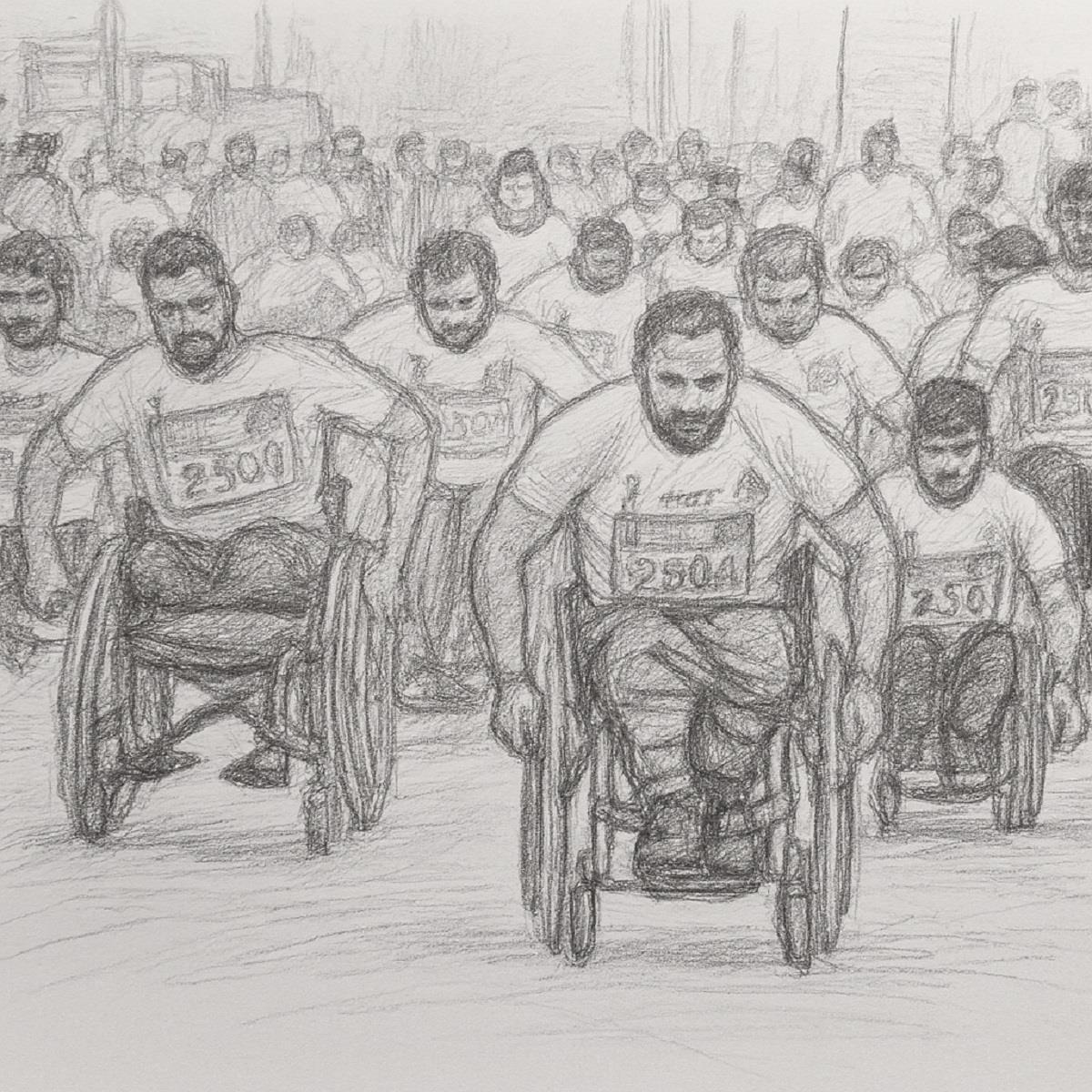
The Wheelchair That Kashmir Still Doesn't Make Room For
(MENAFN- Kashmir Observer)
Representational photo
Representational photo
By Mohammad Hanief
December 3, the International Day of Persons with Disabilities, asks all of us, especially here in Kashmir, to think about how we include everyone in daily life.
Every day, a child in a wheelchair struggles to reach school, a young adult cannot get to work because streets and buses are not accessible, and families carry their loved ones through mesh and mess.
ADVERTISEMENTThese are the realities that show how much work remains. Progress cannot be measured while wheelchairs get stuck at doorsteps and people are left out of the places where life happens.
The annual observance invites everyone to see inclusion as a transformation in how we value human diversity. It asks institutions to create systems that allow every person to participate fully.
A disability-inclusive society sees accessibility as a core part of development.
The 2025 theme stresses that inclusion needs to be woven into planning for education, employment, healthcare, transport, public services, and civic life. Rights should guide this effort.
But despite the sanguine statement, persons with disabilities continue to face deep structural barriers.
There are schools without assistive tools, clinics without trained staff, workplaces without basic accommodations, and transport systems that make movement difficult.
Many people are pushed into poverty and isolation because systems fail to understand their needs. The barriers are often social and attitudinal.
When a school has no ramp or a workplace cannot make a small adjustment, it shows that people with disabilities are still overlooked.
This global concern becomes even more telling in Jammu and Kashmir.
The region's terrain, weather, and infrastructure make the daily experience of disability far more challenging. In many rural areas, a lack of accessible roads or reliable transport forces individuals to stay indoors.
Winter brings harsh snow, long power cuts, frozen paths, and blocked routes to hospitals. A simple trip for therapy or a check-up can turn into a full-day struggle, and for some, it becomes impossible.
Children with disabilities face painful disruptions in their education. Buildings lack lifts, accessible toilets, or teaching materials designed for diverse learning needs. Families often carry children to upper floors because the structure does not allow a wheelchair to move.
Some children drop out because the environment around them never prepared for their presence. It takes away confidence at a young age and creates a feeling of exclusion long before adulthood begins.
There is a heavy emotional toll inside homes.
Parents carry the fear of what happens when support fails. A mother pushes her child's wheelchair across a muddy road and feels the weight of a system that never thought of her journey. A father lifts his son to reach a tuition center because no public transport can manage a wheelchair. A young girl with a hearing impairment tries to follow a class without an interpreter and ends up slipping behind, even though her potential was never in doubt.
The struggle shows in the life of a college student who gives up on higher studies because buses cannot accommodate a wheelchair.
It is felt in the frustration of a talented young person turned away from work because others assume they cannot do the job.
It lives in the loneliness of those who stay home day after day because the world outside was never built for them.
Finding work is a big challenge for the tribe. Offices and workplaces rarely have accessible entrances, adapted tools, or flexible arrangements. Many skilled individuals rely on family support, because the system does not make space for them. Families with limited incomes struggle to pay for wheelchairs, therapy sessions, or trips to hospitals far from home.
These costs add pressure that affects both daily life and the hope of independence.
Such realities make one thing clear: inclusion in Jammu and Kashmir is everyone's responsibility.
A simple ramp, a wider doorway, a teacher trained to teach all students, an accessible bus, or a device that helps someone communicate can completely change the path of a life.
Education remains a strong hope. Accessible classrooms and trained teachers help children with disabilities dream without limits. Technology also brings promise through mobility tools, digital learning options, and hearing and vision aids.
But access to such tools is uneven across Kashmir due to cost and availability. Rural and hilly regions experience the widest gaps. Progress depends on closing these gaps.
Social support programs help, but many families say that money alone cannot make up for inaccessible schools, roads, or transport. Workplaces must adapt. Inclusive offices strengthen teams and show that talent belongs everywhere.
Inclusion also means having a voice. Persons with disabilities should be part of local councils and community planning.
When people who live the challenges are at the table, policies become practical and fair.
Some progress has begun in Jammu and Kashmir, but it is slow. Accessibility must be part of every project. Change happens when empathy turns into action.
A teacher who listens, a neighbour who helps, an official who understands, and a community that chooses help over convenience can open doors that have stayed closed for too long.
The International Day of Persons with Disabilities shows what a society values and what it ignores.

Legal Disclaimer:
MENAFN provides the
information “as is” without warranty of any kind. We do not accept
any responsibility or liability for the accuracy, content, images,
videos, licenses, completeness, legality, or reliability of the information
contained in this article. If you have any complaints or copyright
issues related to this article, kindly contact the provider above.
Most popular stories
Market Research

More Story



Comments
No comment