













403
Sorry!!
Error! We're sorry, but the page you were looking for doesn't exist.
I Love AI-And Why You Should, Too
(MENAFN- Asia Times)
New technologies almost always create lots of problems and challenges for our society. The invention of farming caused local overpopulation. Industrial technology caused pollution. Nuclear technology enabled superweapons capable of destroying civilization. New media technologies arguably cause social unrest and turmoil whenever they're introduced.

Source: Ipsos

Source: Pew
And yet how many of these technologies can you honestly say you wish were never invented? Some people romanticize hunter-gatherers and medieval peasants, but I don't see many of them rushing to go live those lifestyles.
I myself buy into the argument that smartphone-enabled social media is largely responsible for a variety of modern social ills, but I've always maintained that eventually, our social institutions will evolve in ways that minimize the harms and enhance the benefits. In general, when we look at the past, we understand that technology has almost always made things better for humanity, especially over the long haul.
But when we think about the technologies now being invented, we often forget this lesson - or at least, many of us do. In the US, there have recently been movements against mRNA vaccines, electric cars, self-driving cars, smartphones, social media, nuclear power and solar and wind power, with varying degrees of success.
The difference between our views of old and new technologies isn't necessarily irrational. Old technologies present less risk - we basically know what effect they'll have on society as a whole, and on our own personal economic opportunities.
New technologies are disruptive in ways we can't predict, and it makes sense to be worried about that risk that we might personally end up on the losing end of the upcoming social and economic changes.
But that still doesn't explain changes in our attitudes toward technology over time. Americans largely embraced the internet, the computer, the TV, air travel, the automobile, and industrial automation. And risk doesn't explain all of the differences in attitudes among countries.
In the US, few technologies have been on the receiving end of as much popular fear and hatred as generative AI. Although policymakers have remained staunchly in favor of the technology - probably because it's supporting the stock market and the economy - regular Americans of both parties tend to say they're more concerned than excited, with an especially rapid increase in negative sentiment among progressives.
There is plenty of trepidation about AI around the world, but America stands out. A 2024 Ipsos poll found that no country surveyed was both more nervous and less excited about AI than the US:
Source: Ipsos
America's fear of AI stands in stark contrast to countries in Asia, from developing countries like India and Indonesia to rich countries like South Korea and Singapore. Even Europe, traditionally not thought of as a place that embraces the new, is significantly less terrified than the US. Other polls find similar results:
Source: Pew
If Koreans, Indians, Israelis and Chinese people aren't terrified of AI, why should Americans be so scared - especially when we usually embraced previous technologies wholeheartedly? Do we know something they don't? Or are we just biased by some combination of political unrest, social division, wealthy entitlement, and disconnection from physical industry?
It's especially dismaying because I've spent most of my life dreaming of having something like modern AI. And now that it's here, I (mostly) love it.
I always wanted a little robot friend, and now I have oneMedia has prepared me all my life for AI. Some of the portrayals were negative, of course - Skynet, the computer in the Terminator series, tries to wipe out humanity, and HAL 9000 in 2001: A Space Odyssey tries to kill its user. But most of the AIs depicted in sci-fi were friendly - if often imperfect - robots and computers.
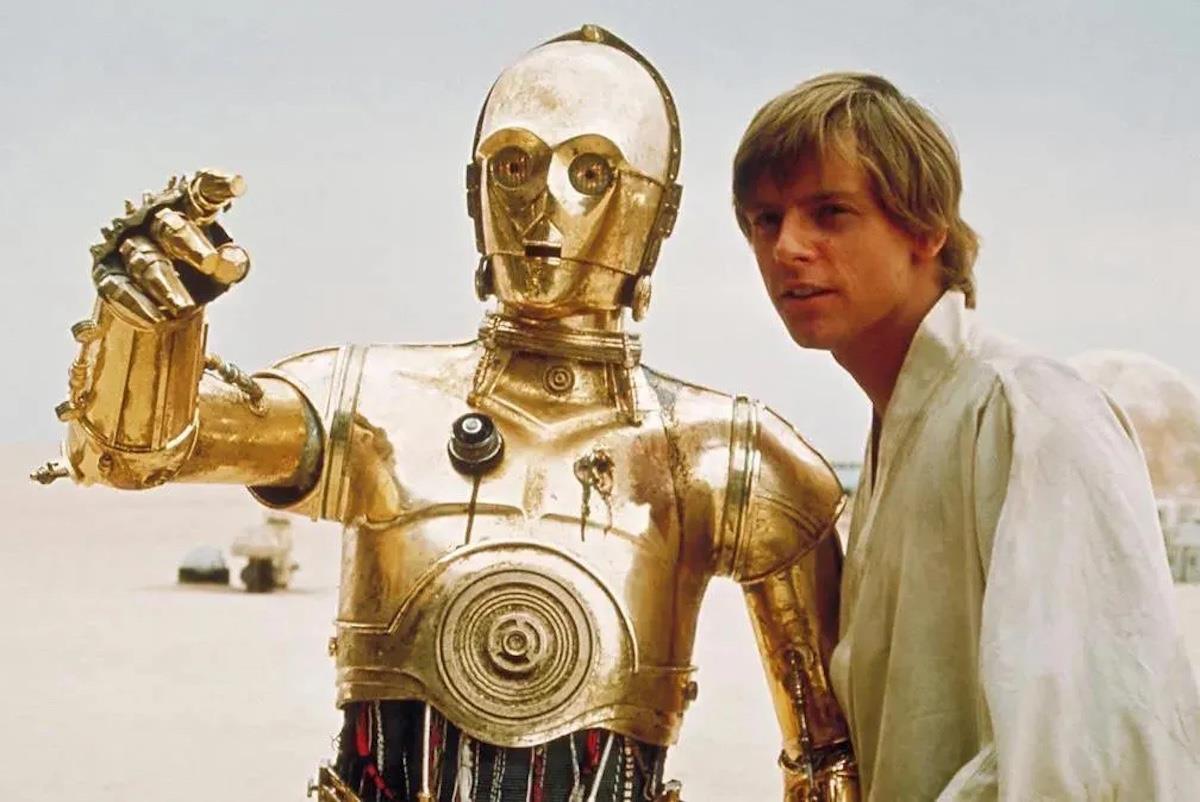
C-3PO and R2-D2 from Star Wars are Luke's loyal companions, and save the Rebellion on numerous occasions - even if C-3PO is often wrong about things. The ship's computer in Star Trek is a helpful, reassuring presence, even if it occasionally messes up its holographic creations.[1]
Commander Data from Star Trek: The Next Generation is a heroic figure, probably based on a character from Isaac Asimov's Robot series - and is just one of hundreds of sympathetic portrayals of androids.
Friendly little rolling robots like Wall-E and Johnny 5 from Short Circuit are practically a stock character, and helpful sentient computers are important protagonists in“The Moon is a Harsh Mistress”, the“Culture” novels, the TV show“Person of Interest”, and so on. The novel“The Diamond Age” features an AI tutor that helps kids out of poverty, while the“Murderbot” series is about a security robot who just wants to live in peace.
In these portrayals, intelligent robots and computers are consistently portrayed as helpful assistants, allies, and even friends. Their helpfulness makes sense, since they're created to be our tools. But some deep empathetic instinct in our human nature makes it difficult to objectify something so intelligent-seeming as a simple tool. And so it's natural for us to portray AIs as friends.
Fast forward a few decades, and I actually have that little robot friend I always dreamed of. It's not exactly like any of the AI portrayals from sci-fi, but it's recognizably similar. As I go through my daily life, GPT (or Gemini, or Claude) is always there to help me. If my water filter needs to be replaced, I can ask my robot friend how to do it.
If I forget which sociologist claimed that economic growth creates the institutional momentum for further growth,[2] I can ask my robot friend who that was. If I want to know some iconic Paris selfie spots, it can tell me. If I can't remember the article I read about China's innovation ecosystem last year, my robot buddy can find it for me.

Legal Disclaimer:
MENAFN provides the
information “as is” without warranty of any kind. We do not accept
any responsibility or liability for the accuracy, content, images,
videos, licenses, completeness, legality, or reliability of the information
contained in this article. If you have any complaints or copyright
issues related to this article, kindly contact the provider above.
Most popular stories
Market Research

More Story







Comments
No comment