



403
Sorry!!
Error! We're sorry, but the page you were looking for doesn't exist.
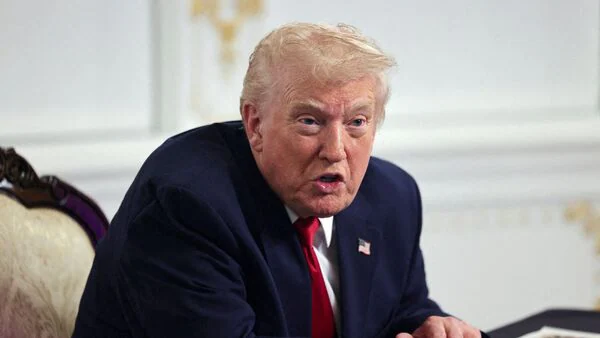
Trump Convenes Emergency White House Meeting As US Ramps Up Pressure On Venezuela
(MENAFN- Live Mint) President Donald Trump convened an urgent national security meeting at the White House on Monday evening as his administration intensified its military and diplomatic pressure on Venezuela. Senior defence, intelligence and foreign policy officials gathered in the Oval Office to determine next steps in a rapidly escalating regional confrontation that has sparked legal questions, congressional scrutiny and fears of a widening conflict.Why did Trump call an emergency meeting on Venezuela?
The high-level meeting - with attendees arriving shortly before 5 p.m. - brought together key members of Trump's national security inner circle, including Secretary of Defense Pete Hegseth, Chairman of the Joint Chiefs of Staff Gen. Dan Caine and Secretary of State Marco Rubio. White House chief of staff Susie Wiles and deputy chief of staff Stephen Miller were also expected.
It follows the administration's recent strikes on suspected Venezuelan drug-trafficking vessels and a rapid build-up of US military assets in the Caribbean as part of“Operation Southern Spear”. The Pentagon has now deployed more than a dozen warships and 15,000 troops to the region.
White House press secretary Karoline Leavitt said earlier in the day that Trump was“meeting with his national security team on this subject and on many matters,” adding:“It's part of his responsibility to ensure that peace is ongoing throughout the world.”
What is prompting new scrutiny of US military strikes?The administration is facing mounting bipartisan concerns about the legality of recent operations targeting alleged drug boats - particularly reports that the US conducted a follow-up strike on survivors after the initial attack.
“The law is clear,” Sen. Angus King told CNN.“If the facts are, as have been alleged, that there was a second strike specifically to kill the survivors in the water - that's a stone-cold war crime. It's also murder.”
On Monday, Leavitt identified the official who authorised the second strike: Adm. Frank M.“Mitch” Bradley, commander of US Special Operations Command. She insisted he acted lawfully.
“On September 2, Secretary Hegseth authorized Adm. Bradley to conduct these kinetic strikes. Adm. Bradley worked well within his authority and the law directing the engagement to ensure the boat was destroyed and the threat to the United States of America was eliminated,” she said.
Pressed repeatedly on legal justification, Leavitt said the strike was“conducted in self-defense to protect Americans” and took place“in international waters and in accordance with the law of armed conflict.”
Trump himself appeared to distance his administration from the alleged follow-up strike.“No. 1, I don't know that that happened, and Pete said he did not want them - he didn't even know what people were talking about,” he told reporters aboard Air Force One.“So, we'll look into it, but no, I wouldn't have wanted that, not a second strike.”
How is Congress responding to the Venezuela escalation?Lawmakers from both parties have demanded further information, with committees preparing interviews across the chain of command.
“There have also been 13 bipartisan briefings to Congress on the Venezuelan strikes,” Leavitt said, noting that members have been given access to classified legal opinions and related documents.
Sen. Mark Warner, chair of the Senate Intelligence Committee, said he and Vice Chair Tom Cotton are engaging on the matter and expect preliminary discussions with Adm. Bradley.“We've got to get to the bottom of this,” Warner said, urging the administration to release an unedited video of the strike.
King said before the White House identified the commander that Congress would question officials“all the way up, up to the top of the chain of command and down to the people that actually triggered that attack.”
What is Trump's broader strategy toward Venezuela?Despite controversy surrounding the strikes, the administration appears determined to expand its campaign.
Trump said last week that the US would begin targeting Venezuelan drug operations on land, not only at sea,“very soon.” Over the weekend, he warned airlines, pilots and criminal networks to avoid Venezuelan airspace, though he told reporters not to“read into” the advisory.
Trump also confirmed he had spoken directly with Venezuelan President Nicolás Maduro, but declined to elaborate on the conversation. Last week, the administration formally designated Maduro and his inner circle as members of a foreign terrorist organisation - a move officials say gives the US greater latitude for military action inside Venezuela.
Why is Trump's pardon decision raising eyebrows?Republican Rep. Maria Salazar questioned Trump's decision to pardon former Honduran President Juan Orlando Hernández, effectively nullifying his US drug-trafficking conviction, even as the administration escalates operations against Maduro.
“I would have never done that,” Salazar said.
Leavitt defended Trump's move, calling Hernández's conviction an example of Biden-era“over-prosecution.”
“President Trump has been quite clear in his defense of the United States homeland, to stop these illegal narcotics from coming to our borders, whether that's by land or by sea,” she said.“He's also made it quite clear that he wants to correct the wrongs of the weaponized Justice Department under the previous administration.”

Legal Disclaimer:
MENAFN provides the
information “as is” without warranty of any kind. We do not accept
any responsibility or liability for the accuracy, content, images,
videos, licenses, completeness, legality, or reliability of the information
contained in this article. If you have any complaints or copyright
issues related to this article, kindly contact the provider above.
Most popular stories
Market Research

More Story



Comments
No comment