




403
Sorry!!
Error! We're sorry, but the page you were looking for doesn't exist.
Why New Delhi Has Become The Most Dependable Partner In South Asia
(MENAFN- Khaleej Times)
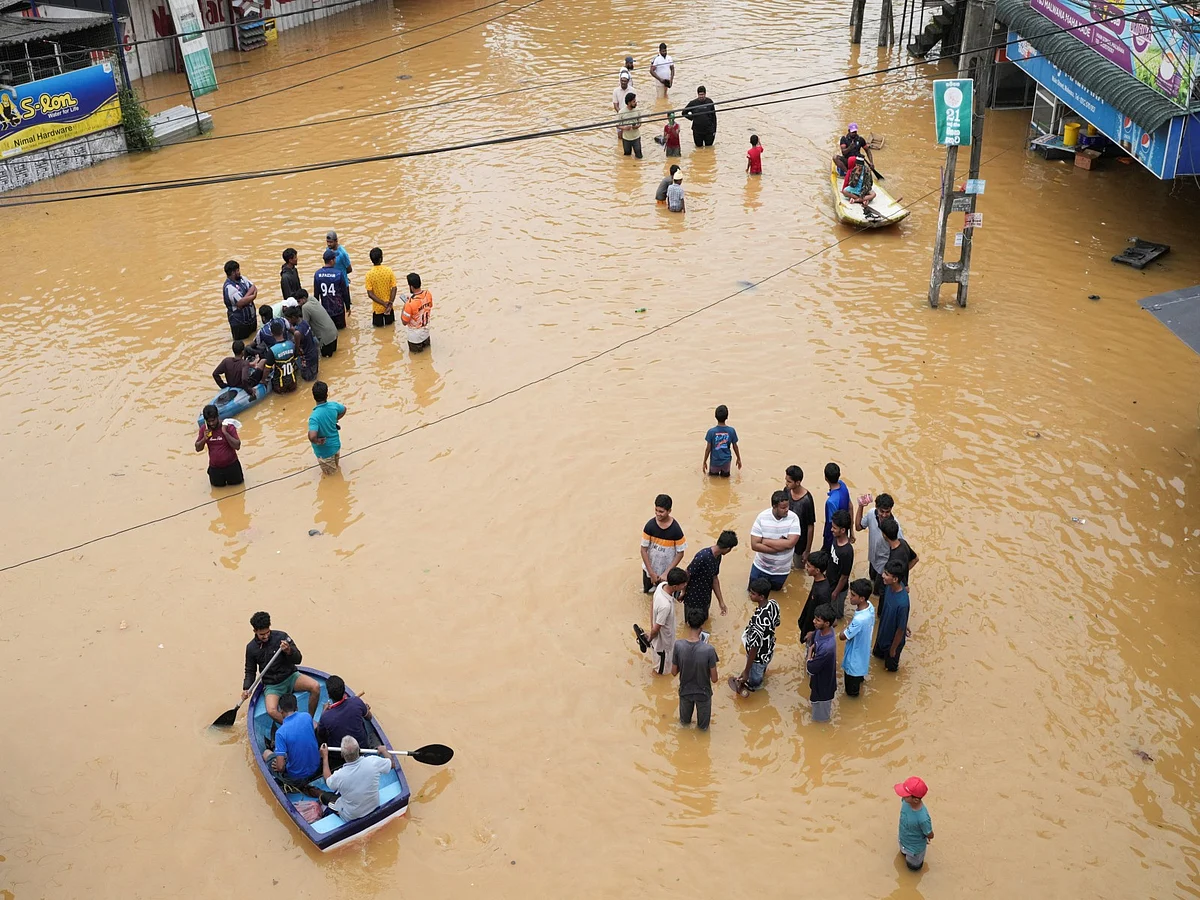
When cyclone Ditwah barrelled toward Sri Lanka last week, bringing with it destructive winds, torrential rain, and widespread flooding, one country moved first, fast, and with absolute clarity of purpose: India. Even before the storm made landfall, New Delhi had activated its well honed humanitarian assistance and disaster relief (HADR) machinery, placing men, material, and maritime assets on standby to support Sri Lanka in any eventuality.
This rapid mobilisation was not an exception. It is the norm. Over the past decade, India has emerged as the most reliable first responder in the Indian Ocean Region, guided by a simple principle: in moments of crisis, neighbours come first.
Recommended For You Dubai Police call on motorists to follow rules during Eid Al Etihad celebrationsAs Sri Lankan authorities issued early warnings about cyclone Ditwah, India's Ministry of External Affairs and the Indian Navy were already coordinating with Colombo. The Southern Naval Command prepared ships carrying relief supplies, medical teams, and emergency equipment. Indian Coast Guard aircraft were readied for search and rescue operations. High capacity power generators, water purification units, and essential medicines were stockpiled for immediate dispatch.
This is a pattern South Asia knows well. India does not wait for distress calls. It anticipates them.
In a region frequently battered by cyclones, monsoons, earthquakes, and tsunamis, speed is the difference between life and death. And India has mastered the art of speed with compassion.
Long before cyclone Ditwah, India established itself as the country neighbours turn to in times of need.
When Nepal was struck by a devastating earthquake in 2015, India launched Operation Maitri, the largest ever HADR mission in its history. Indian Air Force aircraft made over 250 sorties, rescuing nearly 5,000 people and delivering thousands of tonnes of food, tents, medical aid, and engineering support.
During Sri Lanka's economic collapse in 2022, when fuel stations ran dry, medicine stocks vanished, and food inflation soared, India extended over 4 billion dollars in credit lines, humanitarian aid, and emergency supplies. No other nation matched this scale or urgency of support.
When Maldives faced the 2014 drinking water crisis, India dispatched aircraft and naval ships carrying over 1,000 tonnes of potable water within hours of request, long before any other country responded.
When Myanmar and Bangladesh were hit by Cyclone Mocha in 2023, it was Indian naval ships INS Shivalik and INS Kamorta that reached first, carrying relief material, doctors, and communication equipment.
During the Covid 19 pandemic, India sent vaccines, medicines, and oxygen to Sri Lanka, Nepal, Bangladesh, Maldives, Bhutan, and even distant partners in the Indian Ocean like Mauritius and Seychelles. Vaccine Maitri saved thousands of lives and stabilised overwhelmed health systems.
This is not episodic charity. It is a doctrine, and a responsibility India willingly embraces.
India's approach is rooted in the“Neighbourhood First” and“SAGAR” (Security and Growth for All in the Region) doctrines. These ideas rest on a simple truth: India cannot be secure, stable, or prosperous if its neighbours are suffering.
But there is also a deeper moral dimension.
For centuries, people, culture, trade, and faith have moved freely across South Asian shores. The Indian Ocean, despite its name, belongs to all who live around it. In moments of danger, the region's nations share a single fate. India's leadership recognises this interconnectedness.
By helping its neighbours, India is not projecting power. It is fulfilling responsibility.
Sri Lanka's experience during its financial meltdown exposed a stark contrast. While India acted instantly, others delayed, debated, or attached heavy conditions.
During natural disasters too, India's response is far more intimate and grounded in empathy. Indian rescue teams know the terrain, understand local realities, and are trained to coordinate with regional agencies.
As Cyclone Ditwah hit Sri Lanka, the Indian Navy and Coast Guard are on the frontline. Relief supplies have been pre positioned. Communication channels are open round the clock. High resolution satellite data from Indian weather agencies is being shared continuously with Colombo to support decision making and evacuation planning.
This is what a dependable partner looks like. Presence without hesitation.
Cyclone Ditwah is yet another reminder that when crises strike, India is not merely a big neighbour. It is the stabilising force in South Asia, the country that arrives first and stays until the last family is safe.
A future built on trust
As climate change intensifies, disasters like Ditwah will become more frequent and more destructive. In such a world, India's role as the region's humanitarian anchor will only grow stronger. Its capabilities, from naval assets to satellite technology, have expanded dramatically. Its willingness to help has remained unwavering.
For Sri Lanka, and for the region, this reliability is invaluable.
India has shown again and again that it is not just a partner in good weather. It is the partner in the storm.
When neighbours need help, India shows up.
When disaster strikes, India leads.
When the region trembles, India steadies it.
In a world full of uncertainties, India has become the most dependable ally South Asia can count on today, during cyclone Ditwah, and in every crisis yet to come.
The writer is a commentator on political and current affairs. He has previously served as the media adviser to the Jammu and Kashmir Chief Minister.

Legal Disclaimer:
MENAFN provides the
information “as is” without warranty of any kind. We do not accept
any responsibility or liability for the accuracy, content, images,
videos, licenses, completeness, legality, or reliability of the information
contained in this article. If you have any complaints or copyright
issues related to this article, kindly contact the provider above.
Most popular stories
Market Research

More Story




Comments
No comment