




403
Sorry!!
Error! We're sorry, but the page you were looking for doesn't exist.
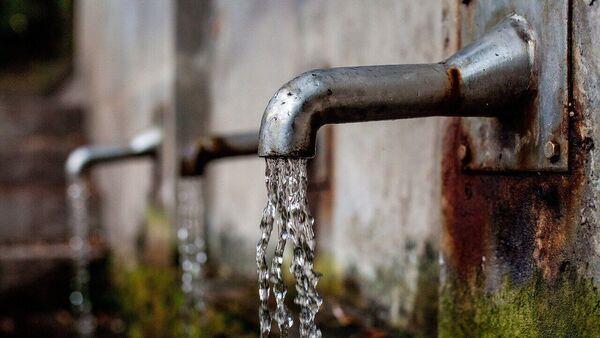
Gurugram, Save Water! Taps To Run Dry In Many Sectors For 48 Hours From 3 December List Of Areas To Be Impacted
(MENAFN- Live Mint) The water supply will be suspended in certain parts of Gurugram between 3 December and 5 December, owing to essential maintenance work at the Chandu Budhera water treatment plant (WTP) and the connection of a new 1,600 mm water pipeline at the Sector 51 pumping station. The Gurugram Metropolitan Development Authority (GMDA) announced the planned works on Friday, as reported by Hindustan Times.
This 48-hour disruption will commence at 11 AM on 3 December and conclude at 11 AM on 5 December. The areas impacted are Sector 37, all sectors from 42 to 74, and the villages of Badshahpur and Khandsa.
Also Read | More than 80% of Indian rural households have potable water connection
“The work includes connection of the 1,600 mm pipeline for the boosting station in Sector 51 and repair of the existing pipeline near the Basai flyover, along with other preventive maintenance activities at WTP Chandu Budhera,” the GMDA spokesperson said, according to the HT report.
The GMDA has urged all residents in the affected areas to conserve water between 1 December and 4 December to minimise inconvenience and disruption during the closure.
The GMDA is also working to commission the Sector 72 water pumping station. This will allow the water supply to be augmented in areas situated along the Southern Peripheral Road and Badshahpur, which are currently supplied by the Sector 51 pumping station.
“Once the Sector 72 metro station is ready, water supply availability in Sector 51 areas, and along SPR will improve substantially,” a senior GMDA official said, according to the HT report.
Also Read | Rail Neer bottles get cheaper as Indian Railways reduces prices after GST cut Delhi groundwater samples contaminated with uraniumThe Annual Ground Water Quality Report 2025, published on 28 November, indicated that between 13% and 15% of the total water samples collected were contaminated with uranium.
The report, released by the Central Ground Water Board (CGWB) under the Ministry of Jal Shakti, is based on approximately 15,000 samples gathered across India throughout 2024.
Furthermore, it disclosed that in Delhi, samples from 86 monitored locations were found to exceed the Bureau of Indian Standards (BIS) drinking water limits on several key parameters.
"Overall, the study shows that while most groundwater in India is safe, certain regions face rising uranium levels, emphasising the need for regular monitoring and local mitigation measures to protect drinking water quality and health,” the report said.
It added that of the 83 total samples analysed, 24 were found to be exceeding uranium parameters, which is roughly around the range of 13.35% and 15.66% of the total samples collected.

Legal Disclaimer:
MENAFN provides the
information “as is” without warranty of any kind. We do not accept
any responsibility or liability for the accuracy, content, images,
videos, licenses, completeness, legality, or reliability of the information
contained in this article. If you have any complaints or copyright
issues related to this article, kindly contact the provider above.
Most popular stories
Market Research

More Story





Comments
No comment