








403
Sorry!!
Error! We're sorry, but the page you were looking for doesn't exist.
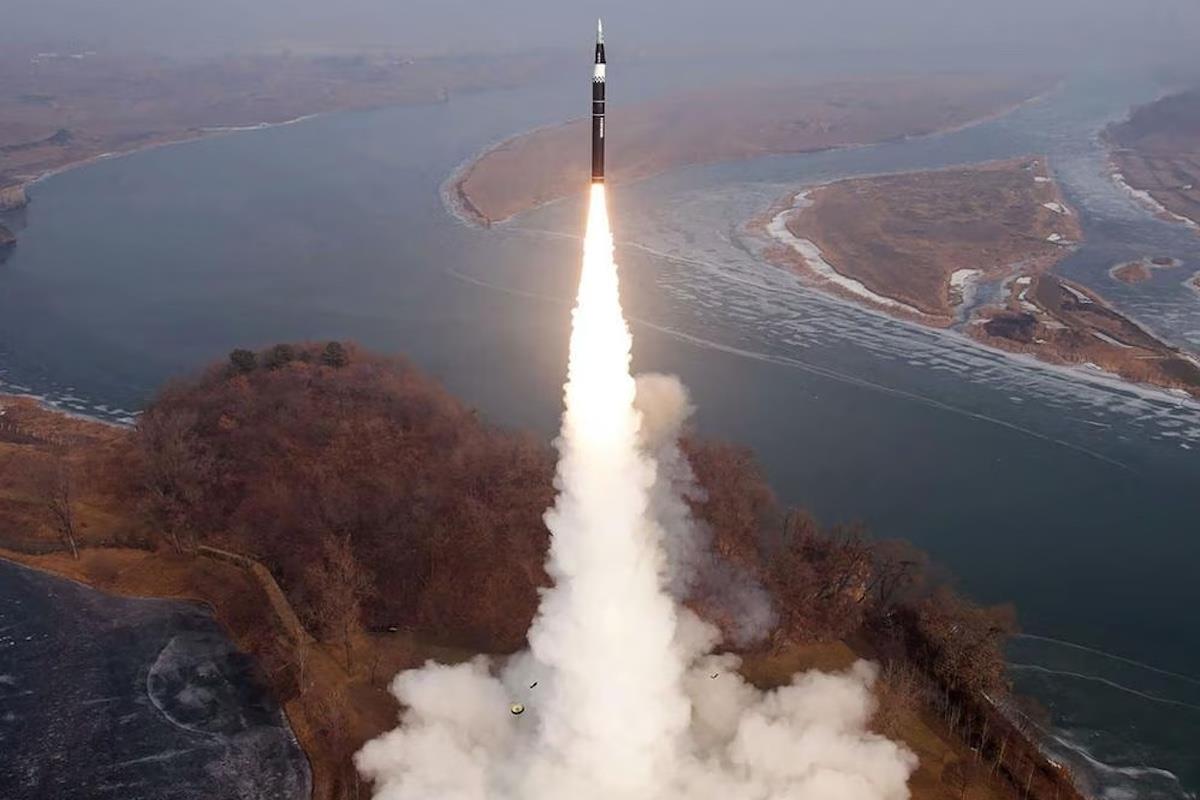
Pinpointing Where North Korea Hides Its US-Aimed Missiles
(MENAFN- Asia Times)
Against the backdrop of North Korea disengaging from initially welcomed diplomatic talks with South Korea (ROK) and America, Pyongyang has again shifted toward a more belligerent stance.
Already at a technological and military disadvantage vis-a-vis both the US and South Korean Armed Forces, the Korean People's Army (KPA) is now fortifying key underground bases to serve as missile storage and leadership bunkers.
Each of these underground facilities, including Sinpung-dong, Hoejung-ni and Yongjo-ri, reveals a distinct pattern in North Korea's overall strategy for contingency planning if Pyongyang finds itself in a full-scale war on the peninsula.
Sinpung-dong BasePyongyang's first strategic site, Sinpung-dong, is located just 27 kilometers from the Chinese border. The strategic underground facility is located under the Pugo Mountains, which are narrow and nearly impassible.
Construction of the Sinpung-dong facility began in 2004, with the base fully operational by 2014. Within the base are concrete storage facilities for Pyongyang's ballistic missiles, such as the Hwasong 15 and 18.
In August 2025, the Center for Strategic and International Studies (CSIS) published satellite imagery that gives a deep insight into the Sinpung-dong base.

Legal Disclaimer:
MENAFN provides the
information “as is” without warranty of any kind. We do not accept
any responsibility or liability for the accuracy, content, images,
videos, licenses, completeness, legality, or reliability of the information
contained in this article. If you have any complaints or copyright
issues related to this article, kindly contact the provider above.
Most popular stories
Market Research

More Story







Comments
No comment