




403
Sorry!!
Error! We're sorry, but the page you were looking for doesn't exist.
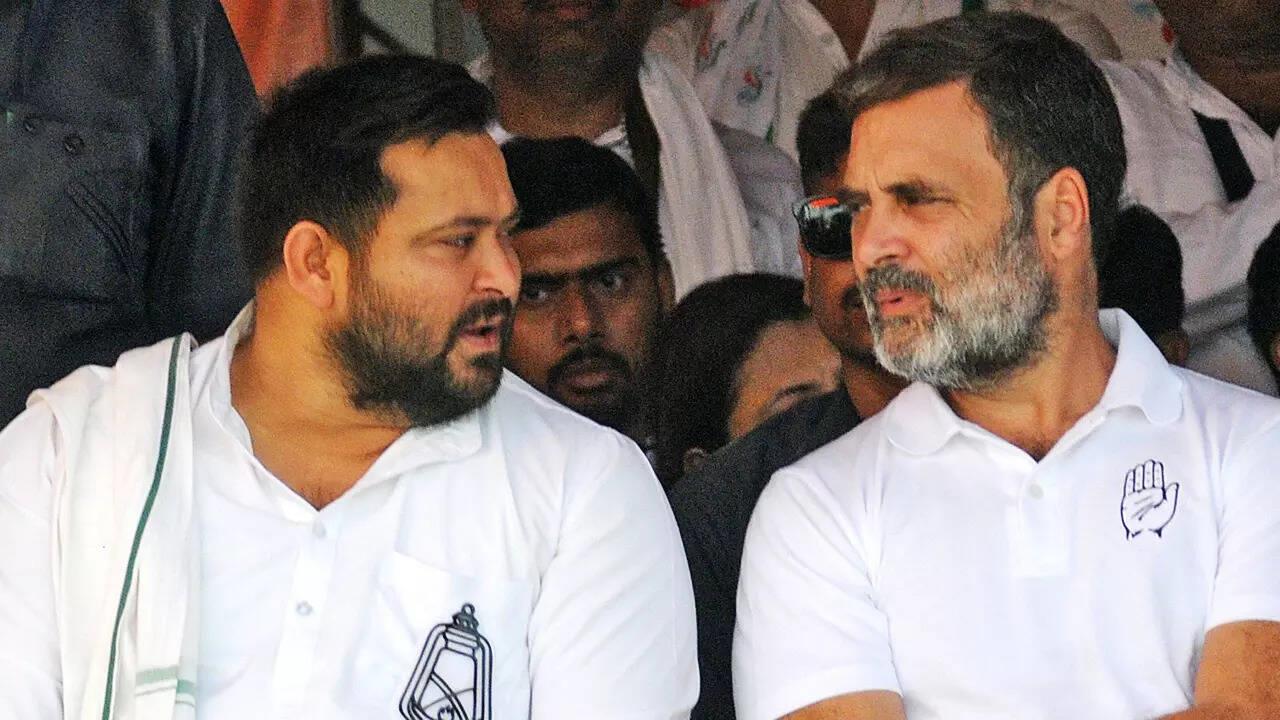
Bihar's Unfair Results: Rahul Gandhi Gets It Wrong For One More Time
(MENAFN- The Arabian Post)
By K Raveendran
Rahul Gandhi's reaction to the Bihar election outcome, framed by surprise and a sense of unfairness, must reopen a debate about the structural imbalances that shape electoral competition in India. His argument, on its surface, reflects the opposition's frustration after a contest that produced a seat tally far more skewed than the vote share might suggest. Yet the unfairness he points to, according to his comments, appears to hinge largely on the conduct of the Election Commission and the circumstances surrounding the campaign. That line of reasoning is unlikely to resonate widely, not because concerns over the electoral environment lack legitimacy, but because India's political system has, for decades, normalised conditions that disadvantage challengers. The lack of a level-playing field is not a sudden aberration but a deeply embedded feature of the country's electoral architecture.
Parties in government almost always approach elections with the authority, visibility and logistical support associated with incumbency. This dynamic is especially stark in states where regional leaders and national figures share the stage. In Bihar's case, Narendra Modi and Nitish Kumar campaigned not merely as party leaders but as the sitting prime minister and chief minister, with all the institutional prominence that comes with those roles. Their images have been established over years of administrative visibility, and their public messaging benefits from a machinery that, while not officially directed toward campaigning, inevitably overlaps with governance.
By contrast, Tejashwi Yadav and Rahul Gandhi entered the arena without that administrative aura. Tejashwi's profile has grown in Bihar, particularly among the youth, but he still had to fight against the state's persistent narrative biases. Rahul Gandhi, despite being a national leader, lacks the governmental perches that amplify the reach and authority of incumbents. To much of the electorate, this translates into asymmetric visibility. The practical effect is that ruling parties can frame campaigns from a position of institutional legitimacy while opposition leaders must rely almost entirely on organisational strength, charisma and message discipline. Even before voting begins, the field is uneven. The Rs10,000 deposited in the bank accounts of women voters seems to have clearly tilted the scales in favour of NDA, while Tejashwi Yadav's offer of three times was only a promise in the air, which did not cut ice with the public.
See also Future Of Trump's Favourite Grouping QUAD Is At Stake Due To India-US SchismFurther to this systemic imbalance, the more striking form of unfairness lies not in campaign conditions but in the distribution of assembly seats relative to the votes cast. This is where Rahul Gandhi's critique could find firmer grounding, though it is not the argument he has chosen to emphasise. The Rashtriya Janata Dal, according to post-election data, secured a vote share higher than that of the Bharatiya Janata Party. Ordinarily, a difference of this magnitude might suggest a competitive or even favourable seat haul. However, the final tally placed the RJD at barely a quarter of the seats secured by the BJP, a disparity that seems incongruent with democratic expectations.
The explanation lies not in electoral malpractice but in the mechanics of the first-past-the-post system. Indian elections reward the geographic concentration of votes far more than the overall volume of support. A party can win a large share of votes statewide yet come second in dozens of constituencies, gaining little or nothing from those votes. Meanwhile, another party may win by narrow margins across numerous seats, converting a leaner vote share into a disproportionately higher seat count. This outcome is not a malfunction; it is the system's design. But its implications are profound: it means millions of votes can translate into little representation, and parties can command legislative dominance without a corresponding mandate in popular vote terms.
The Bihar result offers a textbook illustration. The RJD's vote base, though extensive, appears to have been spread too evenly across constituencies, leading to many narrow losses. The BJP's support, on the other hand, was more efficiently distributed, enabling it to win multiple seats by modest margins. The consequence is a seat map that diverges radically from the voter map. For a democracy that values representational fidelity, this is a structural challenge worthy of debate.
Rahul Gandhi's complaint about unfairness might resonate more convincingly if it focused on this disproportionality. It highlights not a failure of institutions but the inherent limitations of the electoral system. A credible critique could urge a national conversation about exploring alternatives, such as proportional representation, mixed-member systems or even adjustments within the current framework, to ensure that vote share more closely aligns with legislative strength. Such reforms, long discussed but rarely pursued, would require consensus-building and political will across parties, especially those that benefit from the present system. Yet it is precisely this kind of structural fairness that could strengthen India's democracy.
See also India's Energy Pivot Under Donald Trump's Tariff PressureAnother dimension worth examining is the marginalisation of regional and opposition players within the national political discourse. Parties like the RJD must battle both organisational deficits and narrative disadvantages. Media visibility, political storytelling and public perception are all tilted toward national incumbents. The Bihar election cycle, like many before it, revealed how opposition campaigns often struggle to establish narrative ownership. Tejashwi Yadav's emphasis on employment and governance concerns resonated among younger voters, but these messages were frequently overshadowed by the national coalition's broader political themes and branding.
Rahul Gandhi's assertion that the election was unfair, therefore, sits at the intersection of genuine systemic inequities and political rhetoric. While the conduct of the contest may raise legitimate questions about the broader pressures facing opposition groups, the most compelling evidence of unfairness lies not in campaign conditions but in representational imbalance. If the objective is to highlight structural distortions, then the RJD's vote-to-seat discrepancy is the more persuasive argument. It speaks to a deeper issue that affects all parties from time to time, including those currently in power.
A more strategic approach from the opposition would involve shifting the conversation towards these structural factors. Doing so would not only contextualise the Bihar result but also build a foundation for broader democratic reform. The challenge, however, is to present this argument without appearing to undermine public confidence in the electoral process itself. Voters have repeatedly shown that they resent accusations that appear to dismiss their agency. The task is to differentiate between criticising systemic design and criticising voter choice. (IPA Service)
The article Bihar's Unfair Results: Rahul Gandhi Gets It Wrong For One More Time appeared first on Latest India news, analysis and reports on Newspack by India Press Agency).

Legal Disclaimer:
MENAFN provides the
information “as is” without warranty of any kind. We do not accept
any responsibility or liability for the accuracy, content, images,
videos, licenses, completeness, legality, or reliability of the information
contained in this article. If you have any complaints or copyright
issues related to this article, kindly contact the provider above.
Most popular stories
Market Research

More Story



Comments
No comment