




403
Sorry!!
Error! We're sorry, but the page you were looking for doesn't exist.
Provokeglobal: Crisis Is Now A Permanent Operating Environment
(MENAFN- PRovoke)
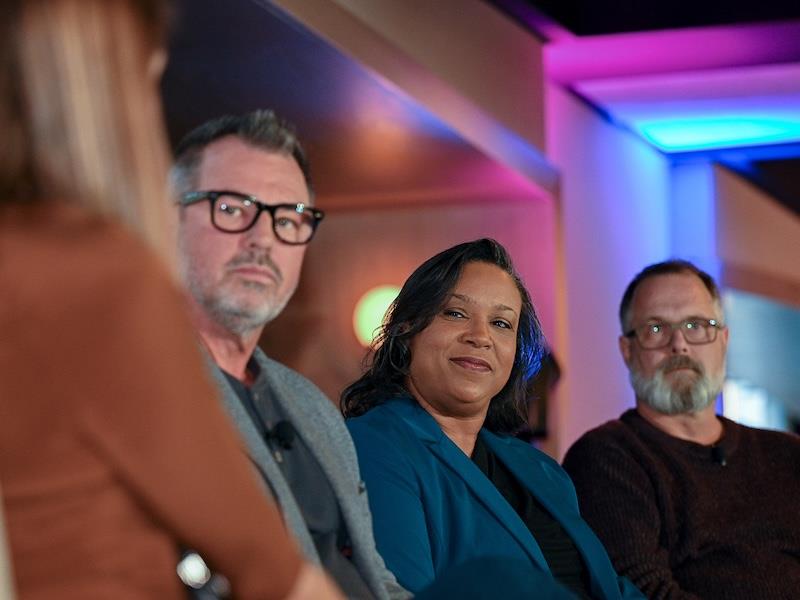
CHICAGO - At the PRovokeGlobal summit in Chicago last week, senior communications leaders from Finn Partners, Bridgestone and Nepenthe Solutions examined how misinformation, cultural volatility and AI are reshaping crisis management. In a wide-ranging discussion, they outlined new frameworks for handling attacks, navigating polarised audiences and preparing for rapidly evolving threats.
Moderating the session, Finn Partners managing partner for public affairs Jessica Berk Ross opened the conversation by noting how dramatically the landscape has shifted.“I said at the start of the pandemic that we are all crisis communicators now, and that already seems like ancient history, crisis is just the background.”
The panel began by addressing how communicators are managing today's complexity. Bridgestone VP of communications Kim Windon said:“We all know misinformation is an accelerator of chaos, and being able to address and refute it can be extremely challenging. I've been in the legal, chemicals and now the tyre industry, and lot of the time businesses across sectors want to battle emotions with facts, but emotion wins every time.”
She added that speed and instinct often collide in moments of high pressure.“When you're in a battle for who makes it to the news feed first, you cannot be reactive, you need to reshape narrative and perception – it's now a lot of what we're having to do with anything we communicate about. You'll see campaigns against a company on social, and sometimes responding is not the answer, especially if you don't know where it's coming from.”
Windon described a recent incident in which the company became the focus of an online attack.“We had an issue where we were being attacked, and then bots took the narrative and pushing it further. Management didn't know how to address it, and my response was to leave it alone. As social posts escalated, we then saw them decrease just as quickly. There are times when we have to avoid our natural instinct to react.”
Finn Partners partner David Krejci outlined his“forensic” approach to crisis.“It occurred to me, why don't we look at communications challenges the way we look forensically at a crime scene, starting with the method and motive of people attacking you. You can suddenly get attacked for reasons you don't understand. If it's a bot farm, it's almost always cultural division or ideology that's driving it; they have money and an agenda – and understand how to push it.”
Determining when to engage, he said, is less about the aggressor and more about their intent.“I often get asked, what's the inflection point of when to respond. It's not about the attacker, it's about their motive, and then how they are distributing the negativity: is it two angry people at home or a bot farm? All responses are not equal.”
The instinct to correct misinformation with facts remains strong, Krejci noted, but is often misguided.“The first instinct is to correct with facts, but to push facts at a group of people who have no intention of listening to you or believing you isn't going to work, in fact they will be more offended that you're not listening. The evolution of crisis has moved to a situation where you're communicating to the opposing team that what they thought was true is not.”
He added:“If you're playing chess and your opponent reaches over and punches you in the face, you're not going to retaliate by getting better at chess; it's not about a better holding statement or more facts.”
Strategic advisor David Hallisey of Nepenthe Solutions – a former chief communications officer at Petco and comms leader at HP – said the very nature of crisis has shifted.“The biggest shift is from reactive to predictive crises, as we're better able to predict, manage and plan contingencies, in an age when there is more than ever to worry about. The majority of really effective crisis campaigns never see the light of day.”
Moderating the session, Finn Partners managing partner for public affairs Jessica Berk Ross opened the conversation by noting how dramatically the landscape has shifted.“I said at the start of the pandemic that we are all crisis communicators now, and that already seems like ancient history, crisis is just the background.”
The panel began by addressing how communicators are managing today's complexity. Bridgestone VP of communications Kim Windon said:“We all know misinformation is an accelerator of chaos, and being able to address and refute it can be extremely challenging. I've been in the legal, chemicals and now the tyre industry, and lot of the time businesses across sectors want to battle emotions with facts, but emotion wins every time.”
She added that speed and instinct often collide in moments of high pressure.“When you're in a battle for who makes it to the news feed first, you cannot be reactive, you need to reshape narrative and perception – it's now a lot of what we're having to do with anything we communicate about. You'll see campaigns against a company on social, and sometimes responding is not the answer, especially if you don't know where it's coming from.”
Windon described a recent incident in which the company became the focus of an online attack.“We had an issue where we were being attacked, and then bots took the narrative and pushing it further. Management didn't know how to address it, and my response was to leave it alone. As social posts escalated, we then saw them decrease just as quickly. There are times when we have to avoid our natural instinct to react.”
Finn Partners partner David Krejci outlined his“forensic” approach to crisis.“It occurred to me, why don't we look at communications challenges the way we look forensically at a crime scene, starting with the method and motive of people attacking you. You can suddenly get attacked for reasons you don't understand. If it's a bot farm, it's almost always cultural division or ideology that's driving it; they have money and an agenda – and understand how to push it.”
Determining when to engage, he said, is less about the aggressor and more about their intent.“I often get asked, what's the inflection point of when to respond. It's not about the attacker, it's about their motive, and then how they are distributing the negativity: is it two angry people at home or a bot farm? All responses are not equal.”
The instinct to correct misinformation with facts remains strong, Krejci noted, but is often misguided.“The first instinct is to correct with facts, but to push facts at a group of people who have no intention of listening to you or believing you isn't going to work, in fact they will be more offended that you're not listening. The evolution of crisis has moved to a situation where you're communicating to the opposing team that what they thought was true is not.”
He added:“If you're playing chess and your opponent reaches over and punches you in the face, you're not going to retaliate by getting better at chess; it's not about a better holding statement or more facts.”
Strategic advisor David Hallisey of Nepenthe Solutions – a former chief communications officer at Petco and comms leader at HP – said the very nature of crisis has shifted.“The biggest shift is from reactive to predictive crises, as we're better able to predict, manage and plan contingencies, in an age when there is more than ever to worry about. The majority of really effective crisis campaigns never see the light of day.”
He also highlighted the challenge of maintaining discipline in complex organisations.“As a corporate communicator, a lot of times you're a gatekeeper and need to manage strategically what the audience hears. It can be challenging where you have different business units and subject matter experts who all want to do press releases and speak at events – there has to be a thoughtful policy and procedure with review by comms or legal.”
“Today, it's harder than ever to be a gatekeeper because of AI. Folks are emboldened, and unqualified experts have a tool that makes it easier for them to do things externally is just another thing for us to worry about. AI exacerbates the challenge.”
Krejci agreed that AI should be viewed through a practical lens.“We need to get away from talking about whether AI is evil or not evil. I use fire to cook my pasta and it could burn my house down – we have regulations, we don't ban fire. I was super-excited because I could see what it could do, but it's another thing humans are not prepared for – we're not able to evolve intellectually as fast as technology.
“We don't know what devices are doing to our kids. Tech does damage while connecting people. Some people will use AI for nefarious reasons. As long as we bring good faith to the use of AI, we will get good results.”
For Hallisey, human behaviour remains the biggest variable.“Crisis comms is one of the most basic comms disciplines – most crisis plans are really simple. We could take the hairiest crisis ever, spend half a day and build a really tight plan, but what will make it go pear-shaped is C-suite egos and bots – the human aspect of crisis more important than ever.
“For me, it's about having augmented intelligence, where humans have relationships and trust and respect, and we solve problems together.”
Windon emphasised the importance of credibility and connection.“You have to be authentic and credible and during a time of crisis you have an opportunity to rewrite the script. It's not about fighting every battle or arguing every point, it's about finding a way to change the perception that is out there. Finding a way to connect with that person will help you move to the next level.”
She added that the definition of a storyteller has expanded.“It's also about recognising who is now essentially a reporter and understanding that the story can come from anywhere. You have to adapt quickly and find your voice, and do it on a continuous basis.”
Finding the right company voices is critical, she said.“It's also about finding right individuals in your organisation to carry that message; not everyone is designed to be a spokesperson. In dealing with the world of misinformation, you need to find the most credible person in the room – and it's not necessarily the most senior.”
Krejci closed by acknowledging the relentless pace of change:“We're in the process of adapting but we're a long way from being adapted – the thing we're trying to adapt to changes every single day. We're evolving as best we can at one particular moment, so you need to develop a mindset of being in perpetual change so you can adapt.
“AI is more significant than the internet because it's cognitive, not static. If you train yourself to become comfortable to change, you'll succeed.”

Legal Disclaimer:
MENAFN provides the
information “as is” without warranty of any kind. We do not accept
any responsibility or liability for the accuracy, content, images,
videos, licenses, completeness, legality, or reliability of the information
contained in this article. If you have any complaints or copyright
issues related to this article, kindly contact the provider above.
Most popular stories
Market Research

More Story








Comments
No comment