




403
Sorry!!
Error! We're sorry, but the page you were looking for doesn't exist.
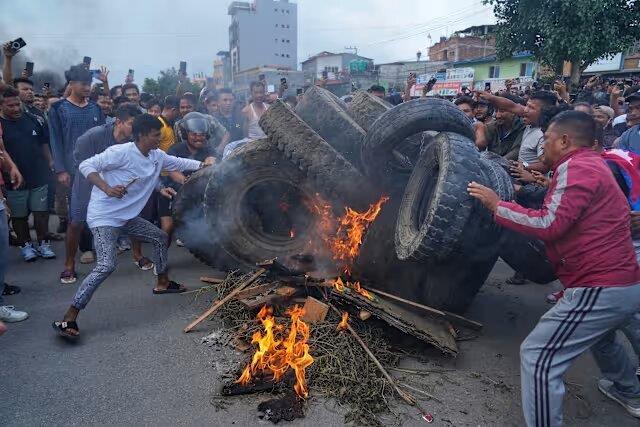
Nepal Prime Minister Resigns After Deadly Protests Over Social Media Ban And Corruption
(MENAFN- Khaama Press) Nepal's Prime Minister K. P. Sharma Oli resigned after violent protests over social media curbs and corruption, leaving 19 dead and sparking calls for reforms.
Nepal's Prime Minister K. P. Sharma Oli has stepped down after days of violent protests that erupted over a social media ban and evolved into a wider anti-corruption movement.
Nepal's Prime Minister K. P. Sharma Oli has stepped down after days of violent protests that erupted over a social media ban and evolved into a wider anti-corruption movement.
At least 19 people were killed and dozens more injured as demonstrators clashed with security forces in Kathmandu and other cities. Protesters torched government offices and homes of senior officials, underscoring the intensity of public anger.
The unrest also forced the closure of Tribhuvan International Airport in Kathmandu, leading to the cancellation or diversion of domestic and international flights, with some rerouted to Lucknow in India.
The Prime Minister's Office said Oli resigned to restore calm and open the door for political reforms. Several cabinet ministers followed suit, while sections of parliament demanded early elections.
Analysts note that the movement was largely driven by young people frustrated with corruption, weak governance, and restrictions on free expression, turning the protests into a nationwide call for change.
Oli's resignation has plunged Nepal into one of its gravest political crises in recent years, raising questions about the stability of its fragile democracy.
Observers say the upheaval could reshape Nepal's political landscape, with growing public pressure likely to push for deeper reforms while also exposing the risks of prolonged instability.
ShareFacebook Twitter WhatsApp Email Print Telegram
Legal Disclaimer:
MENAFN provides the
information “as is” without warranty of any kind. We do not accept
any responsibility or liability for the accuracy, content, images,
videos, licenses, completeness, legality, or reliability of the information
contained in this article. If you have any complaints or copyright
issues related to this article, kindly contact the provider above.
Most popular stories
Market Research

More Story



Comments
No comment