




403
Sorry!!
Error! We're sorry, but the page you were looking for doesn't exist.
India Luxury Goods Market Size, Share, Industry Trends, Growth Statistics And Forecast Report 2025-2033
(MENAFN- IMARC Group)
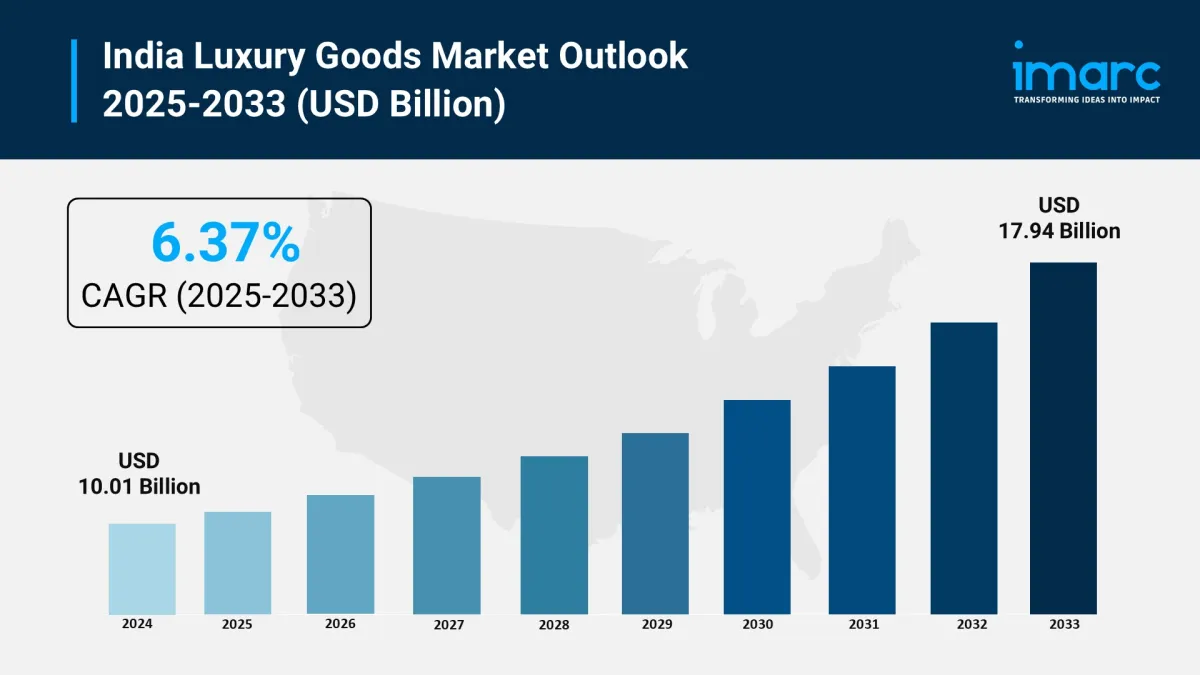
The India luxury goods market was valued at USD 10.01 Billion in 2024 and is expected to reach USD 17.94 Billion by 2033 , growing at a CAGR of 6.37% from 2025 to 2033 . The expansion is driven by increasing disposable incomes, rising middle and upper-class consumer segments, demand for personalized premium experiences, and expanding accessibility through e-commerce platforms.
Key Highlights
-
Market size (2024): USD 10.01 Billion
Forecast (2033): USD 17.94 Billion
CAGR (2025–2033): 6.37%
North India currently dominates the market with a share of approximately 35.45% in 2024
Growth propelled by rising disposable incomes, expanding middle and affluent classes, and heightened preference for premium, exclusive, and customized luxury goods
Rapid expansion of e-commerce platforms unlocking new reach among urban and tech-savvy consumers
Social media and digital channels enhancing awareness and brand engagement-India had 491 million social media users (33.7% of its population) as of January 2025
Request sample copy of the Report: https://www.imarcgroup.com/india-luxury-goods-market/requestsample
How Is AI Transforming the India Luxury Goods Market?
Technological advancement-especially AI-is reshaping the luxury sector in India by enabling:
-
Hyper-personalized shopping experiences: AI analyzes shopping behavior, preferences, and browsing patterns to recommend curated products and services, making consumers feel valued and understood
Virtual try-on and digital stylist tools: AI-powered interfaces allow consumers to visualize products (e.g., bags, jewelry) in real-time, bridging the gap between online and in-store shopping
Demand forecasting and efficient operations: AI tools help luxury brands manage inventory, optimize logistics, and forecast trends by learning from historical data, enhancing supply chain responsiveness
Influencer and marketing optimization: AI identifies the most relevant influencers using demographic and engagement data, improving campaign effectiveness and targeting precision
Growth of digital flagship experiences: Platforms like Tata CLiQ Luxury are integrating AI, AR/VR, personalized boutiques, and assisted selling to offer immersive,“high-tech, high-touch” luxury retail interfaces
Key Market Trends and Drivers
-
Rising disposable incomes and a growing affluent consumer base driving demand for luxury products
Urbanization and lifestyle evolution reshaping consumption patterns toward exclusivity and experience-based luxury
E-commerce expansion enabling wider geographic reach, including Tier-II and Tier-III cities
Social media platforms and aspirational marketing fueling luxury brand engagement and awareness
Sustainability and cultural personalization: growing interest in eco-friendly, traceable, and culturally resonant products
Market Segmentation
The report segments the market into the following categories:
Analysis by Product Type:
-
Watches and Jewellery
Perfumes and Cosmetics
Clothing
Bags/Purse
Others
Analysis by Distribution Channel:
-
Offline
Online
Analysis by End User:
-
Women
Men
Regional Analysis:
-
North India
West and Central India
South India
East and Northeast India
Explore the Full Report with Charts, Table of Contents, and List of Figures (Report link CTA): https://www.imarcgroup.com/india-luxury-goods-market
Latest Development in the Industry
-
The report features a comprehensive competitive landscape, including market structure, positioning of key players, winning strategies, competitive dashboards, company evaluation quadrant, and detailed profiles of leading companies
It also covers COVID-19 impacts, Porter's Five Forces, strategic recommendations, market dynamics, SWOT and value chain analyses, and tracks recent industry developments and technological trends

Legal Disclaimer:
MENAFN provides the
information “as is” without warranty of any kind. We do not accept
any responsibility or liability for the accuracy, content, images,
videos, licenses, completeness, legality, or reliability of the information
contained in this article. If you have any complaints or copyright
issues related to this article, kindly contact the provider above.
Most popular stories
Market Research

More Story








Comments
No comment