






403
Sorry!!
Error! We're sorry, but the page you were looking for doesn't exist.
Dubai: Lowering Speed Limits Not Enough To Slow Down Drivers, Study Finds
(MENAFN- Khaleej Times)
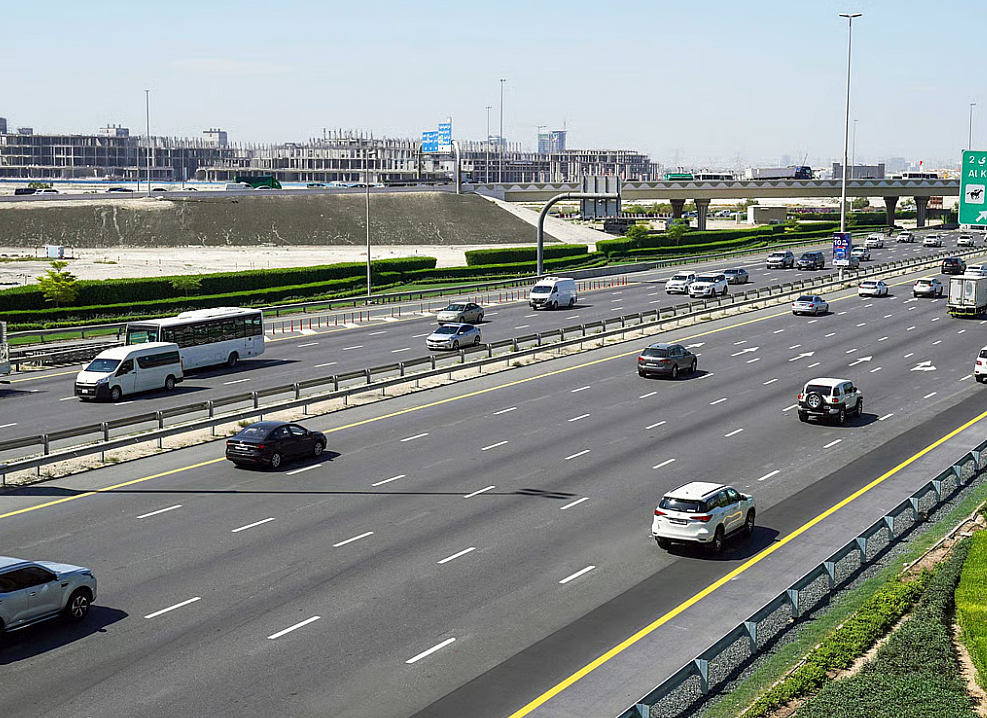
Older districts in Dubai, such as Deira and Bur Dubai - with dense layouts and narrow roads - naturally slow traffic, while newer neighbourhoods with wide, open streets invite higher speeds.
This contrast sums up a new Massachusetts Institute of Technology (MIT) Senseable City Lab study, which finds that simply lowering speed limits isn't enough to slow down drivers.
Recommended For YouUsing artificial intelligence to analyse millions of images and vehicle mobility data across Milan, Amsterdam and Dubai, researchers found that street design, in synergy with signage, is a major influence on speed compliance.
Stay up to date with the latest news. Follow KT on WhatsApp Channels.
The research also found clear differences between Dubai's districts. Older areas already have physical features that slow vehicles, while newer ones require targeted interventions.
“In high-density areas like Deira, the focus could be on refining pedestrian infrastructure, improving crossing safety and reducing vehicle-pedestrian conflicts without major road-width changes,” Alaa AlRadwan, Lab Lead of Senseable City Dubai, told Khaleej Times.“In newer areas, it can be about narrowing lanes, planting more street trees and breaking up long sightlines.”
The study, presented at a conference in Milan last month, shows that in 30km/h zones, drivers reduced their speed by just 2 to 3km/h compared to similar 50km/h streets unless the layout itself encouraged slower driving. Another key finding suggests that narrow, enclosed streets with high building density tend to slow traffic naturally, while wide, open roads with long sightlines encourage faster driving.
Researchers found that street design can multiply the effect of signage and speed limit on driver's compliance.
Dubai was chosen as one of three global test cities for its distinct urban morphology, offering a sharp contrast to the narrower, denser streets of Milan and Amsterdam. In Milan, researchers analysed more than 51 million vehicle telemetry points provided by UnipolTech, paired with thousands of Google Street View images. In Amsterdam and Dubai, the model was tested and refined with support from local partners to capture cultural and geographic differences.
“This is the first study of its kind in the UAE,” said Martina Mazzarello, Global Labs Lead at the Senseable City Lab.“Together with the Dubai Future Foundation, we're developing tools to help cities in the region redesign streets - especially in extreme climate conditions where walkability is already challenged”
The AI model used by the Senseable City Lab can predict how changes in street design - from curb alignment to tree placement - will affect driver speed compliance before construction begins.
According to Carlo Ratti, Director of the Senseable City Lab, the study“confirms” that changing the number on a speed sign is not enough:“If we want safer streets, we must design them in ways that intuitively slow drivers down. As a concept, this has been known for a long time. Only now, with the advent of AI, can we do this in a quantitative way.”

Legal Disclaimer:
MENAFN provides the
information “as is” without warranty of any kind. We do not accept
any responsibility or liability for the accuracy, content, images,
videos, licenses, completeness, legality, or reliability of the information
contained in this article. If you have any complaints or copyright
issues related to this article, kindly contact the provider above.
Most popular stories
Market Research

More Story






Comments
No comment