







403
Sorry!!
Error! We're sorry, but the page you were looking for doesn't exist.
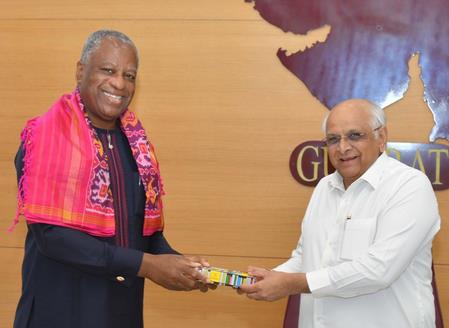
India-Nigeria Ties Strengthened Under PM Modi: Former Nigerian Minister
(MENAFN- IANS) Gandhinagar, 30 July (IANS) Former Foreign Minister of Nigeria, Geoffrey Onyeama, met Gujarat Chief Minister Bhupendra Patel during his visit to India as part of the Indian Culture Immersion Programme organised by the Ministry of External Affairs on Wednesday.
During the meeting, held in Gandhinagar, both leaders lauded the deepening India-Nigeria ties, particularly in the context of Nigeria's participation in the G-20 Summit under India's presidency.
The Chief Minister highlighted Prime Minister Narendra Modi's global vision of Vasudhaiva Kutumbakam -“the world is one family” - and emphasised how this ethos continues to shape India's inclusive foreign policy.
Onyeama, accompanied by his wife, expressed admiration for Gujarat's rapid development and its preservation of cultural heritage.
He appreciated Gujarat's role in offering higher education opportunities to Nigerian students, further strengthening people-to-people connections between the two countries.
He also acknowledged the significant contribution of the Gujarati community to Nigeria's socio-economic development and praised India's technological and economic progress under PM Modi's leadership.
Patel reiterated Gujarat's willingness to explore greater cooperation with Nigeria in the fields of trade, industry, and investment.
The former Nigerian Foreign Minister's visit included stops at the Statue of Unity and Maharaja Sayajirao University in Vadodara.
He is scheduled to visit the National Forensic Sciences University (NFSU) and Gujarat Technological University (GTU) on Thursday.
Senior officials present during the meeting included Additional Chief Secretary to the Chief Minister M.K. Das, Principal Secretary of Industries Mamta Verma, Industries Commissioner P. Swaroop, and INDEXTb MD Keyur Sampat.
As of 2024, India and Nigeria maintain robust bilateral trade relations, with trade volumes exceeding USD 14 billion annually.
India is one of Nigeria's largest trading partners, primarily importing crude oil and liquefied natural gas from Nigeria, while exporting pharmaceuticals, engineering goods, automobiles, textiles, and refined petroleum products.
Nigerian oil accounts for a significant share of India's energy imports. Beyond hydrocarbons, the countries are also exploring partnerships in agriculture, digital technology, fintech, education, and capacity building, reflecting a broader shift toward diversified economic engagement.

Legal Disclaimer:
MENAFN provides the
information “as is” without warranty of any kind. We do not accept
any responsibility or liability for the accuracy, content, images,
videos, licenses, completeness, legality, or reliability of the information
contained in this article. If you have any complaints or copyright
issues related to this article, kindly contact the provider above.
Most popular stories
More Story





Comments
No comment