



403
Sorry!!
Error! We're sorry, but the page you were looking for doesn't exist.
Succession Planning Has A Comms Problem
(MENAFN- PRovoke)
NEW YORK - With CEO turnover on the rise, communications remains a commonly overlooked part of succession planning, even as its role in maintaining trust and continuity grows more critical.
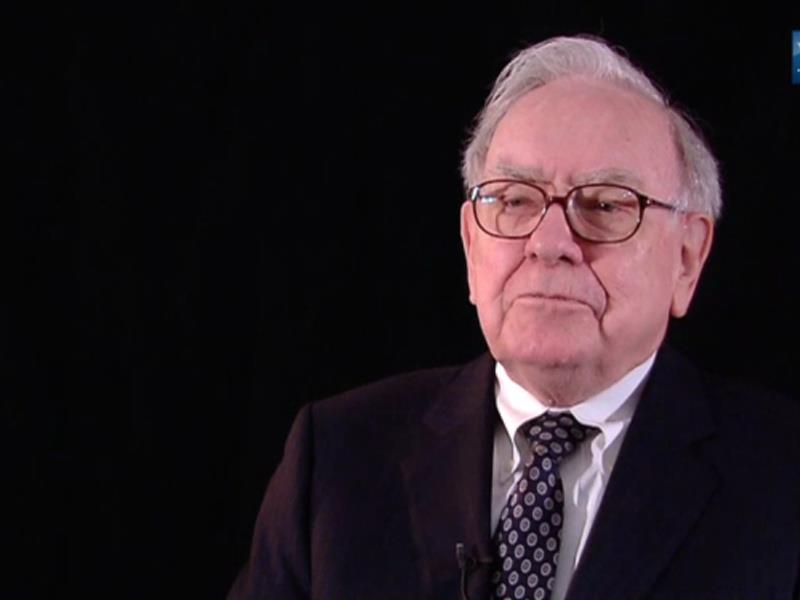
We saw that in May, when Berkshire Hathaway billionaire Warren Buffett announced his retirement, the timing of which was kept so under wraps that even his designated successor, Greg Abel, didn't see it coming.
“That moment really struck me,” said Seth Linden, president and partner at Dukas Linden Public Relations.“I was surprised that Greg Abel didn't know the announcement was coming - and that Warren Buffett made it on his own. I found myself head-scratching on that one.”
The Berkshire Hathaway moment highlights the broader issue facing corporate leadership: communications around succession is still often treated as something to be dealt with later on, rather than an integral part of leadership planning. Yet in 2023, more than 1,900 US-based CEOs left their roles, the highest number recorded since Challenger, Gray & Christmas began tracking the data in 2002.
“Communications should never be just an announcement,” Linden said.“If an organization knows there may be a change in the next three to five years - or sooner - they need to start thinking now about how that transition will be communicated, internally and externally.”
When that doesn't happen, the consequences go beyond a messy rollout.
“Succession planning is intrinsically connected to reputation and stakeholder management,” said Matthew Doering, CEO and founder of Global Gateway Advisors.“It ensures continuity of confidence, trust, and stability.”
Doering said CEO transitions typically fall into one of three categories, each with its own communications risks: founders whose successors must live up to a defining legacy; transformational leaders whose replacements are expected to sustain momentum without signaling stagnation; and sudden or forced exits, which can quickly become a crisis if handled poorly.
“The throughline in all successful succession announcements is clear communication that anticipates stakeholder questions,” Doering said.“This provides assurance on rationale, continuity commitments, and forward vision.”
Even companies with formal plans in place can falter when messaging isn't aligned. In early 2020, Disney named Bob Chapek CEO in a move that surprised employees and external stakeholders alike. Outgoing CEO Bob Iger remained as executive chairman, creating a dual-leader structure that blurred decision-making and diluted messaging during a period of pandemic shutdowns, political controversy, and internal unrest. Less than three years later, the board dismissed Chapek and reinstated Iger.
As Axios wrote , Disney's succession plan was undercut by poor communication, unclear authority between Chapek and Iger, and a lack of internal alignment that created confusion and weakened confidence in leadership
We saw that in May, when Berkshire Hathaway billionaire Warren Buffett announced his retirement, the timing of which was kept so under wraps that even his designated successor, Greg Abel, didn't see it coming.
“That moment really struck me,” said Seth Linden, president and partner at Dukas Linden Public Relations.“I was surprised that Greg Abel didn't know the announcement was coming - and that Warren Buffett made it on his own. I found myself head-scratching on that one.”
The Berkshire Hathaway moment highlights the broader issue facing corporate leadership: communications around succession is still often treated as something to be dealt with later on, rather than an integral part of leadership planning. Yet in 2023, more than 1,900 US-based CEOs left their roles, the highest number recorded since Challenger, Gray & Christmas began tracking the data in 2002.
“Communications should never be just an announcement,” Linden said.“If an organization knows there may be a change in the next three to five years - or sooner - they need to start thinking now about how that transition will be communicated, internally and externally.”
When that doesn't happen, the consequences go beyond a messy rollout.
“Succession planning is intrinsically connected to reputation and stakeholder management,” said Matthew Doering, CEO and founder of Global Gateway Advisors.“It ensures continuity of confidence, trust, and stability.”
Doering said CEO transitions typically fall into one of three categories, each with its own communications risks: founders whose successors must live up to a defining legacy; transformational leaders whose replacements are expected to sustain momentum without signaling stagnation; and sudden or forced exits, which can quickly become a crisis if handled poorly.
“The throughline in all successful succession announcements is clear communication that anticipates stakeholder questions,” Doering said.“This provides assurance on rationale, continuity commitments, and forward vision.”
Even companies with formal plans in place can falter when messaging isn't aligned. In early 2020, Disney named Bob Chapek CEO in a move that surprised employees and external stakeholders alike. Outgoing CEO Bob Iger remained as executive chairman, creating a dual-leader structure that blurred decision-making and diluted messaging during a period of pandemic shutdowns, political controversy, and internal unrest. Less than three years later, the board dismissed Chapek and reinstated Iger.
As Axios wrote , Disney's succession plan was undercut by poor communication, unclear authority between Chapek and Iger, and a lack of internal alignment that created confusion and weakened confidence in leadership
Starbucks encountered similar challenges, with its leadership transition raising questions due to a prolonged and loosely defined handoff between interim CEO Howard Schultz and successor Laxman Narasimhan.
“These are brand-name companies with succession plans in place,” said Linden.“But without a clear narrative and coordinated rollout, the transition becomes the story - and not in a good way.”
Christine DiBartolo, senior managing director at FTI Consulting, said the firm's succession work increasingly goes beyond the handoff moment.“We counsel leaders and boards on the transition announcement, of course, but even more importantly, we help leaders plan their next steps,” she said. That includes aligning executive teams, assessing stakeholder sentiment, establishing post-transition communications cadence, and preparing the incoming CEO for their public positioning.
She added that the focus has expanded beyond the CEO.“Companies are now preparing other senior executives - and even the next tier of rising leaders - to play more active roles in stakeholder engagement and corporate reputation,” DiBartolo said.
Shannon Stucky, also FTI, said the shift is being felt inside organizations. Her team increasingly partners with corporate comms and HR to build what she calls“communications muscle” across the executive team.
“Think: understanding the trust equation, empathetic listening, engaging in difficult conversations, and getting back to the key messages,” she said.“We then map how leadership teams can most effectively work together to build and protect company reputation, retain top talent, gain loyalty and trust, and progress business objectives.”
Often, she said, executives who master those skills become succession candidates themselves.“We're finding that those who thrive in these new communications roles are frequently also those who are chosen to move into increasingly responsible positions because they have the relationships - and the followership - to flourish.”
Communications can no longer be treated as an afterthought - it has to be part of how companies build trust in leadership from the outset.
“For a long time, succession planning was thought of as a closed-door board function,” said Linden.“Now, it's reputational. It's strategic. And it's public.”

Legal Disclaimer:
MENAFN provides the
information “as is” without warranty of any kind. We do not accept
any responsibility or liability for the accuracy, content, images,
videos, licenses, completeness, legality, or reliability of the information
contained in this article. If you have any complaints or copyright
issues related to this article, kindly contact the provider above.
Most popular stories
Market Research

More Story







Comments
No comment