




403
Sorry!!
Error! We're sorry, but the page you were looking for doesn't exist.

The 70 000 Jobs Plan: A Big, Fat Joke
(MENAFN- The Post)
When Prime Minister Samuel Matekane stood before the nation and unveiled a plan to create 70 000 jobs, many clapped, perhaps out of hope, perhaps out of desperation.
But let us be honest, if we are to judge this plan not by its promises but by its processes and practicality, then we must call it what it looks like: a big, fat joke.
The plan appears to be an impetuous, ill-thought-out attempt to patch over a chronic unemployment crisis with flashy numbers and no clear roadmap.
Let us start at the beginning. The urgency of youth unemployment in Lesotho cannot be overstated.
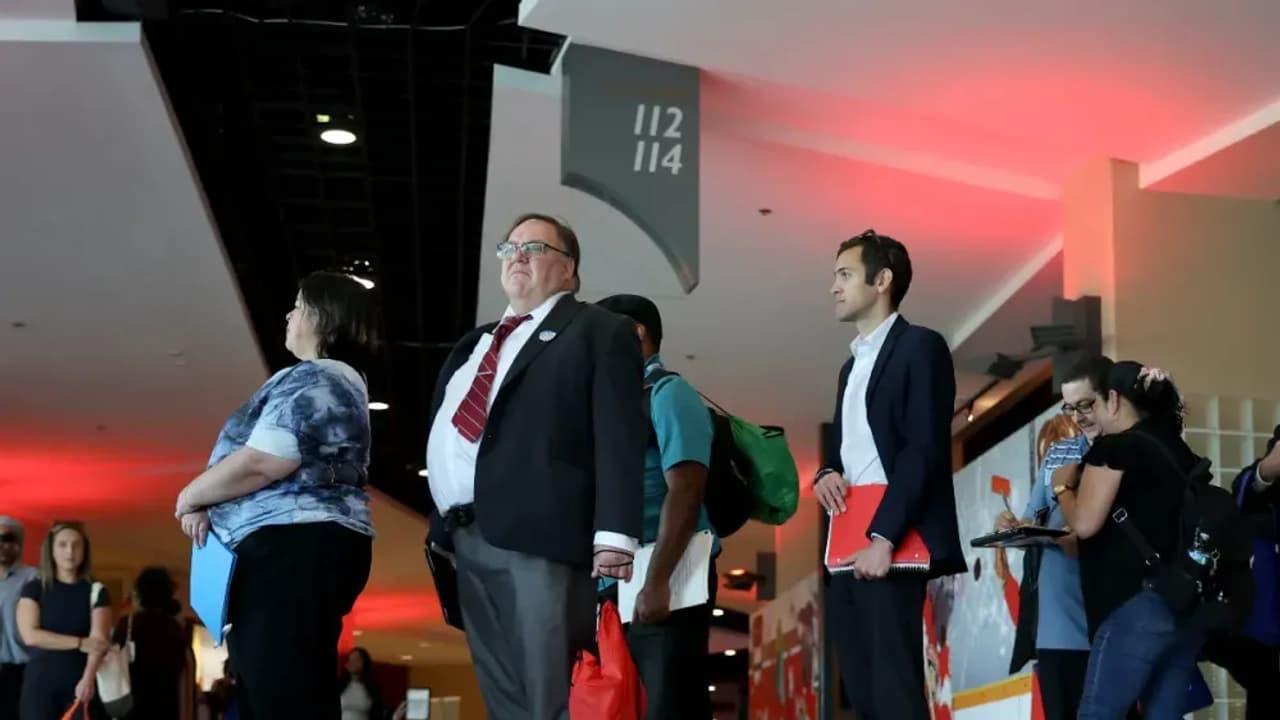
The long queues of hopeful young people who lined up for interviews at the Lesotho Defence Force two weekends ago were not just a snapshot of demand for employment but were a grim reminder of how broken the system has become.
These young people were not there because they dreamed of joining the military. They were there because it was the only job on offer.
In response to this heart-breaking scene, the Prime Minister acted swiftly, calling an emergency cabinet meeting the following Monday, instructing ministers to craft a job creation strategy.
Less than 24 hours later, we are told the plans were presented and approved. And by the following Monday, a full-fledged 70 000-job creation plan was launched.
This timeline does not inspire confidence.
Can a truly comprehensive, nationwide job creation strategy, one that affects the country's economy, budget, labour force, and long-term development, be conceived and approved in under a week? It is difficult to believe that.
Good policy development takes time, consultation, modelling and iteration. This plan feels less like governance and more like theatre.
One of the biggest unanswered questions is simple: where is the money coming from? The plan, as it stands, appears to be heavily government-led.
If thousands of jobs are to be created in the public sector, that means public money will be used to pay salaries. That impacts the wage bill.
Has the government revised the current budget to account for these new expenses? Will there be a mid-year adjustment in Parliament to accommodate this plan?
If not, then which programmes are going to be sacrificed to fund this new initiative? Education? Healthcare? Infrastructure?
Furthermore, how will this job creation spree affect the existing government salary structure?
For years, civil servants have been lobbying for fair pay adjustments and wage increments.
If thousands of new government employees are to be brought in, what will this mean for those already on the payroll?
Will the government freeze pay increases to accommodate new recruits? Or will the plan inflate the wage bill to unsustainable levels?
Then there's the private sector.
The plan includes ambitions to create tens of thousands of jobs in industrial zones like Belo.
The Prime Minister says 20 000 jobs will be created by July.
But that raises more questions than it answers.
Belo's employment capacity is said to be around 20000. But this is theoretical capacity. In reality, many factory shells remain empty.
Investors have not yet come forward in large numbers to fill them.
Global trade dynamics have also shifted, with the US-China trade war and the effects of the Trump-era tariffs creating instability in textile exports, one of Lesotho's major employment sectors.
Are we simply assuming factories will materialise because we want them to?
Even if the investors were ready, there are immediate operational challenges. For instance, the issue of electricity in Belo has still not been resolved.
Power shortages and unstable supply make it difficult for factories to operate consistently, let alone expand.
How soon will this be addressed? Without basic infrastructure, promises of jobs remain just that, promises.
To be clear, I am not saying the creation of 70 000 jobs is impossible. I am saying that doing so in this manner, with this speed, this lack of transparency and the political posturing, is unlikely to succeed. Jobs cannot be willed into existence by press releases and emergency meetings.
I wish the government well in its efforts to tackle unemployment.
It is indeed the elephant in the room and it is about time we confronted it head-on. But we need real strategies, not slogans.
We need economic transformation, not political gymnastics.
What would inspire more confidence is a publicly available policy document outlining exactly how the jobs will be created, which sectors will absorb them, what funding mechanisms are in place and what the short-, medium-, and long-term targets are.
Without this level of detail, this plan appears to be nothing more than a reactionary measure, a kneejerk response to public discontent.
Lesotho needs jobs, that much is clear but what it does not need is a rushed, opaque process that promises miracles without setting in place the necessary work on the ground.
The youth of this country deserve better than that.
They deserve a plan grounded in reality, supported by evidence and sustained by long-term commitment.
Until we see that, I remain sceptical. And I hope the government proves me wrong.
Ramahooana Matlosa

Legal Disclaimer:
MENAFN provides the
information “as is” without warranty of any kind. We do not accept
any responsibility or liability for the accuracy, content, images,
videos, licenses, completeness, legality, or reliability of the information
contained in this article. If you have any complaints or copyright
issues related to this article, kindly contact the provider above.
Most popular stories
Market Research

More Story






Comments
No comment