







403
Sorry!!
Error! We're sorry, but the page you were looking for doesn't exist.

From Fields To Courts: How Kashmiri Land Turns Into Legal Fire
(MENAFN- Kashmir Observer)
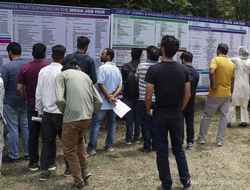
Officials accessing the state of wetland. KO File Photo
Officials accessing the state of wetland. KO File Photo
By Mohammad Amin Mir
Land means everything in Kashmir. It's family history, livelihood, and legacy wrapped into one. So when someone passes away, the question often is: who gets the land next?
That answer lies in a document called a will deed. It's supposed to be straightforward. This piece of paper says who gets what when the owner is gone.
But making it work isn't always simple.
A will deed lets a person clearly spell out how their property-land, houses, even movable stuff-should be handed down after death. But not just any note scribbled on paper counts.
Read Also Kashmir's Stillness Tells a Story Why Kashmir Needs a Legal Training Institute to Break the DeadlockFor a will to hold water legally in Jammu and Kashmir, it needs to meet certain conditions. The testator, the person writing the will, must be at least 18 and of sound mind.
The will must be voluntary, free of pressure or tricks, and signed in front of at least two witnesses who also sign it. Sounds formal? It is. Because any slip-up here can lead to long family fights or legal trouble.
One thing that confuses many is whether you have to register the will deed or not. Technically, no. The law doesn't demand registration for a will to be valid. But let me tell you, skipping this step can cause headaches.
When you register a will with the local Sub-Registrar's office, it becomes a public record. This simple act offers proof that the will is genuine. It also keeps away fraud, forgery, and endless arguments over authenticity.
Imagine a document locked away somewhere versus one on public record that anyone involved can check. Which would you trust more?
You might think,“What about notarization? Doesn't that prove it's real?” Not quite. A notarized will just means a notary public saw the signatures, but it doesn't put the will on public record. Revenue officials prefer a registered will because it makes changing land ownership in official records much smoother.
Changing ownership in official records is called“mutation.” After the landowner dies, the heirs must notify local revenue officials, usually the Patwari and Tehsildar, to update the land records. This step is crucial.
If the mutation doesn't happen, the legal heirs might struggle to prove ownership later, whether selling, mortgaging, or simply managing the land.
Here's how mutation works with a registered will: the heir submits the death certificate and a certified copy of the will to the Patwari. The Patwari verifies the documents and checks the land records. Then, the proposal moves to the Tehsildar, who officially updates the ownership in the village records. The process usually takes a few weeks and allows time for anyone with objections to come forward.
But remember, mutation doesn't prove ownership by itself. That's for civil courts to decide if there's a dispute.
However, courts in Kashmir have repeatedly upheld mutations based on registered wills. One important ruling said mutations can't be reopened unless a court sets aside the will itself. This makes registration a powerful shield against endless challenges.
Legal battles often arise when daughters or other rightful heirs are excluded without valid reasons. Courts have protected their rights, reminding families that personal laws can't be bent by informal deals or family pressure.
What does all this mean for you? First, get your will registered. Don't just rely on a handwritten note or a notarized copy. Make it official at the Sub-Registrar's office and keep multiple certified copies safe.
Second, choose your witnesses wisely-people who can honestly confirm that you were in your right mind and acted freely. Third, once the land is mutated in your name, hold onto certified copies of the updated records. These papers prove you own the property.
Finally, don't try to navigate this maze alone. Personal and land laws in Kashmir can be complex and sometimes change. A local lawyer or revenue expert can guide you through the process, helping avoid costly mistakes or delays.
A will deed is more than just a document. It's a bridge between generations, a promise that your land won't be lost to confusion or conflict.
If you handle it carefully-get it registered, follow the mutation steps, and consult professionals-you can secure your family's legacy and save future generations from needless strife.
In a place where land holds deep meaning, that's a promise worth making.
-
The author is a legal researcher and writer focused on property and inheritance laws in Jammu and Kashmir.

Legal Disclaimer:
MENAFN provides the
information “as is” without warranty of any kind. We do not accept
any responsibility or liability for the accuracy, content, images,
videos, licenses, completeness, legality, or reliability of the information
contained in this article. If you have any complaints or copyright
issues related to this article, kindly contact the provider above.
Most popular stories
Market Research

More Story







Comments
No comment