




403
Sorry!!
Error! We're sorry, but the page you were looking for doesn't exist.
UAE: How Car Insurance Policies Have Changed Since Heaviest Rainfall, Floods
(MENAFN- Khaleej Times)
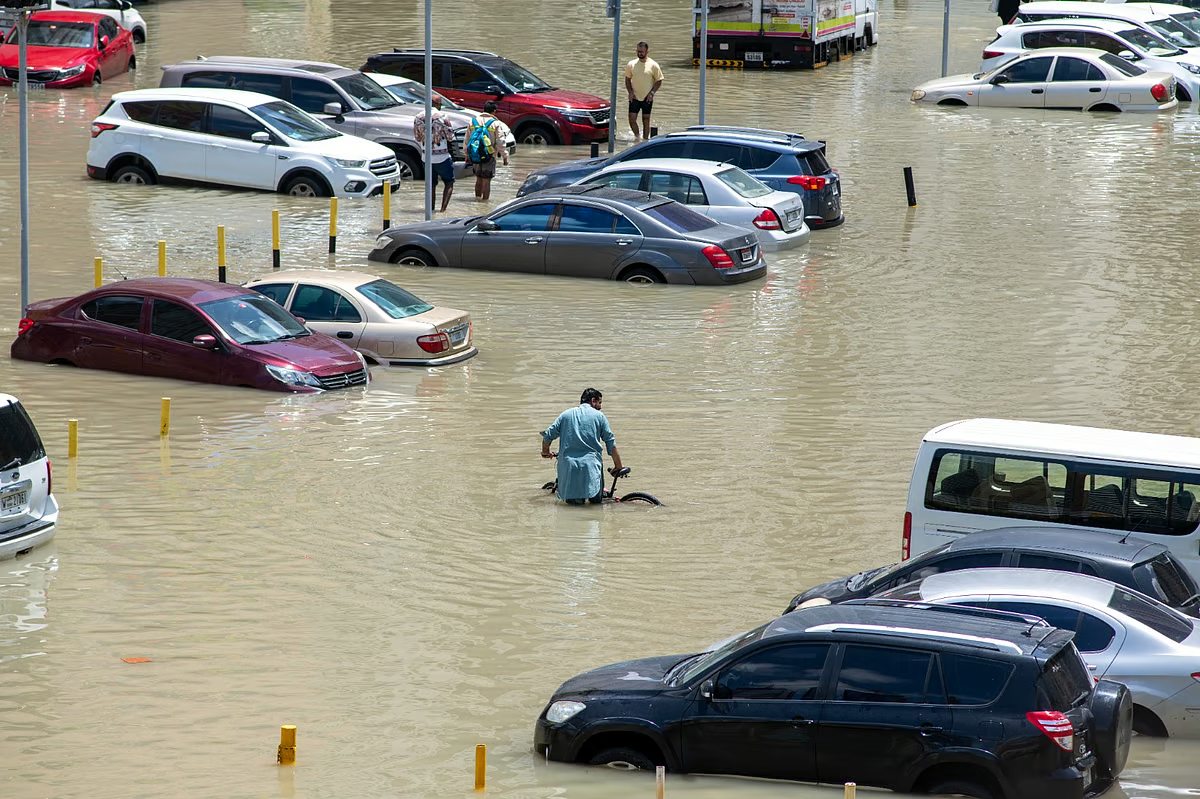
It's been a year since the UAE witnessed one of its most unforgettable weather events, record-breaking rainfall that flooded street , stranded cars, and left thousands of residents looking for help. The country bounced back to normalcy within days, thanks to the immediate response from the authorities and the community that came together.
While the floods became one of the biggest challenges the country had faced , it also pushed the insurance industry forward.
Over 100,000 motor claims in days“The April floods were one of the most unpredictable and unprecedented climate events in recent UAE history,” said Anas Mistareehi, CEO of eSanad.“We estimate over 100,000 claims were filed across the industry, covering motor, property, and commercial.”
Stay up to date with the latest news. Follow KT on WhatsApp Channels.
According to insurers, total insured losses were estimated to be over Dh4 billion and a huge chunk of that came from vehicles - cars that were submerged, stalled, or badly damaged in floodwaters.
Toshita Chauhan, business head, motor insurance at Policybazaar, said that the floods severely impacted vehicles, especially in Dubai, Sharjah, and Ajman.“The most frequently reported damages included engine failures, electrical malfunctions, and brake issues,” said Chauhan.
Despite the sheer volume of claims - equivalent to six to nine months' worth being filed in just a few weeks - insurance providers stepped up and managed the coverage requests.
“Many companies quickly set up dedicated teams to handle the sudden influx,” said Chauhan.“Most claims were evaluated and settled within three months, which is a testament to how efficiently the industry responded.”
Industry stepping upThe floods were a turning point for the industry and insurers, who realised that climate events like this aren't rare and that policies needed to evolve.
“Many insurers have now updated their policies to include climate-related threats as part of their standard or optional coverage,” said Mistareehi.“This includes weather-related protection add-ons, enhanced motor policy features, and business interruption coverage for commercial clients.”
Chauhan said that demand for comprehensive coverage has surged, particularly for natural calamity protection and roadside assistance.“Consumers are far more aware now. They want to be covered not just for the basics, but also for events like floods.”
“Now, most insurance policies have options to cover climate-related damage,” said Mistareehi.“That includes flood protection, add-ons for weather damage, and business interruption coverage.”
Surge in premiums pricesAfter the floods, auto insurance premiums increase and prices nearly doubled for high-risk vehicles.“Following the floods, insurers revised premium structures. On average, motor insurance premiums rose by 25 to 30 per cent, while high-risk categories like EVs saw increases of up to 100 per cent,” said Chauhan.
However, insurers agree that premiums have now stabilised.“The corrections were necessary to ensure the market remains sustainable. Unless we witness another major event, we expect future pricing changes to be gradual,” said Mistareehi.
Insurers also mentioned that pricing now reflect actual risk.“We do not anticipate further sharp increases. The pricing now reflects the real risk environment, and products are becoming more personalised and data-driven,” said Chauhan.
Focus on EVsWith more people switching to electric vehicles, insurers are tailoring plans for them too.“EV insurance is generally more expensive due to battery costs and specialised repairs,” said Chauhan.“However, tailored policies are emerging to ensure these vehicles are well protected.”
She advised EV owners to ensure their policies cover EV battery replacement and associated components.
Comprehensive coverage still mattersAs the UAE government continues investing in drainage infrastructure to reduce future flood risks, the question of the need for full insurance still arises. Experts are of the opinion that comprehensive coverage remains a wise choice.
“Floods are just one aspect. Comprehensive insurance protects against a broad range of unforeseen events, accidents, theft, fire, and more. It's a necessary safeguard in today's climate,” said Chauhan.
Ways to save on premiumsExperts highlight how motorists can keep insurance costs manageable and offer smart ways to save on higher premiums.
- Maintaining a clean driving record
Increasing deductibles (if financially feasible) Bundling insurance policies
Comparing quotes from different insurers Buying only from licensed and regulated providers
“The key is to stay informed and proactive,” said Chauhan.“When consumers understand their coverage, they are better equipped to navigate a changing insurance landscape,” added Chauhan.

Legal Disclaimer:
MENAFN provides the
information “as is” without warranty of any kind. We do not accept
any responsibility or liability for the accuracy, content, images,
videos, licenses, completeness, legality, or reliability of the information
contained in this article. If you have any complaints or copyright
issues related to this article, kindly contact the provider above.
Most popular stories
Market Research

More Story






Comments
No comment