








403
Sorry!!
Error! We're sorry, but the page you were looking for doesn't exist.
The End Of Capitalism Or The End Of Civilization?
(MENAFN- Asia Times)
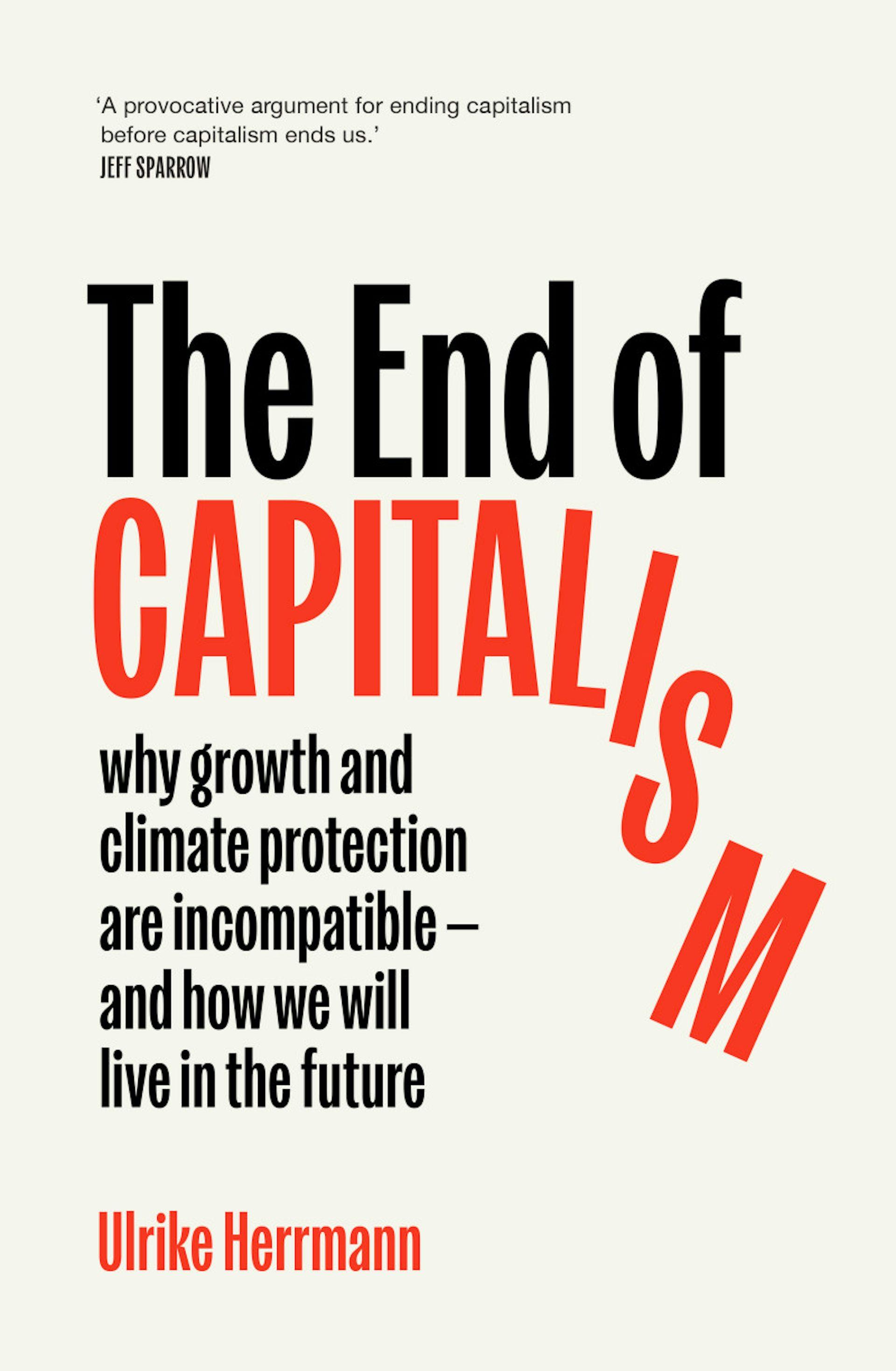
Beware of hyperbolic headlines. But in this case, I'm afraid, as Ulrike Herrmann's very readable book The End of Capitalism makes clear, the choice between capitalism and civilization really does seem to be either/or – and the end will probably come a lot sooner than we thought.

Ulrike Herrmann argues that 'climate protection will only be possible if we abolish capitalism'. Scribe Publishing
Anyone who isn't alarmed about the rapid and well-documented decline in the global environment, upon which we and our atypically comfortable lifestyles depend, really hasn't been paying attention. You may not enjoy reading a book like this, but you really should read it – if only for your children's sake.
The End of Capitalism appeared in Germany a couple of years ago, but it has lost none of its relevance or urgency. On the contrary, with Donald Trump in the White House promising to“drill, baby drill”, it could hardly be more timely.
The majority of potential readers are likely to disagree with Herrmann's central claim that“climate protection will only be possible if we abolish capitalism.”
This is unsurprising. We have known nothing other than capitalism in the West for several hundred years. Attempts to do things differently in other parts of the world, such as the Soviet Union, generally did not go well socially or, more importantly, environmentally .
One of the reasons it's easier to imagine the end of the world than the end of capitalism, as philosopher Fredric Jameson famously claimed , is that people everywhere like the abundance of stuff that capitalism has been instrumental in producing.
Living standards, especially in the West, but also in China, India and elsewhere, have risen unimaginably in a remarkably short space of time. It is not surprising that the beneficiaries have generally been pleased about this unprecedented change in their material circumstances.
Ulrike Herrmann argues that 'climate protection will only be possible if we abolish capitalism'. Scribe Publishing
True, contemporary capitalism is characterised by a growing gulf between the richest and the poorest, both within and between countries. This is an awkward problem for“communist” China, but one that Australians and especially Americans seem relatively unconcerned about. Herrmann, too, is surprisingly relaxed about it. She argues that“capitalism made democracy possible – and it can be democratically controlled.”
This idea is currently being subjected to a searching real-time examination, as the Trump administration systematically eviscerates and transforms America's system of governance to a point where sober and serious analysts consider it to be headed toward authoritarianism.
Herrmann does not consider such a possibility, but she does provide a clear explanation of the rise of capitalism and the social and technological forces that have made it the most transformative force in human history.
More hyperbole? Lots of people have given up on organised religion, but not many have renounced consumerism. Unlikely as such a renunciation might seem, Herrmann argues that endless consumption is something we will have to give up if the environment is to remain habitable.
The argument is simple and has been around since the Club of Rome published The Limits to Growth , half a century ago: a system that is predicated on ever expanding growth is incompatible with a world of finite resources, especially if one of those resources is a functioning natural environment.
Lots of people have spent the intervening 50 years pointing out why the authors of that book were wrong. It is likely they will be queuing up to tell Herrmann she is wrong, too – especially when she argues that“'green growth' does not exist.”

Legal Disclaimer:
MENAFN provides the
information “as is” without warranty of any kind. We do not accept
any responsibility or liability for the accuracy, content, images,
videos, licenses, completeness, legality, or reliability of the information
contained in this article. If you have any complaints or copyright
issues related to this article, kindly contact the provider above.
Most popular stories
Market Research

More Story






Comments
No comment