




403
Sorry!!
Error! We're sorry, but the page you were looking for doesn't exist.
The Lost Tiger: First Animated Film By An Indigenous Woman Explores Heritage And Identity Through A Thylacine
Author:Ari Chand
(MENAFN- The Conversation)
Director Chantelle Murray's new family film The Lost Tiger is the first animated feature written and directed by an Indigenous woman.
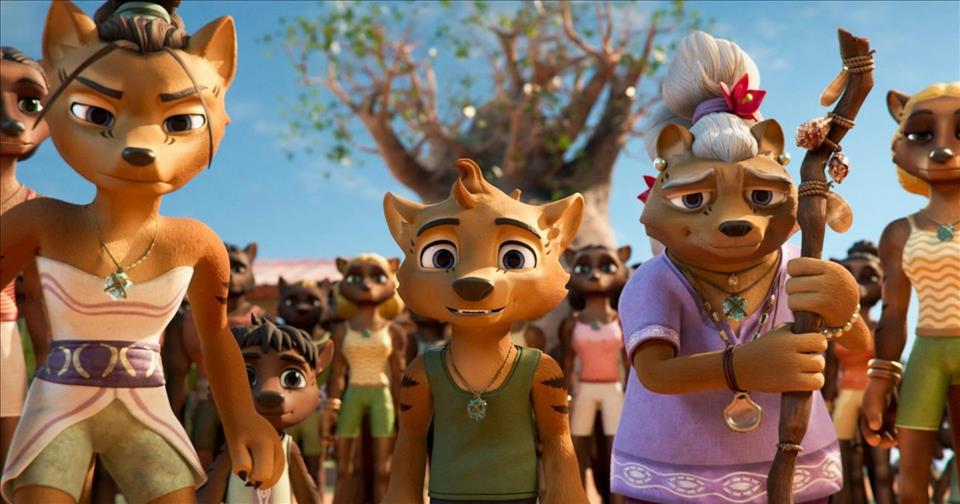
The Lost Tiger breathes life into the extinction story of the thylacine, turning it into a moving narrative for younger audiences. Maslow Entertainment

Continuing with a long history of Indigenous storytelling, Murray has embedded the film with themes of identity, heritage and adventure. In doing so, she tells a story that is utterly heartwarming and wholly unique to place.
In Murray's own words :
The film is produced by Brisbane-based and woman-run Like a Photon Creative , the studio behind The Sloth Lane (2024) and Scarygirl (2023).
A powerful messageThe Lost Tiger is classic orphan story founded on identity. The main character is a thylacine (Tasmanian tiger) named Teo (voiced by Thomas Weatherall), whose hero's journey starts when he begins to grapple with his differences.
Teo is found as a baby, alongside a mysterious crystal, by a couple from the gregarious wrestling kangaroo troupe Roomania. Young Teo struggles with his identity as he's coming of age and wants to fit in.
After visiting a museum, Teo meets platypus and aspiring guild adventurer named Plato (Rhys Darby). Once Plato identifies Teo as one of the world's last thylacines, he tells him of a legendary lost“Tiger Island” said to be inhabited by thylacines – and the two begin a quest to find the island.
The Lost Tiger breathes life into the extinction story of the thylacine, turning it into a moving narrative for younger audiences. Maslow Entertainment
The film critiques the“doctrine of discovery” through its antagonist, adventure guild explorer Quinella Quoll (Celeste Barber). The doctrine of discovery refers to a legal and ideological approach through which colonisers tried to justify the seizing of land, resources and objects by Indigenous peoples.
Quoll – who is always looking to“discover” powerful new artifacts for her museum collection – embodies all the extractive qualities of historical European explorers and museum founders.
This is an important message at a time when museums both nationally and internationally are reevaluating what they hold in their collections – and trying to address the historical injustices associated with colonial acquisitions.
With a simple but well-executed plot, the film allows for some fun colloquialisms such as“2-up” (an old Aussie gambling game) and“stop, drop and roll”, along with a slate of side characters that highlight the value of simply doing what's right.
It taps into the universal truth that each person's story is irrevocably connected to the stories of others, and that the effect of our choices go far beyond our own lives.
Visually, The Lost Tiger has a distinct texture, underpinned by a vivid vision of the bush. Murray, who is from the Kimberley region, was highly intentional in her portrayal of Australia's dynamic landscapes. As she explains :
The animation itself is created on“stepped keys”, a process in which only every second frame is animated. So instead of seeing 24 frames of motion per second, as you would in a traditional computer-animated film, you see 12 frames per second. This pose-to-pose movement gives the film a stop-motion feel.
This unique approach is complemented by some whiz-bang moments sure to draw in younger viewers. The film's wrestling scenes and action sequences, supported by animation director Tania Vincent, are choreographed with high levels of energy, leading to a climactic end.
Between two worldsAnimation has the unique ability to tell stories that are both inclusive and diverse – which acknowledge our differences, yet connect us through our shared loves and experiences.
The Lost Tiger does this beautifully by focusing on messages of respect, unity, connection to place and the importance of conserving precious resources on First Nations lands. It also taps into the difficulties of belonging (and struggling to belong) across different cultural worlds.
Murray's film helps lead us towards an industry that embraces diverse voices, and which will be able to support the uniquely Australian voices of future generations.
The creators of the film acknowledge the Turrbal and Yuggera Peoples as the Traditional Owners and Custodians of the lands in Queensland on which the film was made.
The Lost Tiger is in cinemas now.

Legal Disclaimer:
MENAFN provides the
information “as is” without warranty of any kind. We do not accept
any responsibility or liability for the accuracy, content, images,
videos, licenses, completeness, legality, or reliability of the information
contained in this article. If you have any complaints or copyright
issues related to this article, kindly contact the provider above.
Most popular stories
Market Research

More Story








Comments
No comment