







403
Sorry!!
Error! We're sorry, but the page you were looking for doesn't exist.
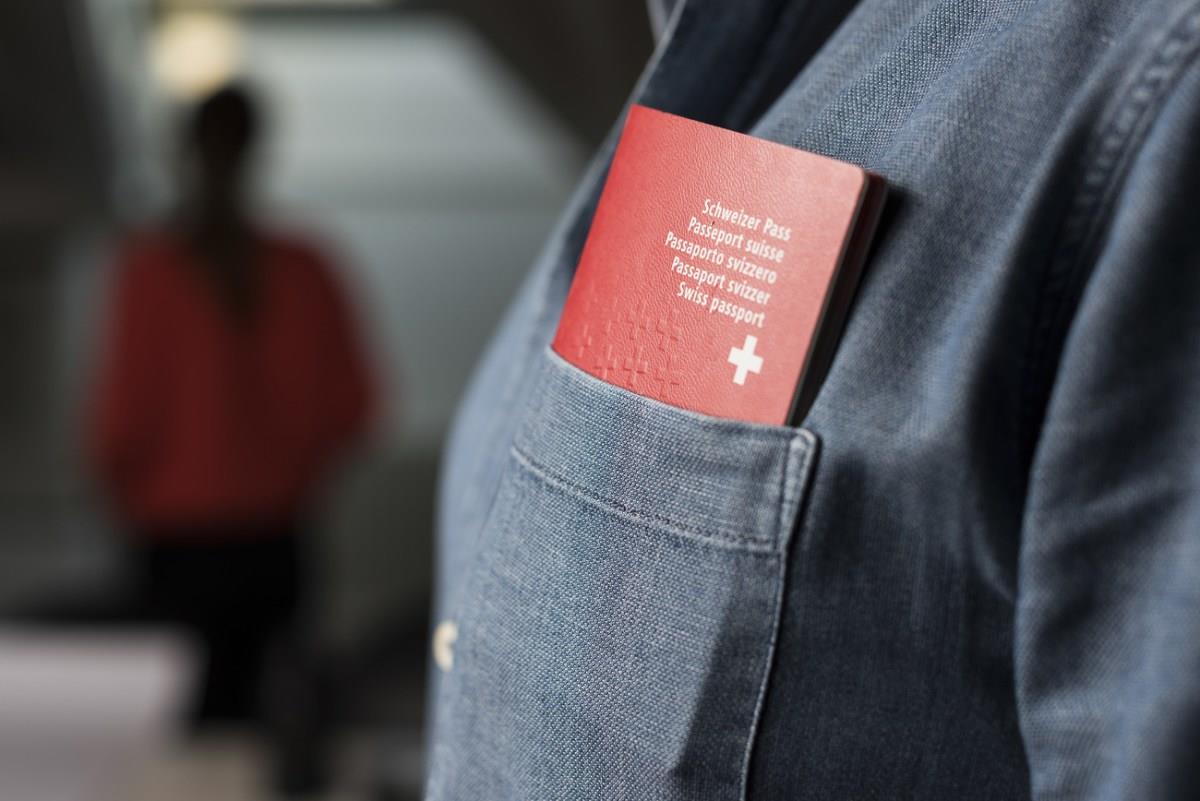
The Citizenship Obstacle Course Facing Spouses Of Swiss Abroad
(MENAFN- Swissinfo)
The spouses of Swiss citizens living abroad can, after several years of marriage, apply for Swiss citizenship. But the process requires determination as it involves lots of paperwork, learning a Swiss language, and significant fees.
This content was published on
February 12, 2025 - 09:00
10 minutes
Graduated with a master's degree in languages and international trade. Worked for 8 years as personal assistant to the Director-general of the Swiss national broadcasting service. An expatriate myself, I have a knack of understanding the Swiss abroad.
-
More from this auth
French Departme
-
Deutsch
de
Schweizer:innen im Ausland: Den roten Pass für Ehepartner gibts nicht einfach so
Read more: Schweizer:innen im Ausland: Den roten Pass für Ehepartner gibts nicht einfach s
Français
fr
Naturalisation: le parcours du combattant des conjoints des Suisses de l'étranger
Original
Read more: Naturalisation: le parcours du combattant des conjoints des Suisses de l'étrange
Italiano
it
Il percorso a ostacoli della naturalizzazione di mogli e mariti delle persone svizzere all'estero
Read more: Il percorso a ostacoli della naturalizzazione di mogli e mariti delle persone svizzere all'ester
Português
pt
A dificuldade enfrentada por cônjuges de suíços para se naturalizarem
Read more: A dificuldade enfrentada por cônjuges de suíços para se naturalizare
“It's too complicated,” declared André Henri, a Swiss in Thailand, discussing his wife's possible naturalisation as a Swiss citizen.“And not particularly useful if you don't plan to live in Switzerland,” added his compatriot Frank Dumoulin, whose wife is also eligible.
Nevertheless, between 2020 and 2023, some 540 spouses of Swiss citzens abroad applied for“simplified naturalisation” at their Swiss embassies or consulates. The State Secretariat for Migration (SEM) issues the decisions. It approved 460 of the applications, most of which came from neighbouring countries (France, Germany, and Italy).
Established marriageSpouses of Swiss Abroad are eligible for simplified naturalisation if they meet two main requirementsExternal link . First, an applicant must be married to, and living with, a Swiss citizen for at least six years prior to applying.
A registered civil partnership can also count towards the six years, as long as it has led to marriage. Simplified naturalisation is not allowed, however, if the Swiss spouse dies before the wife or husband submits an application.
Close ties with SwitzerlandThe SEM's second basic requirement is“close ties with Switzerland”. This innocuous-sounding phrase in fact represents the most complex and detailed part of the procedure. It consists of the following eight conditions, each of which must be met.
1. Visits to Switzerland
Simplified naturalisation requires, within the six years before a candidate applies, at least three visits to Switzerland lasting a minimum of five days each. According to the SEM, this typically causes some of the greatest difficulties, especially for people who live far from Switzerland.
The authorities systematically require evidence of these stays. Receipts, bills, and transportation tickets can all qualify as proof. In addition, the stays must be confirmed by people domiciled in Switzerland.
2. Ability to speak a national language
Applicants must have basic communication skills in one of Switzerland's four national languages: French, German, Italian, or Romansh.
“My wife is struggling to learn German, so I think it would be complicated,” said Oliver Stefan, a Swiss living in the United Kingdom. A number of other Swiss Abroad have expressed similar concerns to SWI swissinfo.
The exact level of fluency required is not entirely clear. The SEM states that“basic oral fluency is sufficient” but gives no further information. Its spokesperson says the SEM does not plan to set a precise language-level requirement. According to several Swiss Abroad, the A1-A2 (“basic user”)External link level of the Common European Framework of Reference for Languages appears to be satisfactory.“My husband's French level is basic,” said Carla Maurer, who lives in the UK.“We learned sentences, dates, and facts by heart. He needed to understand the questions and be able to give a clear answer.”
More More The terrible fate of Swiss women who lost their nationalityThis content was published on May 11, 2023 Until 1953, Swiss women who married a foreigner lost their nationality. This“marriage rule” sealed the fates of hundreds of women.
Read more: The terrible fate of Swiss women who lost their nationalitPia Maria noted, in response to a SWI swissinfo question about application difficulties, that her husband's dyslexia would add an obstacle to learning a Swiss language. The SEM, however, states that it“takes into account, where appropriate, personal circumstances, especially in cases of severe illness, disability, etc.”
Language skills are assessed together with basic knowledge of Switzerland – the third condition – during an interview conducted by the Swiss mission in the applicant's home country.
3. Basic knowledge of Switzerland
The SEM requires“a basic knowledge of Switzerland's geography, history, politics and society”.
Sandy Shirras was living in South Africa at the time her husband applied for citizenship. She explained that“the interview, in German, began with a general conversation followed by questions about ties to Switzerland, frequency of visits, and people met and places seen in Switzerland”.
To ensure equal treatment by Swiss missions worldwide, the SEM provides a list of questions to help evaluate an applicant's knowledge. The embassies and consulates are not obliged to use these questions. The applicant's answers are recorded in the report the mission submits to the SEM.
The SEM also recommends that two mission employees be present for interviews. Its spokesperson acknowledged, however, that“this is not always possible due to the size and resources of certain missions”.
The interviews must, in principle, be conducted in person. Applicants living in large countries like Canada or in countries without a Swiss consulate or embassy may therefore have to travel to reach the nearest mission. The SEM says that“exceptions can be made if justified”.
4. Contact with Swiss nationals
The applicant must show that he or she maintains regular contact with Swiss citizens. These could be Swiss Abroad or family members or friends living in Switzerland.
The candidate must also provide three references domiciled in Switzerland who can corroborate the ongoing relationships with Swiss nationals and other ties with Switzerland.“The paperwork proving close ties with Switzerland is burdensome, and they do in fact get in touch with everyone you put on the list,” said Shirras, who now lives in the UK.
More More Swiss citizenship: discrimination against women continuesThis content was published on May 12, 2023 Some children of Swiss women abroad – but not of Swiss men – still have almost no chance of obtaining a Swiss passport. Why?
Read more: Swiss citizenship: discrimination against women continue5. Respect for public order
The SEM requires that an applicant respect“public security and order”. Candidates must therefore submit a copy of their criminal record that is less than three months old.
If the applicant has lived in other countries during the prior six years, he or she must also provide criminal records from those places.
In some countries, such as Finland, this process can be time-consuming:“In our country, getting the criminal-record documents took several months,” said Mia Kankaanpaa.
It is also essential that the applicant comply with public and private law and not have, for example, any unpaid taxes, rent, alimony, or fines.
6. Respect for constitutional values
Applicants have to answer several questions designed to test their respect for the values of Switzerland's constitutionExternal link .
7. Financial stability
A candidate must show proof of financial stability and independence. But the SEM makes it clear that“the family model has no impact on naturalisation”. A homemaker, for example – male or female – is eligible. A period of unemployment is not a barrier either.
If, however, applicants rely on social assistance from their country of residence, they will not qualify for naturalisation.
8. Family's knowledge of Switzerland
The applicant must foster his or her family's knowledge of Switzerland. This can be accomplished, for example, by encouraging children to learn a Swiss language or to participate in Swiss cultural and social events.
Lastly, the SEM stipulates that a candidate must“not pose a threat to Switzerland's internal or external security”. Any applicant involved in terrorism, violent extremism, organised crime, or spying, for example, will be rejected.
More How to get Swiss citizenshipSwiss citizenship laws have undergone dramatic changes in the past 20 years.
Read more: How to get Swiss citizenshi Procedure and deadlinesThe formsExternal link necessary for simplified naturalisation are not all available online. To obtain them, applicants must contact a Swiss mission in their home country. The SEM feels this direct contact helps avoid errors – and therefore additional work for the applicant and the authorities – since the necessary forms vary according to the type of naturalisation.
When a mission has received all completed forms translated into one of the Swiss languages, it invites the applicant for the in-person interview, during which his or her language skills and knowledge of Switzerland are evaluated.
Once an application has been submitted, the mission has 12 months to transmit the file to the SEM. The SEM in principle then has another 12 months to issue its decision. If it needs more information on certain aspects of the application, it can ask the mission to investigate further.
The SEM transmits its decision first to the Swiss spouse's canton of origin. The canton is allowed to appeal the decision within 30 days. If no appeal is made, the decision is then communicated to the applicant by the home-country mission.
A number of Swiss Abroad have told SWI swissinfo that their applications were processed well within the time limit.“The naturalisation process lasted about eight months, without any difficulties,” said Marc Tasse in Canada.
Switzerland allows dual citizenship, but not every country does. For some applicants, therefore, obtaining a Swiss passport can mean losing their original citizenship.
More More Swiss passport attracts more Russians than ItaliansThis content was published on Feb 22, 2020 Not everyone wants to become Swiss. Residents from far away find it more attractive than Europeans, a new study has found.
Read more: Swiss passport attracts more Russians than Italian Appeals and revocationAbout 15% of simplified-naturalisation requests submitted between 2020 and 2023 were not granted, according to the SEM. Applicants who are turned down may submit an appeal to the Swiss Federal Administrative Court.
The SEM can repeal citizenship within eight years of granting it if any lies are discovered on a person's application.
FeesSeveral people told SWI swissinfo that the cost of applying and the heavy burden of paperwork were among the worst aspects of the process. Antoine Belaieff, a Swiss national in Canada, added that“there is no way to know where you are in the application process”.
The SEM charges CHF600 ($661) to process an application, and the home-country mission charges CHF75 ($83) per half hour of work.“Simple” cases generally take missions about three and a half hours, according to the SEM.
All in all, an average application costs nearly CHF1,200 ($1,322). This does not include the possible additional expense of travelling to the interview. Nor does it take into account potential fees charged by the canton's civil registry office for reviewing foreign documentation. These fees vary by canton.
Online eligibility testThe SEM is running a pilot projectExternal link that allows applicants to answer a few basic questions online to determine their eligibility for simplified naturalisation.

Legal Disclaimer:
MENAFN provides the
information “as is” without warranty of any kind. We do not accept
any responsibility or liability for the accuracy, content, images,
videos, licenses, completeness, legality, or reliability of the information
contained in this article. If you have any complaints or copyright
issues related to this article, kindly contact the provider above.
Most popular stories
Market Research

More Story







Comments
No comment